Location is the single biggest driver of return in Dubai property. It sets your rental yield, the depth of your tenant pool, how long the unit sits empty between tenancies, and how much the asset appreciates before and after handover. Get the area right and an ordinary unit performs. Get it wrong and a beautiful apartment underperforms for a decade while you wonder what happened.
This guide ranks Dubai communities by investor goal rather than pretending there is one winner. Maximum yield, capital growth, central prestige, waterfront lifestyle — each has a different answer, and each answer costs you something. The trade-offs are spelled out because that is the part brochures leave off. You can browse off plan Dubai projects by area and payment plan as you read, or start from the full projects list.
The four factors that actually decide performance
Before any ranking, understand what you are ranking on. These four explain most of the variance between two units bought in the same year at the same price.
Depth of rental demand
Areas with deep, broad tenant pools — young professionals, families, corporate lets — keep void periods short and rents stable. Depth is invisible when things go well and decisive when they do not. A unit empty for two months has given up roughly a sixth of its annual income, which will do more damage than any service charge you argued about. Deep demand is a floor under your income, not a bonus on top of it.
Service charges
Charged per square foot per year after handover, service charges come straight off your net yield and they never stop. Premium communities cost more to run than value ones, and the gap is not small. Two units with identical rent can deliver very different net returns purely on this line. Always model net. The charge is set by the owners association budget and it moves over time, so ask for the current rate per square foot and its history rather than the figure printed at launch.
Connectivity
Proximity to metro, major roads and employment hubs supports both rents and resale, and it is the one factor that improves on its own as infrastructure arrives. It is also the factor most often promised and least often delivered on the original timeline. Buy the road that exists; treat the road that is planned as upside.
Growth trajectory versus supply
Established areas offer stability and proven pricing. Emerging master communities offer more upside as they mature. The hidden variable in both is the supply pipeline: a good community absorbing thousands of units at once will still see rents flatten, because tenants get choice. Ask what is completing around you in the two years after your handover, not just what is completing in your own building.
Best areas for maximum rental yield
These are the cash-flow communities. You trade prestige and appreciation ceiling for the highest percentage return in the city.
Jumeirah Village Circle (JVC)
The perennial yield champion. Affordable entry prices plus relentless tenant demand commonly produce gross yields around 7-8%, among the highest in Dubai. It works because it is genuinely self-contained — schools, retail, parks — which keeps occupancy high rather than depending on people commuting out of it every day. For a one-bedroom bought purely for cash flow, JVC is hard to beat, and our JVC off-plan guide goes deeper on which sub-locations inside the circle hold up.
The honest caveat: JVC is also where a very large share of the city's new supply lands. That is precisely why entry prices stay accessible, and it is why your unit needs to be better than the one launching next door.
Arjan and Dubailand
Similar economics to JVC — low entry, strong yields — with more room to grow as infrastructure matures. The trade is that the community is less complete, so you are underwriting amenities that are not there yet. Suited to investors prioritising income over prestige who can wait for the surroundings to catch up. Arjan in particular sits close enough to the Barsha and Sports City corridors to draw from an established tenant pool rather than needing to create one.
Dubai South
Anchored by the expanding Al Maktoum airport and the logistics district around it, Dubai South is an affordable, long-horizon yield play with real fundamentals underneath. The employment story is genuine. The timing is the risk: airport-anchored demand arrives when the airport phases arrive, and infrastructure timelines move. Buy it with a long hold and no need for the exit to be quick.
Best areas for capital growth
Here you accept a thinner initial yield in exchange for the community becoming more valuable as it fills out.
Dubai Creek Harbour
An Emaar flagship waterfront master community pairing a striking setting with appreciation potential as the district completes. Rents rise as the community matures, so it is a growth play with an improving yield rather than a pure bet. Creek Harbour is a good illustration of the master-developer effect: the same entity controlling the phasing has an incentive not to flood its own market.
Dubai Islands
An emerging waterfront destination attracting significant developer attention. Early buyers position for growth as the islands develop into a lifestyle and tourism hub. This is the highest-variance option on the page. Emerging waterfront depends on delivery of things that do not exist yet, and the honest framing is that you are being paid to take execution and timing risk, not just to be early.
Dubai Hills Estate
A premium, green master community with a golf course, mall and villas that draws affluent end-users. End-user demand is a different animal to investor demand: it is stickier, less price-sensitive and it supports steady appreciation and reliable demand for quality apartments. Dubai Hills is the compromise pick for buyers who want growth without frontier risk: the amenities that anchor demand are already built rather than promised.
Best areas for yield plus central prestige
Business Bay
Walkable, central, adjacent to Downtown, and benefiting from both corporate and short-let demand. It offers the rare combination of a prestige address and solid yields, which is why it is a favourite for investors who refuse to choose between income and location. Business Bay is also, in practice, where a Downtown-quality lifestyle is available at a Downtown-minus price.
Downtown Dubai
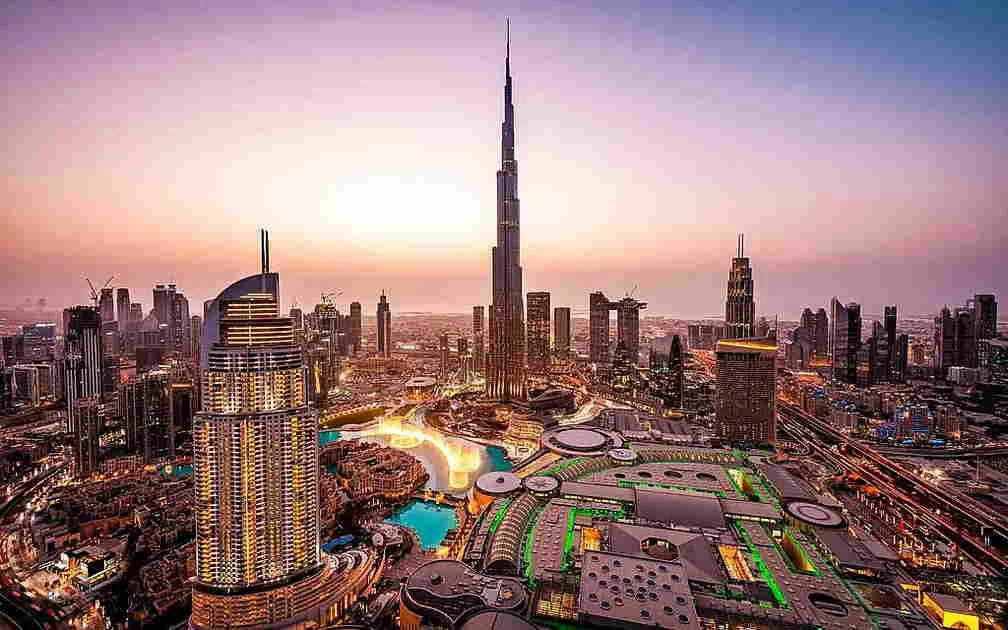
Home to the Burj Khalifa and the Dubai Mall, Downtown commands premium rents and enduring global demand. Yields are tighter than value communities and service charges are higher, but prestige, liquidity and resilience are unmatched. Buy it for durability and exit liquidity, not for cash flow. The full case is in our Downtown off-plan guide.
Best areas for waterfront lifestyle
Dubai Marina
Mature, globally recognised, with deep rental demand from professionals and a thriving short-let market. Marina combines lifestyle appeal with reliable income and is the dependable all-rounder of the list: rarely the top of any single table, rarely the bottom either. Its maturity cuts both ways — proven demand, but most of the steep appreciation is behind it.
Palm Jumeirah
The iconic address for luxury buyers. Yields are lower, but scarcity, prestige and strong capital values make the Palm a long-term store of wealth and a magnet for high-end tenants. It is a capital asset with a rental income attached, and treating it as an income asset with capital upside gets the priority backwards.
Matching area to strategy
There is no single best area. There is only the best area for your goal:
- Pure cash flow: JVC, Arjan, Dubai South.
- Capital growth: Dubai Creek Harbour, Dubai Islands, Dubai Hills Estate.
- Yield plus prestige: Business Bay, Dubai Marina.
- Trophy asset: Downtown, Palm Jumeirah.
Whichever you pick, buy from a credible developer to protect resale value, and match the payment plan to your cash flow rather than to the discount. All rental income is tax-free, so the gross yields above translate closely into net cash flow once service charges are deducted — see how the tax-free framework actually works and the full payment plans hub.
Established versus emerging: the real decision
Most of the choice above collapses into one question. Established communities like Marina, Downtown and JVC offer proven rental demand, mature amenities and predictable performance. You know what you are buying and resale liquidity is high. The trade-off is that the steepest appreciation has probably already happened, and you are paying for certainty.
Emerging areas like Dubai Islands, Dubai South and the newer Creek Harbour phases offer more upside as infrastructure, retail and transport arrive. They require patience and a longer hold while the community fills out, and they carry the risk that the promised amenities land late or smaller than drawn. In an emerging area, your exit window is narrow: sell before the community completes and you are selling into thin demand.
A balanced portfolio usually pairs one of each. One asset paying you now, one asset growing for later. That is a duller answer than "buy the next hot area", and it is the one that survives a cycle.
The developer matters as much as the postcode
Area and developer work together and neither rescues the other. The strongest communities are anchored by developers with the track record to deliver and then maintain quality — Emaar across Downtown, Creek Harbour and Dubai Hills; Sobha, DAMAC and others across multiple districts. A credible developer in a strong area is the most reliable formula in off plan; a weak developer in a strong area gives you a good postcode attached to a building nobody wants to rent. Compare Emaar and Sobha project by project rather than by reputation, and read the honest risk picture before committing.
Frequently Asked Questions
Which area has the highest rental yield in Dubai? JVC is consistently at or near the top, commonly around 7-8% gross, with Arjan, Dubailand and Dubai South in similar territory. The mechanism is arithmetic: yield is rent divided by price, and these communities have low prices with strong tenant demand. The trade-off is that they also absorb the most new supply, so your specific building has to compete.
Is it better to buy in an established or an emerging area? Established areas give proven demand, mature amenities and fast resale, but less appreciation ahead. Emerging areas give more upside and require a longer hold plus tolerance for infrastructure arriving late. If you need the exit to be quick or the income to be reliable, buy established. If you can wait years without touching the asset, emerging pays you for the patience.
How much do service charges change my return? Enough to reorder the whole table. They are charged per square foot per year, forever, and premium waterfront and master communities cost significantly more to run than value communities. Two units with identical rent can deliver very different net yields on this line alone, which is why you should always compare net rather than gross before choosing an area.
Which area is best for a Golden Visa purchase? Any freehold area works as long as the property value clears the threshold, so the question is really about what else you want from the asset. Prestige districts clear it comfortably on a single unit; value communities may need a larger or combined purchase. Pick the area for the investment logic first and treat visa eligibility as a constraint, not the goal.
Should I buy where the metro is planned? Treat existing connectivity as the thing you paid for and planned connectivity as free upside. Infrastructure genuinely lifts rents and resale when it lands, but timelines move, and a return that only works if a station opens on schedule is a return that depends on someone else's project plan.