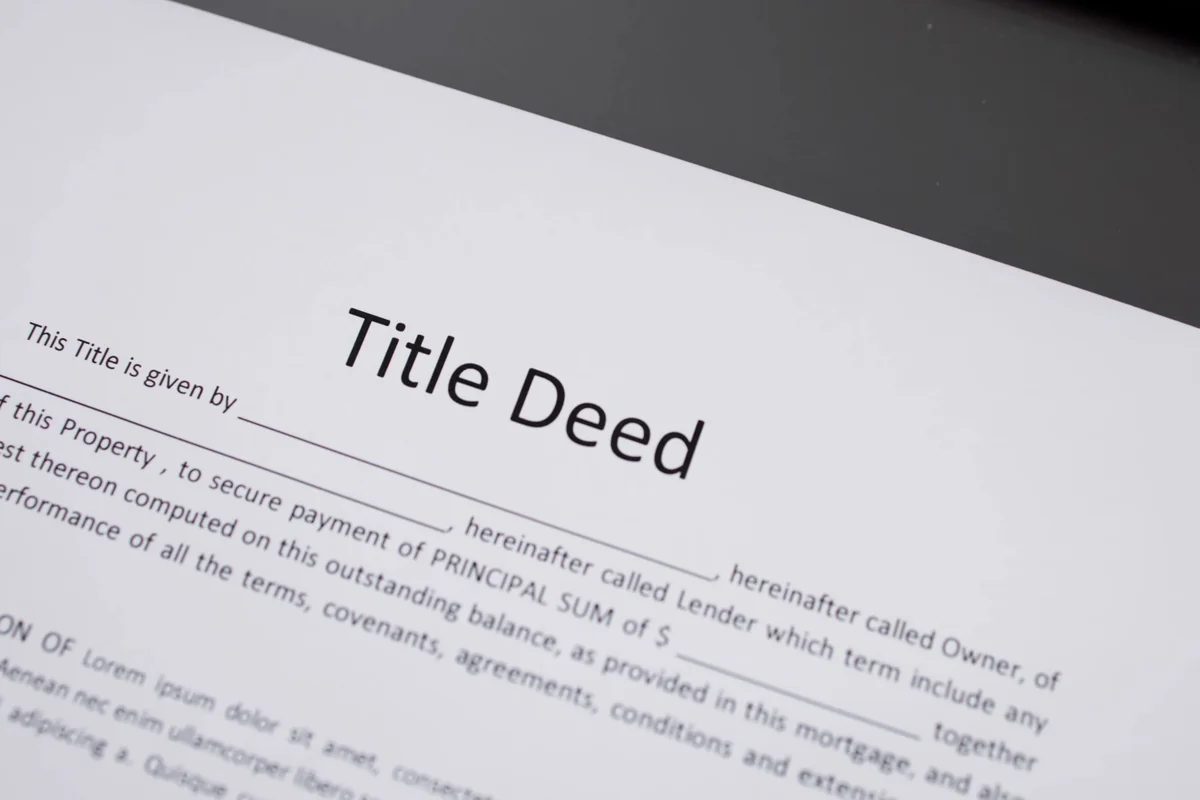
Developers must operate under a set of rules before, during, and after a construction project. These sets of rules involve planning permits, construction permits, safety permits, and environmental permits. These are adhered to by the developer to ensure that the public, including buyers, employees, and the general population, are safe. This will also ensure that there are fewer delays in the construction process. Trustworthy developers are willing to provide any permits, designs, and certifications whenever a buyer requires them. This will be evaluated by the concerned authorities, including the government, and failure to meet these standards may result in a refusal to hand over. This article will provide a list of the necessary standards observed by developers, required permits, standards, inspection process, and steps to ensure compliance. This will help a potential buyer understand what to request or require in terms of compliance to avoid spending money on delays.
Permits and approvals that developers must obtain
Prior to embarking on any development, it was common to need both planning consent and building approval. Planning consent evaluated the use of the land and the proposed height of the development. Building approval evaluated the design of the proposed development. In larger projects, there were additional approvals concerning the local environment and the provision of essential services. These were sometimes approved at the national level and sometimes approved locally. Submissions to the relevant authorities would need to show the designs of the proposed development, structural reports, and insurance guarantees. The relevant authorities were then free to impose clauses that the developer had to comply with during construction. Failure to comply with such clauses would result in the development being stopped by the relevant authorities, with threats of fines. Here’s a checklist that buyers would use before going ahead with development:
Planning permission or planning reference number.
Building permit or construction approval and any listed conditions.
For environmental or water permits, see the relevant regulator in your area.
Building standards and codes that developers must meet.
Building codes require technical compliance with regard to structural requirements, fire safety, accessibility, and energy efficiency. Some countries adopt a model code, such as the International Building Code (IBC), while others have their own customized codes. Such codes provide a minimum level of requirements with regard to design, materials, and system requirements for life and health safety. Builders engage licensed architects and engineers whose signatures on designs indicate compliance with codes. Designs were compared with local codes by authorities, with a call for third-party verification in some countries. Failure to comply with codes results in a call for repairs by authorities, refusal for completion or issuance of permits, or revocation of permits. On matters pertaining to model codes and their scopes, consult International Code Council resources.
Quick comparison table: typical standards and enforcers
Standard / Rule | What it covers | Who enforces |
Planning permission rules | Land use, scale, impact | Local planning authority/council. |
Building code (eg, IBC) | Structural, fire, accessibility | Building control / municipal inspector. |
Environmental permits | Waste, water, emissions | Environmental regulator (national). |
(Exact names vary by country; always check local authority sites.)
Health, safety, and environmental duties
Developers have to look after employees and anyone living near the construction site throughout the course of the project. This can be achieved through properly managing the site, inspecting the scaffolding, correctly managing waste, controlling dust and noise, and creating a construction environmental management plan, which may also require a stormwater or waste permit. The developer may be asked to show environmental protection records and contractor competency records to the concerned regulators. A health and safety plan will also be needed by the financier to disburse the money. A developer can be taken to court if the health or environmental protection standards are inadequate. The developer would have to be asked to show the investment or payment plan, the site safety plan, and the environmental permits.
Inspections, compliance checks, and handover obligations
During construction, the inspectors ensure that everything is as per approved plans and codes. Inspections would be conducted upon the successful completion of all principal stages-footings, structural, services, and finishes. The presence of defects must then be fixed by the developer, on whose completion, various approvals need to be taken. At practical completion, the occupancy or completion certificate comes from the relevant authority when the work is in conformance with the rules. Usual developers provide warranty, as-built drawings, and maintenance manuals. All the inspection reports must be copied to the buyers, along with the final certificate. A regular buyer handover checklist would contain :
Ask for the completion/occupancy certificate and inspection sign-offs.
Request as-built drawings, warranties, and appliance manuals.
Keep these documents safe; they prove lawful completion and help with future resale or insurance claims.
Legal, contractual, and consumer-facing obligations
Registration of off-plan sales, holding consumer funds in escrow, and satisfying defective guarantee warrants are necessities for many regions. One ought to register lenders to check for legal encumbrance or permitted authorization. Any misrepresentation in the developer’s advertisements could lead to penalized consumers or even a canceled sales agreement. It is important to ask for sales agreements, escrow agreements, developer licenses, and a summary of guarantee terms prior to penning your own sales agreement. Misgivings on buyers can decrease as one uses an effective sales contract that assigns payments to certified milestones, making a developer adhere to his or her defined agreements.
Common problems, enforcement, and how buyers verify compliance
The difficulties may center on a lack of permits, poor workmanship, or certifications yet to be submitted. The regulators have the following options: they can levy a penalty, withhold permit approval, or tell the developers what they must do for compliance. Investigate the registration numbers, public records for planning and building, and ask for updates on the last inspections carried out. Engage a local attorney or conveyancer who can ensure titles, approved planning, and the presence or absence of any enforced notices. If you realize there are missing permits, withhold funds until something is produced for your verification before proceeding. The trick is simple: reference number for planning, building permit, completion certificate, or escrow receipt.
Conclusion
Developer responsibilities involve planning, building standards, safety, environmental impact, and consumer protection. "The strength of safe, legal construction rests upon obtaining the necessary permits and complying with the standards set for construction." Inspections and final completion certificates confirm compliance with these standards. "A buyer must not be satisfied with verbal assurance—ask for permits, inspection reports, completion certificates, and escrow proofs. If there appears to be any deficiency or discrepancy, consult an attorney and defer full payments." Regulated compliance is enforced by government agencies, while pre-construction verification by the buyer and financier can avoid many problems. A simple "checklist and a request for documentation" will render your money safe while sparing you the turmoil involved in project completion. Good builders will not mind any scrutiny, which turns out to be a guarantee for good construction.
FAQ
Q1: How does planning permission differ from a building permit?
Planning permission determines the actual use of space, the size, and the appearance. A building permit confirms the technical design and construction methods. Quite often, you'll need both: you need to plan, then have the building permits to start working.
Q2: Who is responsible for ensuring building codes are followed and that inspections take place?
Enactment and inspections at critical stages of the works are carried out by local building control or municipal inspectors. While the technical standards are set by national model codes, it is the local authorities who apply and enforce the so-called IBC.
Q3: What documentation should I request from the developer prior to paying a deposit?
Request the planning reference, building permit, escrow or payment protection details, contractor licenses, and recent inspection reports. Also, request the proof of insurance and the expected completion certificate.
Q4: Can regulators stop work if rules are violated?
Yes. Stop-work orders may be issued by the authorities, or fines levied, or remedial work required. Seriously, permits may be revoked, or court action followed. That is why developers must follow the conditions very closely.
Q5: How long does the hook developers for defects?
The liability timeframes vary by jurisdiction and by contract. Most jurisdictions specify statutory defect periods, with perhaps 1-10 years for structural issues plus shorter warranty terms for finishes. Always check the sales contract and local statutes for exact time frames