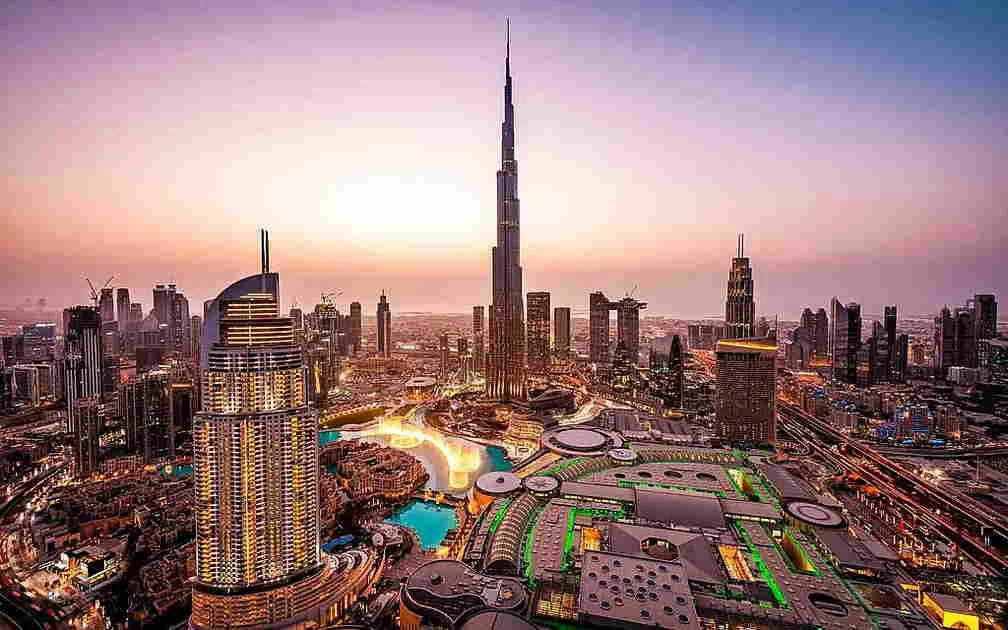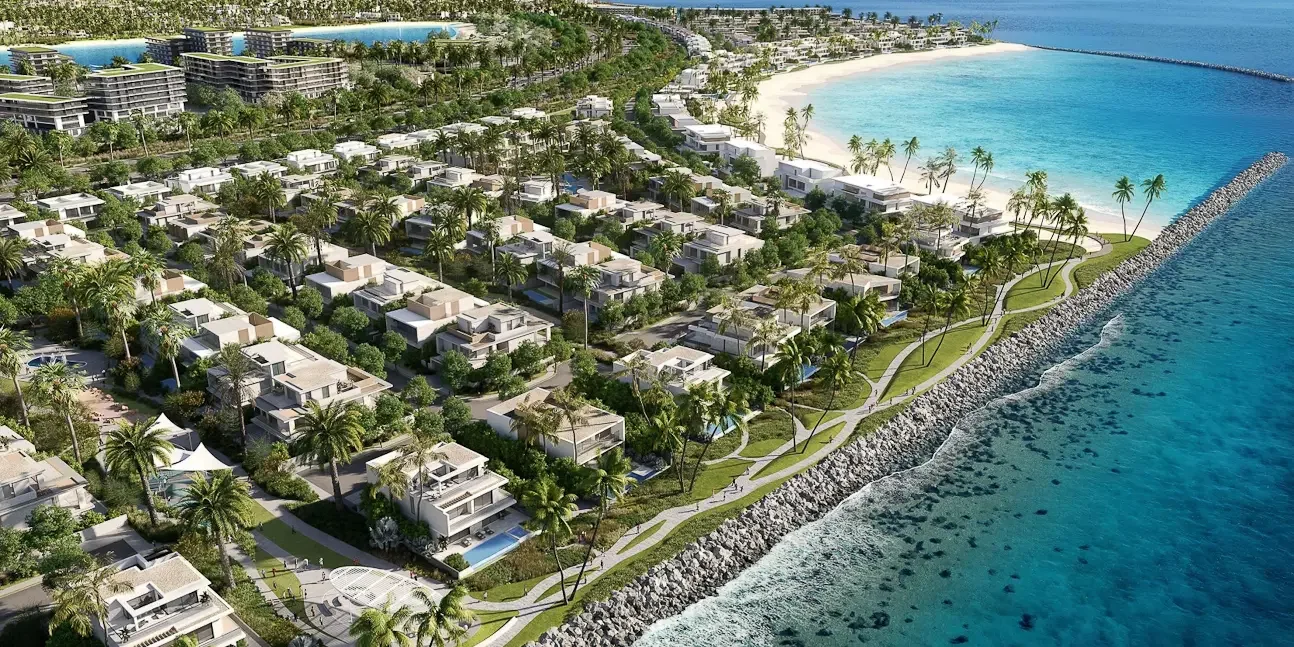
Master developer Nakheel has rebranded the megaproject off the coast of Deira as Dubai Islands, with plans to transform the five-island development into a destination spanning innovative homes, cultural hubs, sports beaches and beach clubs. The name change is the headline. The more useful question for anyone considering a purchase is what a repositioning of this kind actually changes about the asset, and what it leaves exactly where it was.
This piece works through both sides. A rebrand is a real signal, and pretending otherwise would be naive. It is also not construction, not infrastructure, and not a valuation. Knowing which of those you are buying is the difference between an early entry and an expensive wait. You can browse off plan Dubai projects across the city's waterfront communities alongside this read.
What actually changed
The development sits off the Deira coast, close to central Dubai, and comprises five islands. Under the Dubai Islands name, Nakheel has positioned it as a waterfront destination rather than an extension of Deira, with a masterplan encompassing residential, cultural, beach and leisure components.
A name is a market signal, not a building
Renaming a masterplan is a repositioning exercise, and repositioning is a commitment of marketing capital and reputational credibility. That is worth something. A master developer does not rename a flagship asset unless it intends to spend against the new identity. It is a statement of intent that the district should be read against Dubai's waterfront destinations rather than against its neighbouring district.
But a name does not pour concrete. Nothing about a rebrand accelerates a delivery schedule, funds a road, or brings forward a beach club. When you assess what the change means for a purchase, separate the two clearly: the rebrand tells you where the developer is aiming, and only the construction schedule tells you when you will be able to live there.
What a repositioning tends to do to price
Repositioning generally works on value through demand rather than supply. A higher-profile identity widens the buyer pool, and a wider buyer pool supports pricing and, importantly, resale liquidity. The effect is real, and it tends to be gradual rather than immediate.
The honest caveat is that a repositioning can also be priced in before it is delivered. If launch pricing already reflects the destination the masterplan describes rather than the district that exists today, the buyer is paying for the future and carrying the risk of it. That is the single most important thing to check on any repositioned masterplan, and it is checkable: compare the ask against what completed waterfront stock elsewhere actually transacts for.
Why it matters for off-plan buyers
A repositioned, higher-profile masterplan close to central Dubai broadens the waterfront off-plan choice beyond the Palms, often at more accessible entry points during early phases. That sentence carries the whole investment case, and each part of it deserves unpacking.
Proximity to central Dubai is a durable advantage
Location relative to the existing city is the one variable that cannot be redesigned later. A waterfront development close to the established core inherits a functioning city: existing road connections, an existing labour market, existing demand from people who already work nearby. A waterfront development far from the core has to import all of that, which takes years and depends on parties beyond the developer.
This is a genuine structural point in the project's favour and it is independent of the branding. It was true when the development had a different name and it will be true whatever it is called next.
Early-phase entry points cut both ways
More accessible pricing during early phases is exactly what it sounds like: a discount. Discounts exist for a reason, and the reason is that early buyers absorb risk that later buyers do not. You are buying before the retail, before the leisure components, before the community's demand profile has been demonstrated by anyone actually living there.
If the masterplan lands, that discount converts into the largest source of gain available in the market, because you bought the district before it existed. If delivery stretches, you hold a finished unit in a community that has not caught up with it, with weaker rents than the brochure implied, waiting. Both outcomes are common in Dubai. The mechanics of how that discount unwinds are covered in our guide to calculating off-plan ROI.
Waterfront supply is not one market
It is tempting to treat every waterfront community as interchangeable. They are not. Palm Jumeirah is finished geography with a fixed frontage and an established resale market, which is why it prices the way it does. A new island development is unfinished geography with an unproven resale market. The first is a known quantity at a known price. The second is a bet at a lower one. Neither is the correct answer; they are answers to different questions, and a buyer who has not decided which question they are asking will end up disappointed by whichever they choose.
What to check before you buy into a repositioned masterplan
The discipline here is the same as anywhere else in the off-plan market, applied with more care because a fresh identity makes it easier to buy the story instead of the asset.
- Which phase are you actually in. A five-island masterplan is not delivered at once. The phase your unit sits in determines what exists around you at handover, and it is often a very different picture from the masterplan render.
- What is funded versus what is drawn. Infrastructure under construction is a probability. Infrastructure on a masterplan is an intention. Both appear in the same rendering and they are not the same thing.
- The registration and escrow position. Verify the project's registration and that instalments flow into a supervised escrow account independently, rather than accepting a summary from the person selling to you.
- The comparable that is not another launch. Benchmark against completed waterfront transactions, not against neighbouring launch prices. Launch prices reference each other and drift as a group.
- The pipeline in your window. If several thousand units complete in the same phase and quarter as yours, you will be competing with your neighbours and with the developer's remaining stock at precisely the wrong moment.
- Your exit clause. Check the developer's minimum-payment threshold for assignment before you sign. It determines whether an early exit exists for you at all.
The developer question
On a masterplan of this scale, the master developer is not just building your tower; it is building the district your tower depends on. That changes the nature of the diligence. Your unit's value is hostage to the delivery of components you are not buying and cannot influence: the beach, the retail, the cultural venues, the road network.
The evidence that matters is delivered work, not announced work. Look at what the same developer completed several years ago and how those communities matured: whether the amenities in the old masterplan exist today, how long the district took to become livable after the first handover, whether the retail arrived with the residents or years afterward. That history is the best available predictor of how the next one behaves. You can review current stock and track records across developers directly.
How this fits the wider off-plan market
Repositioning is not unique to this project, and it is worth understanding as a pattern rather than an event. Dubai's master developers actively manage the identity of large landholdings, and a district's name, positioning and target buyer can all shift long before the last plot is built. For an off-plan buyer that produces a recurring situation: you are frequently asked to pay today for a district that is described rather than delivered.
The way through it is not cynicism. Plenty of Dubai's now-established communities were exactly this proposition a decade ago, and the buyers who took the early discount did well. The way through it is time horizon. Early entry into an unfinished district is a long-hold strategy, and it fails almost exclusively when someone treats it as a short one. If your capital needs to come back within a couple of years, an early phase of a new island is close to the worst instrument available to you, regardless of how strong the masterplan is. If you can hold through the district maturing, it is one of the few places where the discount is genuinely large.
The same logic applies to how you frame the whole waterfront decision, which our comparison of the best areas to buy off plan in Dubai works through community by community. When you want to see what is currently releasing, our new launches listing tracks it.
The balanced read
Dubai Islands is a serious asset with a genuine structural advantage: five islands of waterfront close to the established centre of the city, under a master developer with the balance sheet to deliver at scale. The repositioning signals intent and broadens the audience, and the early-phase pricing on developments of this type reflects real, quantifiable risk transfer to the early buyer.
None of that makes it a good purchase in the abstract, because no district is. It makes it a good purchase for a buyer with a long horizon, an honest reading of which phase they are in, and the cash flow to carry the instalments through to a handover date that may move. It makes it a poor purchase for a buyer who read the masterplan as a completion certificate. The name changed. The discipline did not.
Frequently Asked Questions
What was Dubai Islands called before? The development was previously known as Deira Islands. Nakheel has rebranded the five-island megaproject off the Deira coast as Dubai Islands, repositioning it as a waterfront destination spanning residential, cultural, beach and leisure components rather than as an extension of the neighbouring district.
Does a rebrand increase the value of a property there? Indirectly and gradually, if at all. A higher-profile identity tends to widen the buyer pool, which supports pricing and resale liquidity over time. But a name change builds nothing and delivers nothing. If launch pricing already reflects the destination the masterplan promises rather than the district that exists, the uplift has been charged to you in advance.
Is buying in an early phase of a new island development risky? Yes, and the pricing acknowledges it. You commit before the retail, leisure and community demand are proven, and you may take handover into a district that is still under construction around you. The risk is compensated by a lower entry price. It is a long-hold position and it punishes anyone who needs their capital back quickly.
How is my money protected on an off-plan purchase there? On a registered project, instalments are held in a RERA-supervised escrow account and released to the developer against construction milestones certified by an engineer, with your interest recorded through Oqood interim registration. This protects the payment and your claim to the unit. It does not guarantee the delivery date or the value.
How does Dubai Islands compare with Palm Jumeirah for an off-plan buyer? They are different propositions. Palm Jumeirah is finished geography with fixed frontage and an established, liquid resale market, priced accordingly. A newer island development offers a lower entry point in exchange for unproven demand and an unfinished district. One is a known quantity, the other is a bet on maturity arriving.