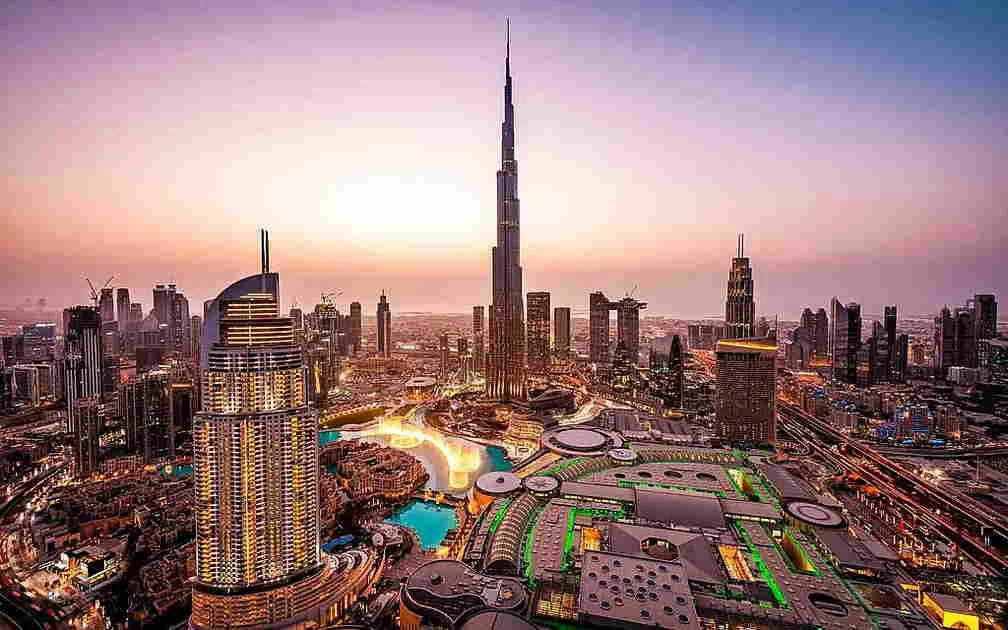
Dubai has entered the largest half-year cycle of new real-estate launches in its history. The value of new projects has exceeded AED 275 billion — about $74.9 billion — since the start of 2026, and in the first six months developers launched 250 projects registered with the Dubai Land Department. Projects launched over the first five months comprised roughly 59,400 residential units and 10,800 villas.
Numbers that large invite two lazy readings: a boom to celebrate, or a bubble to fear. Neither is analysis. What follows is what a pipeline of this size actually does to the choices in front of a buyer — to pricing power, payment plans, absorption risk and developer selection — and what it does not do. You can browse off plan Dubai projects against the backdrop of this reading.
The numbers, and what each one measures
Before drawing conclusions, it is worth being precise about what has actually been counted, because value, project count and unit count each answer a different question.
AED 275 billion is announced value, not money spent
The headline figure is the value of projects launched. It is not construction expenditure, it is not sales, and it is not money that has changed hands. It measures ambition committed to registration. That is meaningful — DLD registration is a real gate with real requirements, including escrow — but a launched project is a project at its beginning. Every one of them still has to be built, sold and handed over. Treat the number as the size of the intent, not the size of the delivery.
250 projects is the number that governs your choice set
For a buyer, the project count matters more than the value. Two hundred and fifty registered launches in six months means the number of live options competing for your first instalment is unusually high, and competition among sellers is the single most reliable source of buyer advantage in any market.
59,400 apartments to 10,800 villas is the shape of the wave
Roughly 59,400 residential units against 10,800 villas over five months underlines that residential apartments remain the engine of growth. That ratio matters because supply pressure will not land evenly. A large apartment pipeline concentrated in the same handful of dense communities produces very different absorption dynamics from a villa pipeline spread across master communities with fixed plot counts.
The 2025 comparison sets the trend
For context, 2025 saw 648 projects from 258 developers worth around AED 463 billion. Half of 2026 has already produced AED 275 billion against a full-year 2025 figure of about AED 463 billion. That is a clear acceleration in announced value, and — note the second half of the 2025 figure — 258 distinct developers were active. A market with that many launchers is not a market where every launcher is equally capable of finishing.
What a deep pipeline does for a buyer
A deeper pipeline means more choice, more competitive payment plans and more entry points across price bands. Each of those is a mechanism, not a slogan.
Choice is negotiating leverage
When one project is launching in a community, the developer sets terms. When six are launching in the same quarter within a few kilometres of each other, the buyer sets more of them. That leverage rarely appears as a headline discount, because developers protect the list price — it is what the next buyer's valuation is anchored to. It appears instead in the things that are easier to give away quietly: DLD fee waivers, service-charge holidays, furniture packages, and above all payment terms.
Payment plans are where competition actually shows up
In a crowded launch market, the plan is the product. Developers compete by moving cash later — smaller instalments during construction, more weight at handover, or a post-handover tail that runs after you have the keys and, potentially, a tenant. The mechanism is simple: a plan that defers cash reduces the buyer's capital at risk during the build and lets a smaller balance sheet reach a bigger asset. That is genuinely valuable, and it is genuinely dangerous, because a plan that stretches your commitment across years is a plan that assumes your income holds across those years. Our payment plans hub and the deeper post-handover explainer set out how the structures differ and what each one costs you in practice.
Entry points widen across price bands
A pipeline this broad spans value communities, central districts and waterfront. That is why the same six months can produce a launch aimed at a first-time investor in Arjan and a branded tower aimed at a private-bank client, and both find buyers. Breadth is good for the market's resilience: a market with only one price band has only one buyer, and when that buyer stops, everything stops.
The other side: absorption, and why supply is a timing risk
Every unit launched is a unit that eventually needs an occupier or an owner. The pipeline does not create the demand that clears it. This is where a buyer should be honest with themselves.
Completion clustering is the real mechanism
Launches do not hurt anyone. Completions do. When a cohort of projects launched in the same window completes in the same window, a community receives thousands of units within a few quarters, and every one of those owners tries to lease at once. Rents in that community flatten or dip while the stock is absorbed. It is a temporary condition and it recovers, but it can land precisely on your first year of income — the year your model assumed the yield that justified the purchase.
It concentrates by community, not by city
City-wide averages will conceal this completely. The pressure will show up in the specific districts that take the largest share of the apartment pipeline — the dense, affordable communities where towers are quickest to build and cheapest to sell. Jumeirah Village Circle is the standing example of a community that absorbs a disproportionate number of towers and periodically digests them. That is not an argument against buying there; it is an argument for knowing what else completes near you in the same six months, and asking the question before you sign rather than at handover.
What to do about it
Two defences, both boring. First, ask what else is under construction within walking distance and when it hands over — a sales agent will not volunteer it, but the information exists. Second, do not underwrite your purchase on year-one rent. If the deal only works if your first tenant pays top of market on day one of handover, you have built a model with no tolerance, in a market that has just launched 250 projects in six months.
Developer selection matters more in a launch wave, not less
A deep pipeline rewards buyers who do their homework on developer track record and location. That statement is easy to nod at and expensive to ignore.
The escrow framework protects your money, not your timeline
DLD registration and escrow mean your instalments sit in a project account and are released against certified construction milestones rather than into a developer's general funds. That is real, and it is the reason the Dubai off-plan market functions at this scale. Read our escrow and deposit protection guide for how the releases actually work. But understand the limit: escrow governs where money goes. It does not make a developer competent, and it does not compensate you for two years of delay in a market where two years of rent was your entire return case.
A crowded market is where inexperienced launchers appear
When 258 developers are active in a year, some of them are building their first tower, or their first tower at this scale, or their first in this emirate. Capability is not evenly distributed across a launch boom — booms are exactly when the marginal developer enters, because that is when selling is easiest. The buyer's job is to distinguish a track record from a rendering. Ask what the developer has handed over, when, and whether it was on time. Our Emaar guide and Sobha build-quality guide show the standard against which a newer name should be measured.
Location is the part you cannot fix later
You can live with a mediocre finish. You cannot move a building. In a wave this large, the temptation is to buy the best plan rather than the best plot, because the plan is what the sales pitch is about. Plots inside established or planned growth corridors — Dubai Creek Harbour, Business Bay, the southern corridor around Expo — have a reason to exist beyond the current cycle. Plots that exist because land was cheap are relying on the cycle to bail them out.
Is this a bubble?
The honest answer is that a launch figure cannot tell you. Launch value measures what developers intend to build, and developers launch when they believe they can sell. It is a sentiment indicator on the supply side — a confident one. What it does not measure is whether the units sell, whether they complete, and whether the population arrives to occupy them. Those are answered by transaction volumes, completion rates and absorption over the following years, not by the size of the announcement.
What can be said without inventing anything: a pipeline of this scale increases the dispersion of outcomes. In a thin market, the difference between a good purchase and a bad one is modest, because there is not much to choose from. In a market launching 250 projects in half a year, the gap between the best-located, best-built, best-priced unit and the worst one in the same price band is very wide — and both are being marketed with equal confidence. That is the actual news here for a buyer. The abundance is not a signal to hurry. It is a signal that selection now matters more than participation.
How to use a record pipeline
- Shop the plan, not just the price. Competition shows up in terms first. Compare three offers on the same unit type before you commit to any.
- Count the completions around you, not the launches. Your rent at handover depends on what else finishes in your community that year.
- Underwrite a delay. Ask what your return looks like if handover slips a year and the first tenancy is below your assumption.
- Filter by builder before you filter by render. Track the newest stock on our new launches feed and compare who is behind it on the developer pages before you commit.
Frequently Asked Questions
How much new project value has Dubai launched in 2026? The value of new projects has exceeded AED 275 billion, about $74.9 billion, since the start of 2026 — from 250 projects registered with the Dubai Land Department in the first six months. That is announced project value, not construction spend or sales.
How does 2026 compare with 2025? 2025 saw 648 projects from 258 developers worth around AED 463 billion across the full year. 2026 reached AED 275 billion in six months, which is a clear acceleration in announced value.
Does a record launch pipeline mean prices will fall? Not directly. Launches are announcements; completions are supply. Pressure on rents and prices tends to appear where a cluster of projects completes in the same community within a short window, which is a district-level and timing question rather than a city-wide one.
Are apartments or villas driving the launch numbers? Apartments, decisively. Projects launched over the first five months comprised roughly 59,400 residential units against 10,800 villas, which is why supply pressure is likely to concentrate in dense apartment communities rather than spread evenly.
Is more choice actually good for a buyer? Yes, if you use it. More competing launches mean better payment terms and more entry points across price bands. It also widens the gap between the best and worst unit in any given band, so the advantage only accrues to buyers who compare properly.
Does DLD registration mean a project is safe? It means the project is registered and buyer instalments run through an escrow account released against certified construction progress. That protects your money from diversion. It does not guarantee the developer delivers on time or builds well, which are separate risks you assess through track record.