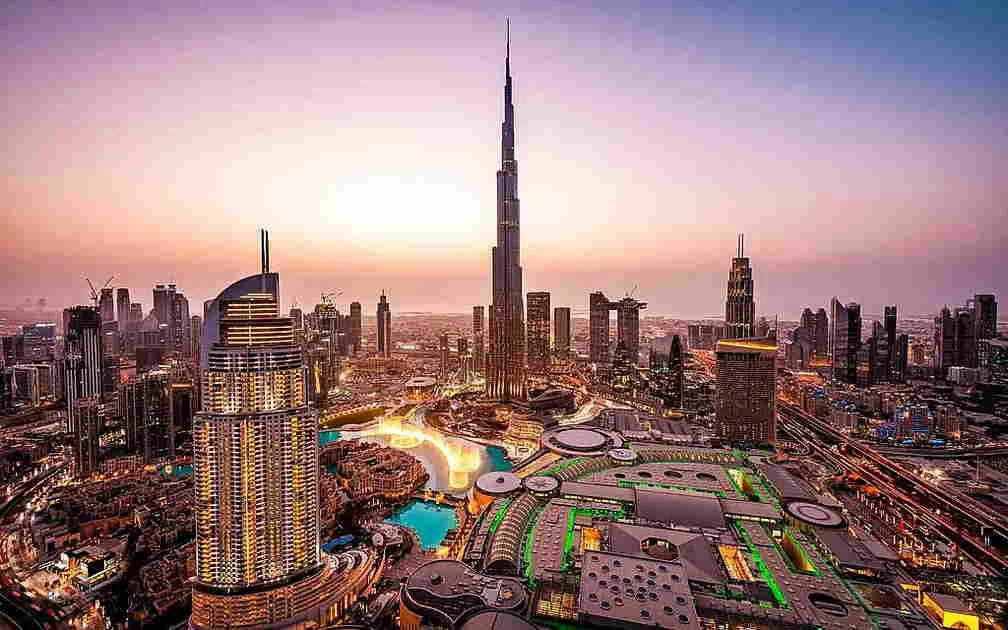
Dubai's off-plan market is larger and more crowded than at any previous point in the emirate's history, with tens of thousands of units launching in a single year and developers competing aggressively for the same capital. For an investor who treats property as a financial instrument rather than a lifestyle purchase, entering that market without return data is not investing. It is guessing with a deposit attached.
This guide sets out how ROI on Dubai off plan is actually constructed: the two metrics that matter and why they disagree, indicative benchmark ranges by community, the three communities with the clearest case, the four things that quietly destroy returns, and how the payment plan changes your real return on capital more than the purchase price does. You can browse off plan Dubai projects by area and yield profile alongside the reading.
How we define ROI for off-plan property
Two metrics, and confusing them is the most common analytical error in this market.
Gross rental yield
Annual gross rent divided by purchase price, times 100. It measures income return before any costs. It is the number in every brochure because it is the most flattering one. It ignores service charges, agency fees, void periods, maintenance and the DLD fee entirely.
Total ROI
Capital gain plus rental income minus purchase costs, divided by purchase price, times 100. This measures what an investor actually earned over a hold period. The benchmarks below assume a five-year hold starting at off-plan launch, which includes roughly an 18-30 month construction period during which the asset produces no income at all. That dead period is why an off-plan yield and an off-plan total return tell different stories, and why anyone quoting a yield without a hold period is not telling you much.
Benchmark ranges by area
These are indicative ranges, not promises, and they move with the cycle. Read them as the shape of the market rather than as a price list. Entry is quoted per square foot, gains over a four-year window, and total return over the five-year hold defined above.
- Jumeirah Village Circle: entry around AED 750-1,100/sqft, gross yield 7-9%, four-year capital gain 28-40%, five-year total ROI 65-95%.
- Arjan / Dubailand: entry around AED 650-950/sqft, gross yield 7.5-9.5%, capital gain 22-35%, total ROI 60-90%.
- Dubai Marina: entry around AED 1,600-2,500/sqft, gross yield 5.5-7%, capital gain 35-50%, total ROI 65-85%.
- Business Bay: entry around AED 1,400-2,000/sqft, gross yield 5.5-7.5%, capital gain 30-45%, total ROI 60-80%.
- Mohammed Bin Rashid City: entry around AED 1,200-1,800/sqft, gross yield 5.5-7.5%, capital gain 30-50%, total ROI 65-90%.
- Palm Jumeirah: entry from around AED 2,500-5,000+/sqft, gross yield 4.5-6%, capital gain 40-60%, total ROI 65-90%.
- Dubai Hills Estate: entry around AED 1,200-2,000/sqft, gross yield 5.5-7%, capital gain 25-40%, total ROI 58-80%.
- Meydan / MBR City: entry around AED 900-1,500/sqft, gross yield 6-8%, capital gain 25-40%, total ROI 60-85%.
- Dubai South / Expo City: entry around AED 600-900/sqft, gross yield 7-9%, capital gain 15-30%, total ROI 50-75%.
- Ras Al Khaimah: entry around AED 500-800/sqft, gross yield 6-8%, capital gain 10-25%, total ROI 45-68%.
Notice the pattern rather than the digits. Yield and capital gain move in opposite directions across the list. Cheap communities pay you in income; expensive ones pay you in appreciation. Total return converges far more than the individual columns do, which is the single most useful thing on this page: the market is broadly rational, and choosing an area is mostly choosing the form your return arrives in, not its size. Anyone promising both top-of-table yield and top-of-table appreciation is selling, not analysing. The method for running these numbers on a specific unit is in our ROI calculation guide.
The three communities with the strongest case
Jumeirah Village Circle: the yield champion
JVC tops yield tables for structural reasons, not fashion. Entry prices remain accessible — studios have been available from around AED 480,000 — while rental demand is perpetually strong from the large young-professional population working the Marina, JBR and Media City corridor who cannot afford or do not want to rent inside it. JVC is close enough to that employment cluster to serve it and cheap enough to undercut it.
Investors who bought off plan in JVC at around AED 700-850/sqft have seen completed assets valued materially higher while collecting a 7-9% yield throughout. The compounding of income plus a moderate gain is what puts JVC's five-year total return among the strongest in the market despite its unglamorous positioning. Best for: yield-maximising investors, first-time Dubai buyers, buy-to-let operators targeting professional tenants. Not every part of the circle performs identically, so compare live stock in JVC building by building rather than treating the community as one market.
Mohammed Bin Rashid City: the appreciation play
MBR City encompasses District One, Sobha Hartland and its later phases, Azizi Riviera, Meydan and the planned Meydan One retail anchor. Buying off plan here is a bet on the full delivery of that infrastructure over a long horizon rather than on the unit itself. District One has already delivered strong appreciation over recent years, and Hartland II buyers at launch prices have been sitting on unrealised gains at secondary-market valuations.
The risk is execution, and it should be stated plainly: an appreciation thesis that depends on a mall, a lagoon and a road all landing roughly on time is a thesis with someone else's project plan inside it. Dubai's track record on marquee projects is good, which is what makes the risk/reward defensible rather than reckless. Best for: longer-horizon investors on a three-to-seven-year view and buyers seeking premium assets with upside. The developer detail is in our Sobha build-quality guide.
Arjan: the earlier-stage yield play
Arjan occupies roughly the position JVC held several years ago: genuinely affordable, high yield, and not yet widely understood by international investors. Studios yield 8-10% gross and entry prices are among Dubai's lowest for freehold apartments. Adjacency to the Miracle Garden and the Barsha corridor gives it a structural demand driver that many comparable communities lack.
The honest counterweight is that "early JVC" is a comparison, not a guarantee, and the same low-entry economics that produce the yield also invite the supply that compresses it. Best for: budget-conscious investors and yield maximisers, particularly at AED 400,000-700,000. Browse Arjan and cross-check against the best areas guide.
What kills ROI
Benchmarks are worthless if you do not understand what removes them. These four do most of the damage.
Developer delay and default
UAE developers do not have equal track records. RERA escrow protection exists and it works — funds release against certified progress, so a developer cannot simply take your money and build nothing — but escrow does not deliver a building on time. Delays of 12-24 months beyond projected handover are common with tier-2 developers, and every month of delay is a month your capital earns nothing while the total-return clock keeps running. Stick to developers with verifiable delivery histories. The mechanics are in our guide to off-plan safety and risk.
Oversupply in specific corridors
Areas that absorb very large volumes at once have seen service-charge pressure and extended vacancy. Jumeirah Village Triangle and Dubai Sports City are the usual cautionary examples. Research what is completing around your unit in the two years after your handover, not just what is completing in your own tower. Supply is the variable that defeats good communities, and it is knowable in advance.
Service charges eroding yield
This is the biggest and quietest gap between brochure and bank account. A building with an 8% gross yield and a service charge of around AED 22/sqft can net closer to 5.5%. That is not a rounding error — it is a third of your income. Verify the current charge, its history and its RERA registration before you commit, and model net. The figure quoted at launch is an estimate; the figure the owners association eventually sets is the one you pay.
Liquidity risk on exit
Not all off-plan property is equally sellable. Boutique buildings in secondary locations can take 6-12 months to sell at the price you want, and a return you cannot realise is a spreadsheet entry. Stick to communities with active secondary markets. Liquidity costs you yield up front and repays you on the way out.
How the payment plan changes your real return
The most misunderstood ROI driver in Dubai off plan is not the price. It is the payment structure. Consider an AED 1,000,000 apartment at a 7% yield, producing AED 70,000 a year. Under a 30/70 plan you deploy AED 300,000 during construction. Measured against capital actually deployed at that point, AED 70,000 on AED 300,000 is an effective return above 23%.
That figure is real and it is also incomplete. The 70% balance is still owed. It is simply not deployed yet, and it is not earning either. Back-loading converts a modest yield into a high return on capital only for as long as the balance stays out, which is why timing your handover and your financing is as much of an ROI decision as choosing the community. A 60/40 and a 30/70 on the identical apartment are two different investments. Work through the structures in the payment plans hub and, if you want the asset to fund itself, the post-handover mechanics.
One more line item people forget: the 4% DLD fee and registration costs sit outside the plan and land upfront, which drags the early-year return in exactly the period when nothing is coming in.
Frequently Asked Questions
What is the average ROI on off-plan property in Dubai? There is no single average worth quoting, because yield and capital gain trade off against each other by community. Value communities like JVC and Arjan run 7-9%+ gross yields with more moderate appreciation; prime districts run 4.5-7% yields with stronger capital gains. Over a five-year hold from launch, total returns across the market converge far more than the individual components suggest.
Which areas have the highest rental yield in Dubai? JVC, Arjan/Dubailand and Dubai South consistently sit at the top, in the 7-9%+ gross range, because yield is rent over price and their entry prices are low while tenant demand is deep. Those same economics attract heavy new supply, so verify what is completing around your unit and always model net of service charges rather than accepting the gross figure.
Is off-plan property a good investment in Dubai? It can be, and the advantage is leverage rather than the property itself: you capture appreciation on the full value while deploying part of the capital. The costs are a construction period with no income, delay risk, and service charges that can remove a third of your gross yield. It suits investors with a multi-year horizon and no need for immediate cash flow.
Can I get a UAE Golden Visa through off-plan investment? Off-plan purchases can qualify where the property value meets the required threshold, with the detail sitting in how the investment is evidenced during the construction period. Requirements change, so confirm the current position with the developer and treat the visa as a benefit of a sound investment rather than the reason for it. A property bought mainly for a visa tends to be a property bought without enough scrutiny.
Why does the payment plan matter more than the price? Because return on capital is measured against money actually deployed, not against the headline price. Deploying 30% during construction on a unit yielding 7% produces an effective return above 23% on the capital in play, while the balance stays out of the market. The price sets the asset; the plan sets your return on the cash you committed.