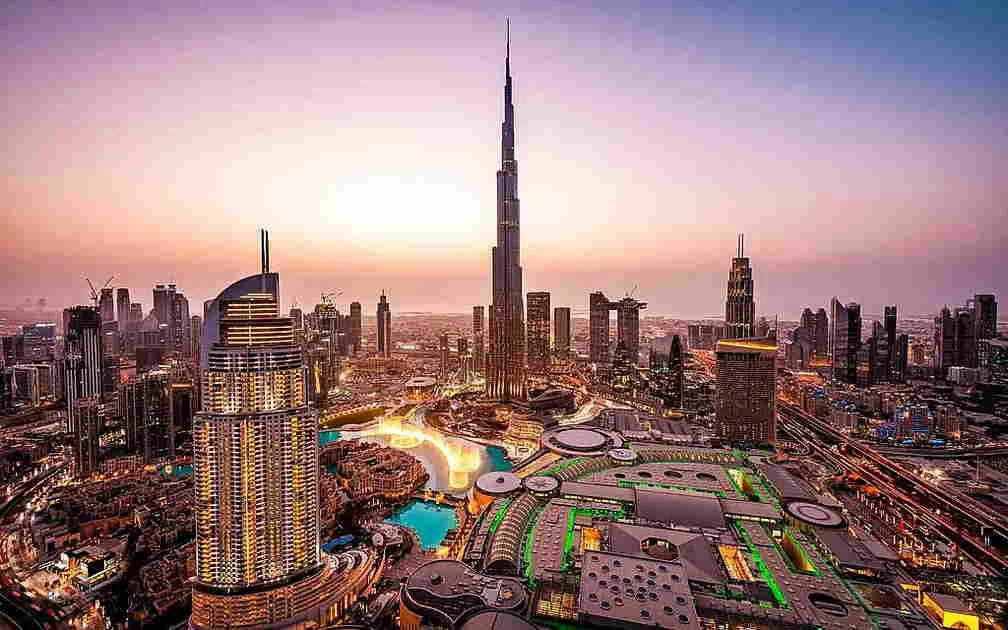
Off-plan projects in Dubai are new developments sold by the developer before or during construction, ranging from a single tower to a master-planned community of thousands of homes. Dubai launched a record pipeline in 2026 — over AED 275 billion of new projects in the first half alone, across 250-plus DLD-registered developments — which makes it the deepest off-plan market in the world.
Depth is a mixed blessing. When 250 projects register in six months, the constraint on your decision stops being availability and becomes discrimination. Most guides respond to that by listing developers and areas. This one is about the mechanism: how a project is structured, what actually determines whether it delivers, and the five checks that separate a launch worth buying from one that is simply available. You can browse off plan Dubai projects against every point below as you read.
What an off-plan project actually is
The transaction
You reserve a specific unit from the plans, pay a booking deposit, sign a Sales and Purchase Agreement, and pay the balance against a schedule until handover. In legal terms you are buying a contractual right to a future property, not the property itself. The property does not exist yet.
That distinction is the source of every off-plan advantage and every off-plan risk, and holding it clearly in mind is most of what separates good buyers from bad ones. You are underwriting a promise plus a regulatory framework, not a building you can inspect.
The three mechanisms that make it work
Dubai's off-plan market functions at scale because three pieces of machinery sit under it.
- Escrow. Your instalments go into a regulated escrow account rather than to the developer's operating account. Money releases against certified construction progress. This is what stops a developer funding project B with project A's buyers, which is the failure mode that has destroyed off-plan markets elsewhere. Read how escrow and deposit protection work for the detail.
- Registration. Your interim ownership is registered on the Oqood system, creating an official record of your claim before the title deed exists. Without registration you hold a contract; with it you hold a recorded interest. Our Oqood explainer covers what it does and does not secure.
- Project registration. A DLD-registered project has passed a set of checks before it can be sold. The 250-plus registrations in the first half of 2026 are projects that cleared that bar. Registration is a floor, not a recommendation.
Understand what this machinery protects you from: it protects your money from being misused, and it protects your claim from being denied. It does not guarantee the project completes on schedule, and it says nothing about whether the price you paid was sensible. Those two questions are entirely on you.
Why anyone buys unbuilt property
Two reasons, and it is worth being honest about which is doing the work.
The first is financing. A construction-linked payment plan converts a large lump sum into a schedule payable from income, with no bank, no credit assessment and no interest line. For an international buyer without UAE mortgage access, the developer's plan is frequently the only financing available. This is the real driver of off-plan's dominance, and it is under-discussed because it is less exciting than the second reason.
The second is the appreciation runway. Buying before completion gives price movement time to work while your capital is only partly deployed. That is genuine, and it is symmetrical — the same effect works against you if the market moves the other way, and your ability to exit before handover depends on the developer's assignment rules rather than your own judgement.
The 2026 launch pipeline
What a record pipeline means for you
Over AED 275 billion of new projects registered in the first half of 2026 across 250-plus DLD-registered developments. That is one of the largest launch cycles in the city's history, led by mega-developments from established names and by waterfront masterplans.
Two consequences follow, and they point in opposite directions. Choice and competitive pricing are real: developers launching into a crowded field compete on payment terms, and that competition is worth money to you. But every one of those projects completes eventually, and completions arrive in clusters. A record launch cycle in 2026 is a delivery wave in the years that follow, and delivery waves land unevenly across communities. That is the most predictable risk in the market and the one buyers most consistently ignore.
How to use a launch cycle rather than be used by it
Track the pipeline through new launches, and use it to answer a question rather than to browse. The question is: what else completes in my community within a year of my handover? If the answer is several thousand units of similar product, your first year of rental income is going to face a lease-up market. That does not make the purchase wrong. It makes the first year's number wrong if you did not plan for it.
The five checks that decide the outcome
In rough order of how much money each one saves or costs you.
1. Developer track record
This is not a tiebreaker. It is the primary variable. A developer's completed history tells you what its contracts are worth, how it handles delays, what its handover quality is like, and whether its snagging process is a genuine remediation or a formality. None of that is visible in a brochure, and all of it is visible in what it has already delivered.
Look at completed projects, not announced ones. Ask what the developer delivered five years ago and how those buildings are ageing. Established names such as Emaar carry a price premium that is, at least in part, a payment for reduced delivery risk. Whether that premium is worth it depends on your risk appetite, but you should at least know that is what you are buying when you pay it.
2. Price against real comparables
The comparison that matters is not the citywide average and not the developer's own price list. It is the price per square foot of similar units, in the same community, in buildings of comparable specification — including ready stock.
Launch prices are generally set below expected completion value to attract early buyers, which is why buying at launch is a core off-plan strategy. "Generally" is doing real work in that sentence. In a crowded launch cycle, some projects are priced at or above what comparable finished product in the same community trades for. Those exist, they are marketed identically to the well-priced ones, and the only way to tell them apart is to do the comparison yourself.
3. Location and connectivity
Location is the variable you cannot fix later. A well-built tower in a poorly connected location stays poorly connected; a mediocre tower on a metro line stays on the metro line. In Dubai specifically, connectivity has driven a durable premium for over a decade, and it is the closest thing to a reliable rule the market has.
Be precise about what the community is today versus what the masterplan says it will be. Jumeirah Village Circle is established, dense and reliably tenanted at a low entry price. An emerging waterfront district may be better in 2032 and quiet in 2028. Both are valid. Confusing one for the other is not.
4. The payment plan, priced honestly
Treat the payment plan as part of the price, not as a separate benefit. Deferred payment has a time value and the developer prices it in. A project with a generous post-handover plan and a higher headline price may cost you more in total than a plainer plan at a lower price, and the comparison is not obvious until you do it.
Then check the schedule against your actual cash flow, conservatively. The instalments are an obligation. Buyers who commit to more units than their income can carry become forced sellers at the moment they have least leverage, which is the single most avoidable way to lose money in this market. Our payment plans hub sets out how the structures compare.
5. The return, calculated properly
Gross yield is rent divided by price and it is not your return. Your return is what survives the DLD fee, the service charges, agency and management costs, and the void periods. Service charges in particular vary enormously by building and are the most common reason a modelled yield does not show up in a bank account. Model the number before you commit, not after.
What actually goes wrong
Four failure modes, all of them ordinary rather than exotic.
- Cash-flow failure. The buyer, not the developer, is usually what fails. Over-committing across multiple units and hitting an instalment you cannot meet forces a sale at a bad price. This is the most common loss in Dubai off-plan and it has nothing to do with the market.
- Delay. Projects run late. Escrow protects your money from misuse; it does not compensate you for time. A delayed handover pushes out rental income you may have been counting on.
- The lease-up quarter. Your building completes alongside three others in the same community. Rents flatten while everything leases up. Temporary, but it lands on year one.
- Specification drift. What arrives is not quite what the render implied. Get the finishes schedule in writing, and take the snagging process seriously at handover.
None of these argue against off-plan property in Dubai. They argue for buying a specific unit for specific reasons rather than buying the asset class because it is what everyone is doing.
How to run the search
Start with your constraint rather than with the inventory. If your constraint is monthly cash flow, the payment plan filters the field before anything else does. If it is total capital, price does. If it is a hold horizon, the delivery date does.
Then compare within a shortlist rather than across the whole market. Three projects examined properly — developer history checked, comparables pulled, plan modelled against your income, service charges asked about — will produce a better decision than thirty browsed. Compare live launches by area, developer and payment plan on our off-plan projects page, and speak to a RERA-licensed agent before you sign anything.
Frequently Asked Questions
How many off-plan projects are there in Dubai? Thousands are live at any time — offplans.com lists over 2,000 developments — and Dubai registered 250-plus new DLD projects in the first half of 2026 alone, representing over AED 275 billion of new launches. That is one of the largest launch cycles in the city's history and makes Dubai the deepest off-plan market in the world.
How do I buy into an off-plan project in Dubai? Reserve a unit and pay a booking deposit, typically 10 to 20% of the price, then sign the SPA which is registered on Oqood. From there you pay according to the agreed schedule into a regulated escrow account until handover. The escrow releases funds to the developer against certified construction progress rather than on demand.
Are new off-plan projects cheaper than existing ones? Usually the launch price is set below expected completion value to attract early buyers, which is why buying at launch is a core strategy. But "usually" is not "always". In a crowded launch cycle some projects price at or above comparable ready stock in the same community, and the only reliable way to tell is to compare price per square foot against real comparables yourself.
Which off-plan project is best in Dubai? There is no single answer, because the right project depends on your budget, hold horizon and cash flow. The consistent rule is to prioritise a developer with a real completed track record, a location with existing connectivity rather than promised connectivity, a payment plan you can service from income you are confident of, and a price that stands up against comparables.
What protects my money in an off-plan project? Two mechanisms. Your instalments go into a regulated escrow account and release against certified construction milestones, which prevents your money being used elsewhere. Your interim ownership is registered on Oqood, which records your claim before a title deed exists. Neither guarantees on-time delivery or that your price was sensible.
What is the most common way buyers lose money on off-plan? Cash-flow failure, not developer failure. Buyers commit across more units than their income can carry through the construction period, hit an instalment they cannot meet, and sell under pressure at whatever price is available. Size your commitment against income you are certain of rather than income you are projecting.