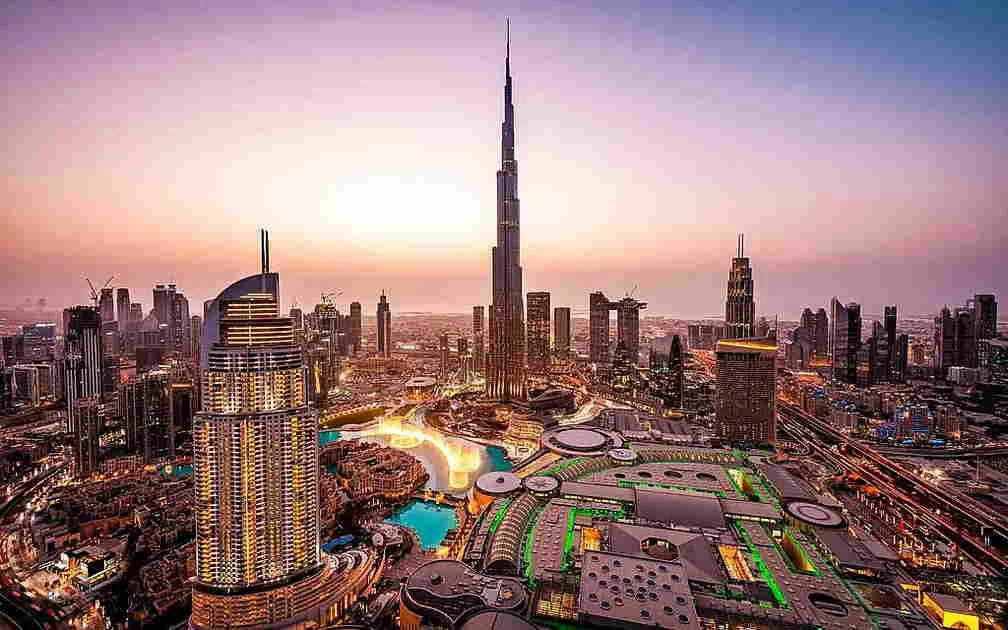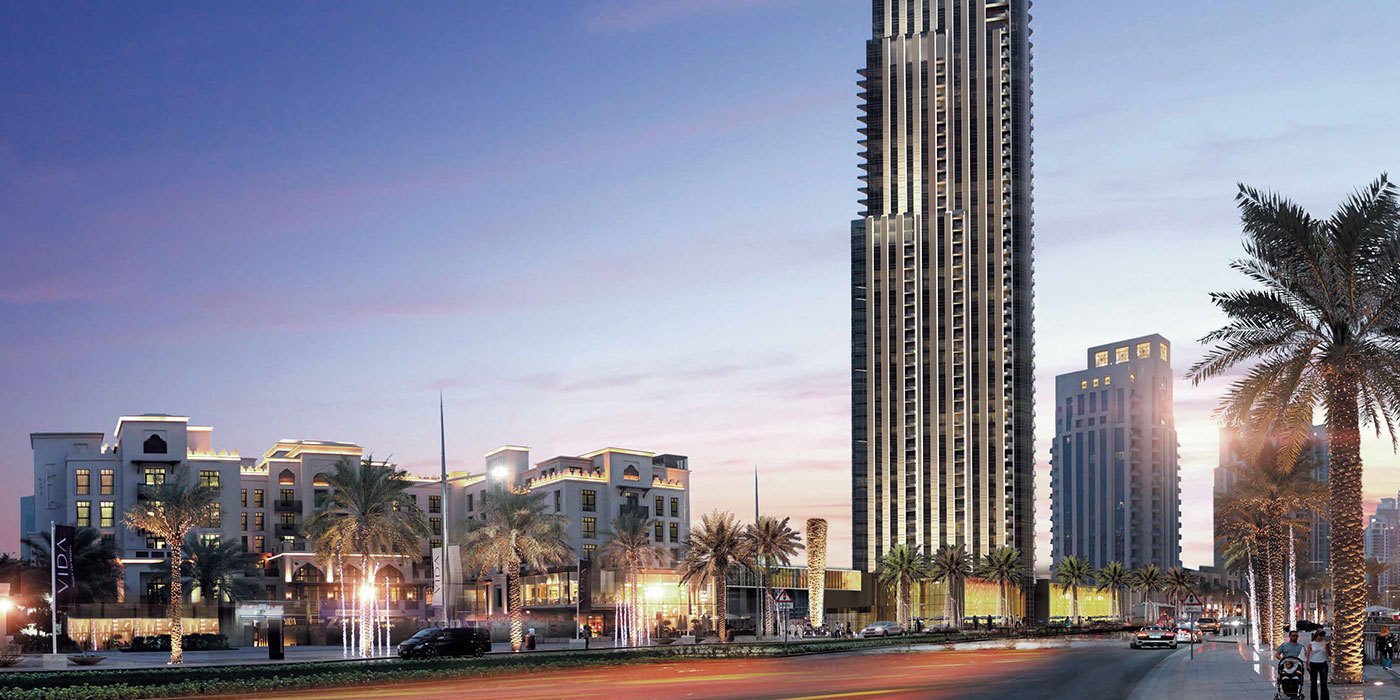
Downtown Dubai is the one address in the city that needs no explanation anywhere in the world. The Burj Khalifa, the Dubai Mall, Dubai Opera and the fountain sit inside a walkable core that Emaar built and still shapes. That recognition is real, and it is priced in. Buying off plan here is not a yield decision. It is a decision about scarcity, liquidity and holding a recognisable asset through cycles.
This guide is about what you are actually buying when you sign a Downtown reservation: why the land constraint matters more than the skyline photos, what the yield genuinely looks like once premium service charges are deducted, where short-let economics change the maths, and who should walk away and buy somewhere else. If you want to compare live stock while you read, you can browse off plan Dubai projects by community and payment plan, or look at the wider Downtown Dubai pipeline directly.
What Downtown Dubai actually is
Downtown is Emaar's flagship master community and the symbolic centre of the modern city. Around the Burj Khalifa it packs the Dubai Mall, Dubai Opera, Burj Park, the Dubai Fountain and a dense lattice of luxury towers, hotels and offices into a compact, genuinely walkable core. The Boulevard rings it. DIFC and Business Bay sit immediately adjacent. It is a designated freehold area open to foreign ownership and to remote purchase without residency.
The land constraint is the whole investment case
Developable land in the heart of Downtown is finite. That single fact drives almost everything else. In most Dubai districts, the supply pipeline is the dominant risk: new towers keep arriving, tenants get choice, and rents flatten even when the community is good. In the established Downtown core, that mechanism is muted. There is simply not much left to build on inside the ring that matters, so well-located stock tends to hold its desirability rather than being competed away by the next launch two streets over.
Read that carefully, because it has a boundary. The scarcity applies to the core. It does not apply to everything marketed as "Downtown adjacent" or to peripheral plots on the edge of the district, where the usual supply dynamics are alive and well. When a broker tells you land scarcity protects your price, ask which plot, on which side of the Boulevard, with what view corridor. Scarcity is a location fact, not a postcode fact.
Why launches here behave differently
Because there is little land, new off-plan launches in the Downtown core are infrequent and draw genuinely global interest. Allocation at launch can be competitive in a way that mid-market communities are not. That is an advantage if you can act, and a trap if it pushes you into a unit you would not otherwise want — a low-floor apartment facing a neighbouring tower carries the postcode but not the scarcity premium that made the postcode worth paying for.
Why investors buy Downtown
Downtown is bought for prestige and durability of value, not for chart-topping yield. The honest list of what you get:
- A globally recognised address. A Burj Khalifa-district location commands premium rent levels and instant tenant recognition, including from tenants who have never been to Dubai before signing.
- Two demand pools at once. Executives and affluent professionals compete for long lets; tourists compete for short lets. Limited stock sits between them.
- Liquidity. When you want out, there is a queue. That is not true everywhere in Dubai, and it is worth more than a percentage point of yield in a soft market.
- Capital preservation. Land scarcity plus brand power makes Downtown a resilient store of value, with rental income taxed at zero and a one-off 4% DLD fee on purchase.
Our guide to the best areas to buy off plan in Dubai treats Downtown as the benchmark prestige community. It is worth remembering that Emaar built the district and still controls what gets added to it, which is a large part of why the supply picture stays disciplined.
The unit mix and who buys it
Downtown is a luxury apartment and branded-residence market. There are no starter homes here in any meaningful sense.
Studios and one-bedrooms
These are the short-let and single-professional end of the market. They carry the highest yield percentage in the district because yield is rent over price and the price denominator is smallest. They are also the units most exposed to competition, because they are the ones investors buy in volume.
Two and three-bedrooms
The affluent-family and long-stay executive product. Thinner buyer pool, longer tenancies, lower turnover cost. If your strategy is buy-and-hold with minimal management, this is usually the more sensible half of the market despite the lower headline yield.
View-led units and penthouses
Burj-facing and fountain-facing apartments are the capital-preservation core of Downtown: scarce, coveted, and resilient because the view cannot be manufactured elsewhere. This is where the scarcity argument is at its strongest and most literal. It is also where you pay for it in full at purchase, so the appreciation has to be earned from an already-high base.
Yield: the number nobody wants to say out loud
Because prices are high, Downtown's gross yields typically sit toward the lower end of Dubai's 6-8% range on long lets. That is the trade. You are compensated in premium rent levels, exceptional liquidity, strong short-let potential from non-stop tourism, and a brand that protects value through cycles. What you are not compensated in is cash flow per dirham deployed.
Work net, not gross
Downtown's luxury towers carry premium service charges. Concierge, security, pools, valet, lobby standards and prime-district upkeep all cost money per square foot, every year, forever. A gross yield quoted at the bottom of Dubai's range becomes materially thinner once the service charge is deducted, and that charge is not fixed for life — it is set by the owners association budget and it moves. Ask for the current rate per square foot and its recent history before you sign, not after. Our explainer on Dubai property service charges covers how the budget is set and what you can and cannot challenge.
Where the return actually comes from
For most Downtown holders, the return is capital plus optionality, not income. If your model needs income to work — if instalments or a mortgage depend on rent covering them — Downtown is a difficult place to make the arithmetic behave, and a value community will do the job better. Be honest with yourself about which return you are buying. The test is simple: write down what the unit must be worth on exit for the deal to have worked, and ask whether you would still buy if it merely held its value.
Short-let economics
If you can run a holiday let, Downtown is one of the strongest short-stay markets anywhere. The Burj Khalifa, Dubai Mall, Dubai Opera and the fountain pull a constant flow of international visitors who will pay premium nightly rates to be inside the core rather than a taxi ride from it. A well-furnished, view-facing studio or one-bedroom can outperform its long-let yield in peak season.
The costs are real and they are not optional. You need a holiday-home permit. You need to furnish to a standard that photographs well and survives strangers. You need either your own time or a management company taking a cut of gross. And you carry seasonality: the same market that pays premium rates in winter goes quiet in the deep summer, so annualise before you get excited by a nightly rate. Short-let is a small business attached to an apartment, not a passive upgrade to your yield.
Buying process and costs
The purchase follows Dubai's protected off-plan path, and the protections are structural rather than promotional. You reserve, sign the SPA, pay a deposit plus the one-off 4% DLD fee, then pay instalments into a RERA-regulated escrow account. The escrow is the mechanism that matters: funds are released to the developer against verified construction progress rather than on request, which is why a stalled project does not automatically mean a drained account. Interim ownership is logged via Oqood so your interest is on record before the building exists.
None of that makes off plan risk-free. It makes a specific failure mode — the developer taking your money and building nothing — much harder. Delay risk, specification-change risk and market risk are all still yours. Read how escrow accounts and deposit protection work and what Oqood registration actually does before you sign, and budget the transaction costs properly using our breakdown of DLD fees and transaction costs.
Connectivity and lifestyle
Downtown has its own metro station and sits directly on Sheikh Zayed Road, with DIFC and Business Bay adjacent and the Marina reachable along one road. The lifestyle needs no selling: the Dubai Mall, Dubai Opera, the Boulevard restaurants, the fountain and Burj Park, all on foot. This concentration is not a nice-to-have in the investment case — it is the reason premium rents are sustainable rather than aspirational. Tenants pay to walk out of the lobby into all of it.
The counterweight is traffic and construction noise. The core is busy, the road access is constrained at peak, and any active plot near you will be loud for years. Those are livability facts a tenant will notice and price.
Who Downtown Dubai suits, and who it does not
It suits prestige-focused investors who want a trophy, globally recognised asset; capital-preservation buyers prioritising liquidity and value resilience; short-let operators targeting constant tourist flow; and Golden Visa buyers, since most Downtown units comfortably exceed the AED 2M threshold.
It does not suit anyone whose return depends on cash flow, anyone buying at the top of their budget with no margin for a service-charge increase, or anyone who wants the highest percentage return available in the city. Those buyers are better served by a value community, where the same money buys more rent and less recognition. If you want central buzz at a lower entry point, Business Bay next door does most of what Downtown does for less, and the trade-off is a name people recognise slightly less.
Frequently Asked Questions
Is Downtown Dubai a good off-plan investment? It is a good capital-preservation and liquidity investment, and a mediocre yield investment. The land constraint in the core supports long-run value and the address keeps the asset tradable on exit, but gross yields sit toward the lower end of Dubai's 6-8% range before premium service charges are deducted. Buy it for durability and recognisability, not for cash flow.
What yield does Downtown Dubai offer? Typically the lower end of the citywide 6-8% gross range on long lets, and less than that on a net basis once Downtown's premium service charges are taken out. Short-letting a furnished, view-facing studio or one-bed can beat the long-let figure in peak season, but only after a holiday-home permit, furnishing costs, management fees and summer seasonality are all accounted for.
Can foreigners buy off-plan property in Downtown Dubai? Yes. Downtown is a designated freehold area open to foreign ownership, with no residency requirement, and the purchase can be completed remotely. You pay the one-off 4% DLD fee, your instalments go into a RERA-regulated escrow account, and your interim ownership is registered via Oqood before the building is finished.
Why are Downtown service charges so high? Because you are paying for what makes the address work: concierge, security, valet, pools, lobby standards and prime-district upkeep, all charged per square foot per year and set by the owners association budget. They are the single biggest gap between the gross yield in a brochure and the money that reaches your account, so ask for the current rate and its recent history before signing.
Does buying off plan in Downtown qualify for the Golden Visa? Most Downtown units comfortably clear the AED 2M property threshold, and off-plan purchases can qualify. The detail sits in how and when the investment is evidenced during construction. Requirements change, so confirm the current position with the developer before you rely on a visa as part of the reason for the purchase.