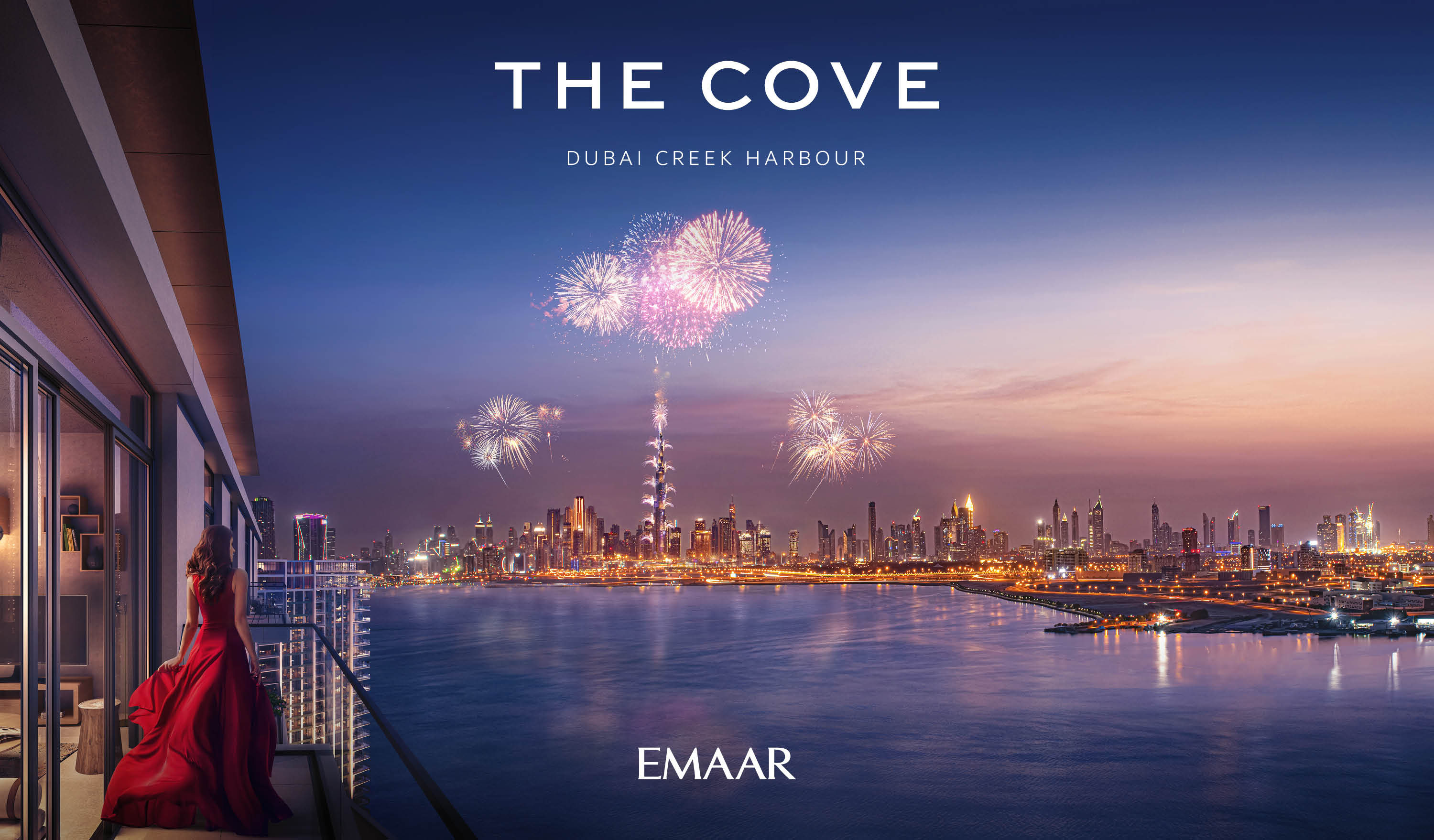
Dubai Creek Harbour is a six-square-kilometre master community by Emaar Properties, set along the historic Dubai Creek minutes from Downtown Dubai and the Ras Al Khor Wildlife Sanctuary. For off-plan buyers it combines a brand-name developer, a waterfront location and genuine end-user demand — three things that rarely appear together at this price band.
This guide is about the money rather than the marketing: which projects are live, how the payment plans are actually built, what leaves your account and when, what drives returns here, and the six steps from booking form to title deed. You can see every live launch on the Dubai Creek Harbour area page, or browse off plan Dubai projects citywide to compare entry prices.
Why Creek Harbour holds investor attention
Three things keep it near the top of shortlists, and it is worth being precise about each.
An Emaar masterplan. The same developer behind Downtown Dubai and Dubai Marina controls the entire community, which means consistent quality, a long delivery record and a coordinated infrastructure plan rather than a patchwork of unrelated towers. In off plan, where your central risk is completion, a developer's delivery history is the only hard evidence available on that question.
Waterfront and skyline views. Most towers are positioned for creek, marina or Downtown skyline outlooks. Views hold rental and resale value because they cannot be replicated by new supply: another tower can copy your finishes and your amenities, but it cannot copy your aspect. That is the only durable scarcity in an apartment market.
End-user demand, not just speculation. Parks, schools, a marina, retail and the Creek Beach promenade make this a place people live. That matters mechanically: a community filled by residents has stickier occupancy and less volatile rents than one filled by investors who all list at once.
Active off-plan projects
Emaar has launched a steady pipeline of waterfront apartment towers here. Among the projects available off plan or in recent launch phases:
- Silva — a recent Creek Beach launch of contemporary one- to three-bedroom apartments.
- Creek Waters 2 — waterfront living next to the marina and yacht club.
- Aeon — apartments overlooking Creek Beach and the Island District.
- Creek Rise and The Cove — established towers in the Island District core.
- Valo and Albero — newer launches with modern layouts and resort-style amenities.
Availability and pricing change constantly as phases sell out and new ones release, so always check the live listing on each project page for the current starting price, floor plans and payment plan before committing. Treat any project list, including this one, as a starting point for research rather than a statement of what is on sale today.
Reading a tower rather than a name
The names above tell you very little on their own. What decides your return is the district the tower sits in, the phase you buy in, the floor and aspect of the specific unit, and the handover date. Two apartments in the same building, on the same plan, can produce materially different outcomes purely on aspect. Established towers such as Creek Rise and The Cove are useful reference points even if you buy elsewhere, because they show what occupied product in this community actually rents for and what its service charges run at.
How the payment plans work
Off-plan payment plans here follow Emaar's typical structure: a deposit on booking, instalments tied to construction milestones, and a final payment on handover. The common shapes are:
- 80/20 — 80% paid during construction, 20% on handover. The standard Emaar plan.
- 90/10 — 90% during construction, 10% on handover, often on shorter-timeline towers.
- Post-handover plans — a portion, commonly 10 to 20%, spread over one to three years after you receive the keys.
Why the split is tied to milestones, not months
This is the mechanism most buyers never have explained to them. Your instalments do not go to the developer. They go into a project escrow account regulated by the Dubai Land Department, and the developer draws from that account against construction progress certified by an engineer. That is why the schedule tracks milestones rather than a calendar.
Two consequences follow. First, a slower build means slower payment demands as well as a later home — a delay is not usually a cash-flow emergency during construction. Second, escrow protects your money from being spent on a different project. It does not guarantee a handover date, a valuation at completion, or a rent. Knowing precisely what the protection covers is worth more than knowing it exists.
What the handover tranche really means
The difference between 80/20 and 90/10 is not a discount; it is a question about when you need liquidity. A 20% handover tranche is a large single payment that lands at the exact moment you also face DLD transfer formalities, the first service charge invoice, furnishing costs if you are letting, and a possible void before your first tenant. A 90/10 plan front-loads more of the cost into the build but leaves a smaller cliff at the end.
Post-handover plans go further: they are, functionally, an interest-free loan from the developer. That is genuinely useful for end-users and landlords managing cash flow. It is also the reason some buyers over-commit, because a small monthly figure disguises a large obligation that keeps running after the keys arrive. Our guide to Dubai off-plan payment plans breaks the plan types down across developers.
The cash you actually need on day one
You will typically pay a 10% reservation deposit plus the 4% Dubai Land Department registration fee at the point of booking. Those two together are the real entry cost, and the DLD fee is the one people forget, because it is not part of the plan the developer shows you. Add developer administration and registration charges on top. None of it is spread; all of it is due early. Model your entry from the total cash out on signing day, not from the percentage on the brochure.
What drives returns here
Creek Harbour has historically delivered competitive gross rental yields for a prime waterfront address, with capital appreciation strongest on units bought early in a project's launch cycle and held to handover. Two factors do most of the work.
Launch-phase pricing
The earliest buyers in a new tower usually secure the lowest per-square-foot price, then benefit as later phases release higher. That is real, and it is the core investment mechanic in a phased masterplan. The honest caveat: it only works if later phases price higher. In a flat market, launch pricing is simply pricing, and you have taken construction risk for nothing. A launch discount is compensation for uncertainty, not free money.
Handover uplift
Completed, ready-to-rent units in an established waterfront community typically command a premium over off-plan prices — provided the wider market stays healthy. The conditional clause is the whole sentence. Handover uplift is a market outcome, not a contractual one.
Where the gross yield goes
Gross yield is rent over price. Net yield is what you keep, and in an amenity-heavy waterfront community the gap is not trivial. Service charges on promenades, marinas and beaches are real annual costs. Add agency letting fees, maintenance, and any void period between tenants — a unit empty for two months has surrendered roughly a sixth of its annual income, which will do more damage than a service charge you argued about for a week. Run the arithmetic before you buy, not after. Our framework on calculating ROI on Dubai off-plan property sets out how.
The six steps from booking to title deed
- Shortlist a project and unit type that matches your budget and your objective — end-use, rental or resale. These three goals point at different units, and buyers who have not chosen between them tend to buy the wrong one.
- Reserve the unit with a booking form and the reservation deposit, commonly 10%, plus the 4% DLD fee.
- Sign the Sale and Purchase Agreement. Read the payment schedule, the handover date, and the penalty and delay clauses before signing, not after. The SPA is the only document that governs what happens if things go wrong, and it is the one buyers most often skim.
- Register with the DLD. The developer issues an Oqood, an interim registration for your off-plan unit, which records your ownership during construction before a title deed exists.
- Pay instalments on the agreed construction-linked schedule into the project's RERA-regulated escrow account. Never pay outside the escrow account, whatever the reason offered.
- Take handover. Complete a snagging inspection, settle the final payment, and receive your title deed. Snagging is the last point at which defects are the developer's problem rather than yours, and rushing it to get the keys a week earlier is a false economy — our snagging and handover guide covers what to check.
What to verify before you reserve
Foreign buyers can own freehold in Dubai Creek Harbour, with full title deed on handover, and qualifying investments may support a UAE Golden Visa. Beyond that, five items decide whether this purchase works, and all five are unit-specific rather than community-specific: the exact payment schedule for your tower, the contractual handover date and what the SPA says if it slips, the estimated service charge for the building, the floor and aspect of your specific unit, and how much of the surrounding district will actually exist when you take keys.
That last one deserves weight. Creek Harbour is still building out. Your tower can complete before the retail, the schools and the transport around it do, which means a first year of ownership with softer rent than the launch assumption implied. It is survivable if you planned for it. It is the most common reason off-plan buyers here are disappointed when they had no reason to be surprised. Compare live entry prices across the city on our off-plan project listings before you commit to one.
Frequently Asked Questions
What payment plans are available in Dubai Creek Harbour? Most projects use 80/20 or 90/10 construction-linked plans, and some include post-handover options spreading roughly 10 to 20% over one to three years after you receive the keys. Exact terms vary by project and launch phase, so confirm on the specific listing.
How much cash do I need to book an off-plan unit here? Typically a 10% reservation deposit plus the 4% Dubai Land Department registration fee at the point of booking, along with developer administration and registration charges. None of that is spread across the plan, and the DLD fee is the item buyers most often leave out of their model.
Who is the developer of Dubai Creek Harbour? The entire community is master-developed by Emaar Properties, the developer behind Downtown Dubai, the Burj Khalifa and Dubai Marina. Single-developer control is why the masterplan's parks, retail and infrastructure are the developer's own obligation rather than a third party's.
Can foreigners buy property in Dubai Creek Harbour? Yes. It is a freehold area, so foreign nationals can own apartments outright and receive a full title deed on handover. Qualifying investments may also support a UAE Golden Visa application.
What is an Oqood and why does it matter? Oqood is the interim registration the developer files with the Dubai Land Department for an off-plan unit. Because no title deed can exist before the building does, the Oqood is what records your ownership during construction. Without it, your purchase is a contract rather than a registered interest.
Is Dubai Creek Harbour a good investment in 2026? For buyers who want a brand-name developer, a waterfront location and real end-user demand, it remains one of the stronger off-plan choices in Dubai. But returns depend on the specific project, the unit, the phase and your entry price — and the community is still building out, so a completed tower can sit in an unfinished district for a year or more with softer rents than the launch assumption implied.