The townhouse is Dubai's compromise product, and that is meant as a compliment. It gives a family a private front door, a small garden and two or three storeys of living space at a price that sits below a detached villa, inside a gated community with shared pools and parks. It is not a luxury asset and it is not a yield machine. It is the unit type with the broadest possible buyer and tenant base, which is a more useful property than either.
This guide covers what an off-plan townhouse actually is, why the middle ground is structurally resilient, which layouts rent and resell, what the payment plans and running costs do to your net return, and where the risks sit — because the townhouse segment has a specific failure mode that nobody advertises. Alongside the reading you can browse off plan Dubai projects and compare live clusters by community and plan.
What exactly is an off-plan townhouse?
A townhouse is a multi-storey home that shares one or two walls with its neighbours, usually arranged in a terraced row inside a gated community with communal amenities. Buying one off plan means purchasing from the developer before construction finishes, paying in instalments along a payment plan, and taking handover once the cluster is complete.
The trade against a villa is explicit: you give up a detached structure and a large plot, and you get the vertical space, the private entrance and the garden at a materially lower price with a lighter maintenance burden. The trade against an apartment is the mirror image: you give up the yield percentage that a small ticket produces, and you get space, privacy and a tenant who signs longer leases.
Why the cluster matters more than the house
A townhouse is bought as part of a community, not as a standalone building. The pool, the park, the walking trail, the retail at the entrance and the school on the next plot are what a family is actually paying for. This makes the developer's master-plan credibility unusually important in this segment. A finished townhouse in a community whose amenity never arrived is a house on a road, and it prices like one.
Why the middle ground is structurally resilient
Townhouses answer a specific brief: a growing family that wants a garden and a community, and is not ready for villa pricing. That positioning creates a demand base that overlaps two markets at once.
The case for end-users
- Space without overreach. Three or four bedrooms across multiple floors give a family genuine room to grow without the villa ticket.
- Private outdoor area. A small garden is rare in apartments and is often the single reason a household moves.
- Community amenity. Shared pools, parks, play areas and trails, maintained by the community rather than by you.
The case for investors
- A deep tenant pool. Families renting houses are plentiful and tend to sign longer leases, which cuts turnover cost.
- Healthy yields for the size. Value-oriented townhouse communities often deliver gross yields in the 6–8% range — respectable for a unit of this size, though below what a small apartment produces.
- Resale demand. The broad buyer base makes townhouses easier to sell than niche luxury product, because you are marketing to both investors and people who want to live there.
Why two buyer pools is the whole point
Liquidity is invisible until you need it. A four-bedroom branded penthouse has one thin pool of buyers. A three-bedroom townhouse in a family community has two thick ones stacked on top of each other. When sentiment softens, investor demand thins first — and end-user demand, driven by a family that needs a home near a school, does not switch off. That is the mechanism behind the segment's reputation for holding value, and it is worth more than a point of gross yield.
Where Dubai's off-plan townhouses are
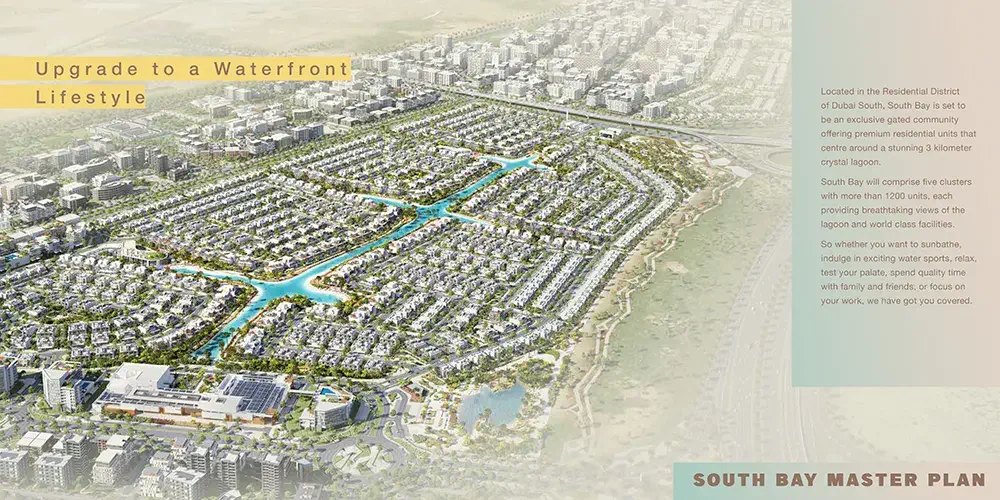
Townhouse value clusters along the city's growth corridors, where land is available at a price that lets developers deliver scale. Communities around Dubai South, in Town Square, on the wider MBR City fringe, and inside established golf townships all carry townhouse stock. Emaar South is a good example of the pattern: a masterplan built around a golf course and a growing employment node rather than an existing city centre.
The geographic logic is unavoidable. Townhouses need land, land is cheaper further from the core, so almost every townhouse community is a bet on a corridor maturing. Read that as the actual investment thesis, because it is. Our analysis of the best areas to buy off-plan in Dubai covers which corridors combine price discipline with genuine upside, and you can compare live stock across all projects.
Developers who build at townhouse scale
Master-planned townhouse communities are a scale business — you need land, infrastructure and the balance sheet to build hundreds of units at once. Emaar and Nakheel both deliver large family townships; DAMAC builds golf-anchored townhouse clusters with heavy amenity. The relevant question is not which name is best but whether the developer has finished a comparable community before, since that is what predicts whether your cluster gets its park.
Payment plans and what the entry actually costs
Because townhouses cost less than villas, the entry point is friendlier, and developers frequently pair them with builder-financed payment plans. Many offer post-handover schedules that let you pay part of the price after you have moved in.
- Booking deposit: usually 10–20% to reserve the unit.
- Milestone instalments: tied to construction progress and held in RERA-supervised escrow.
- Handover and beyond: a completion payment, sometimes followed by post-handover instalments.
How the escrow mechanism protects you
Your instalments do not sit in the developer's operating account. They go into a supervised escrow account for that specific project and are released against verified building progress, with your purchase recorded via Oqood interim registration. That is the structural reason an off-plan developer cannot collect deposits and disappear. It is not a guarantee against delay — escrow controls where the money goes, not how fast the concrete rises. That distinction is the one buyers most often miss: the regulatory architecture is built to stop your money being misused, not to stop your handover date moving. Weigh the developer's completion record separately, because nothing in the escrow system does that job for you.
Post-handover plans are financing, not a discount
A post-handover schedule lets rent from the completed house help pay the remaining instalments, which is genuinely useful for cash flow. It is not free money. A developer offering an unusually long post-handover tail is financing your purchase, and that cost is somewhere in the headline price. Compare structures in the payment plans hub and post-handover plans explained before you treat a long plan as a win.
Layouts and configurations that actually rent
The layout you choose shapes both your lifestyle and your resale pool. This is where a townhouse purchase is won or lost, because unlike an apartment there is real variation between units in the same row.
- Three-bedroom townhouses: the workhorse of the segment. Demand is deepest here, so it is the easiest size to rent and the easiest to resell.
- Four-bedroom and larger: higher rents, bigger ticket, narrower tenant pool. Fine if you have the holding power for a longer lease-up.
- End and corner units: more light, a larger garden, one shared wall instead of two. They command a premium and tend to hold it on resale.
- Maid's room or study: a small extra room widens family appeal disproportionately to its cost.
Compare floor plans carefully rather than headline square footage. A family renting a house cares about usable space, storage, natural light and whether the stairs eat the living room. Those details decide the rent; the brochure area does not.
The service charge nobody models
Townhouse communities charge for the amenity that makes them attractive: the pools, the landscaping, the security, the parks. Those charges come off your gross yield every year and they are not fixed forever. Model the net figure, not the headline percentage — see Dubai property service charges explained, and how to calculate ROI on off-plan for the full arithmetic.
The risk the brochures skip: cluster supply
Townhouse communities complete in phases, and a phase is hundreds of near-identical houses handed over within weeks of each other. If you take keys in the same quarter as your neighbours, you are competing with dozens of landlords marketing an identical product to the same pool of families, at the same time, in a community whose retail may not have opened yet.
The practical consequence is a longer first lease-up and softer initial rent than the launch projection assumed. This is a timing problem rather than a permanent one — the cluster absorbs, the amenity opens, rents normalise. But it can land squarely on your first year, which is exactly the year your post-handover instalments are due. Buyers who plan for a slow first let do fine. Buyers who assumed a tenant on handover day become forced sellers into a market full of identical houses.
Capital growth and resale liquidity
Townhouses sit in a structurally resilient part of the market because the demand base is wide: families who want to live in them, investors who want to let them, and apartment owners trading up. That breadth translates into resale liquidity. When you sell, you are marketing to the largest single buyer segment in the city rather than a narrow niche.
Growth in these communities is typically a maturation story rather than a launch-day story: values firm up as the landscaping fills in, schools open, retail arrives and the corridor gets its road links. That takes years, not quarters, which makes townhouses a poor vehicle for a fast flip and a reasonable one for a hold. For the wider comparison against completed stock, see off-plan versus ready property.
Frequently Asked Questions
Is a townhouse cheaper than a villa in Dubai? Generally yes. A townhouse shares one or two walls, sits on a smaller plot, and is delivered at scale within a cluster, all of which reduce cost per home. You give up the detached structure and the land, and you get most of the practical family space at a lower ticket with lighter maintenance.
Can foreigners buy off-plan townhouses in Dubai? Yes. Freehold ownership in designated zones is open to foreign nationals with no residency requirement, and the purchase is recorded through Oqood interim registration until the title deed is issued at handover.
What yields do Dubai townhouses offer? Value-oriented townhouse communities often sit in the 6–8% gross range, toward the middle of it. That is below what a small apartment produces on a percentage basis, because the ticket is larger, and it is compensated by longer tenancies and a deeper resale pool. Always subtract service charges to get to the number that matters.
Which townhouse size is easiest to rent? The three-bedroom, by a distance. It is the size the largest number of Dubai families are actually looking for, which shortens the lease-up and widens the buyer pool at exit. Four-bed and larger rent for more but take longer to place.
Can I sell an off-plan townhouse before handover? Yes, subject to the developer's minimum-payment threshold and an NOC. Most developers require a set share of the price to be paid before approving an assignment, and the transfer is registered through Oqood.
What is the biggest risk with an off-plan townhouse? Handing over into a phase of hundreds of identical houses before the community's amenity and retail are open. That combination produces a slow first let and a soft first rent, at exactly the point post-handover instalments start. Plan the cash flow for a longer initial vacancy than the projection shows.