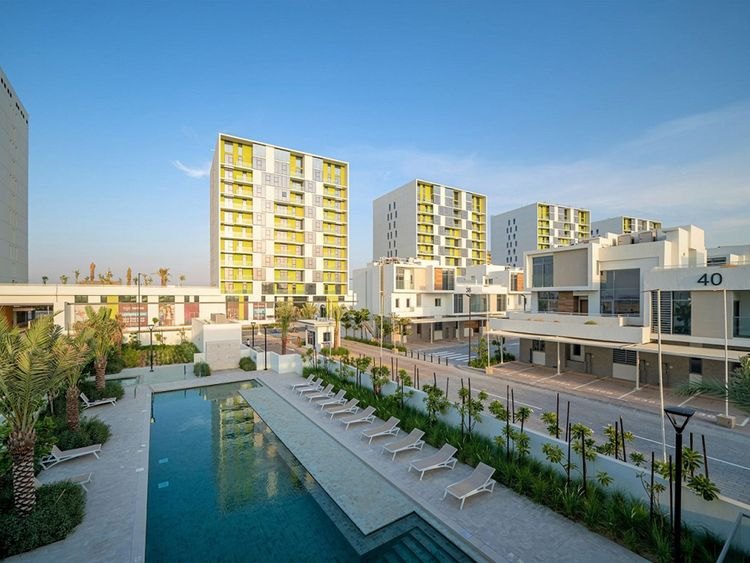
Yes. Chinese nationals can buy property in Dubai with full freehold ownership and no residency requirement. There is no rule that treats a Chinese passport holder differently from any other foreign buyer, and no obligation to live in, work in or visit the UAE in order to own real estate there. Chinese buyers have become one of the most active international groups in the market, drawn by tax-free returns, a currency peg to the US dollar, and a government-run registration system that records ownership in your own name.
This guide covers what freehold actually means, how the purchase works from China without travelling, where your money sits during an off-plan build, the residency threshold, and the home-country obligations that Dubai's tax position does not remove. You can browse off plan Dubai projects by community and payment plan as you read.
Can Chinese nationals legally own freehold in Dubai?
Yes — outright. Dubai allows non-GCC foreign nationals, including citizens of China, to own property in designated freehold zones in perpetuity. This is not a lease and not a nominee arrangement.
What freehold means in practice
Freehold ownership is registered with the Dubai Land Department (DLD) in your own name and recorded on a title deed for completed homes, or via Oqood interim registration for off-plan units still under construction. The registration is what makes the ownership real: it is a government record, not a developer's promise, and it is what you rely on when you sell, mortgage or inherit the asset.
The "designated zones" qualification matters and is often glossed over. Freehold applies in specified areas, which is why every community you will see marketed to foreign buyers sits inside one. It is not a restriction you will bump into in practice, but it is the reason the rule exists in that form. The wider eligibility position is set out in our guide on off-plan safety and risks in Dubai, and live inventory is on the projects page.
What you can buy
Chinese buyers can purchase across the full spread of freehold stock: waterfront towers, central apartments, golf-course villas and emerging master-planned districts. There is no category reserved for residents or for particular nationalities. Popular starting points include Dubai Marina for a mature rental market, Business Bay for centrality, and Dubai Creek Harbour for a growth-stage masterplan.
Is a residency visa required to buy?
No. Purchasing and residency are decoupled in Dubai. A Chinese national living in Beijing, Shanghai or anywhere else can buy, register and own Dubai real estate as a non-resident. There is no obligation to relocate, hold a job locally, or spend a minimum number of days in the UAE.
The relationship runs one way: ownership can make you eligible for residency, but residency is never a precondition for ownership. This is worth being clear about because the reverse assumption — that you need a visa first — stops buyers who did not need stopping.
Buying from China without travelling
Remote purchase is standard practice for overseas buyers, not an exception someone makes for you. Two routes are common.
Power of attorney
You appoint your brokerage or a trusted representative to sign on your behalf. A POA prepared in China is notarised and attested so that it is valid in the UAE. This is the older, heavier route, and it is still the right one where a physical signature or an in-person step is unavoidable. The attestation chain takes time, so start it before you find the unit rather than after.
Remote and digital signing
Many off-plan reservation forms and sale-and-purchase agreements can be signed electronically with remote identity verification. For off-plan in particular this is now routine, which is part of why off-plan attracts a disproportionate share of overseas capital: the whole transaction is designed to happen at a distance.
Where the money goes
Funds are sent by international bank transfer. For an off-plan purchase, the money does not go to the developer's operating account — it goes into a regulated escrow account for that specific project, and is released to the developer only against construction milestones certified by an engineer. That is the single most important protection for a buyer who is thousands of kilometres away and cannot walk the site. Read escrow accounts and deposit protection for what the mechanism covers, and understand its limit: escrow controls where your money goes, not how quickly the building rises.
The process step by step
- Set the budget and the objective — rental yield, capital growth, a holiday home, or visa eligibility. These pull in different directions and you cannot optimise for all of them.
- Shortlist — off-plan for staged payment plans and a launch-to-handover runway, or ready property for income from day one.
- Reserve — sign a reservation form and pay the booking deposit.
- Sign the SPA — this fixes the price, the payment schedule and the handover date. It is the document that matters; read the schedule, not the brochure.
- Register and pay the DLD fee — a one-off 4% charge. Off-plan is recorded through Oqood.
- Handover — snag the unit, settle the balance and take possession.
For the pre-construction specifics, Oqood registration explained covers what you actually hold before the title deed exists, and the snagging and handover process covers the stage remote buyers most often handle badly — because someone has to inspect the unit, and it will not be you unless you fly.
How Dubai property is taxed for Chinese investors
On the Dubai side the position is straightforward: residential property is tax-free. There is no annual property tax, no tax on rental income, and no capital gains tax on sale. The only government charge of note is the one-off 4% DLD registration fee at purchase.
This is the actual mechanism behind the returns Dubai advertises. A gross yield in the 6–8% band is a very different number in a jurisdiction that takes nothing from it annually than in one that taxes the rent and then the gain. The compounding difference over a ten-year hold is larger than most buyers model. See tax-free property investment in Dubai and DLD fees and transaction costs for the full charge list, since the 4% is not the only line item at closing.
A note on home-country obligations
Dubai imposes no tax. Your own tax position is a separate matter and Dubai's rules say nothing about it. Requirements on reporting foreign assets, declaring overseas income and moving capital across borders vary, apply independently, and can change.
This is a general note, not tax or compliance advice, and you should treat it that way. Before buying, consult a qualified tax or financial adviser in your home country so you understand any reporting and cross-border transfer requirements in advance — in advance being the operative phrase. The time to discover a constraint on moving funds is before you have signed an SPA with a payment schedule attached to it.
Can Chinese buyers get a Golden Visa through property?
Yes. A property investment of AED 2 million or more can qualify the owner for the UAE Golden Visa — a renewable 10-year residency that can extend to a spouse and children. Off-plan purchases can count toward the threshold under the prevailing rules.
Two points buyers get wrong. First, the visa is a benefit of ownership, not a requirement of it: you can own with no visa at all, forever. Second, the threshold is about property value, so it shapes which unit you buy rather than whether you may buy. If residency is part of the objective, that constraint should be set before you shortlist, not discovered after. Our Golden Visa through property guide covers how the threshold is applied.
Why off-plan appeals to Chinese buyers
A large share of Chinese investment flows into off-plan rather than ready property, and the reasons are practical rather than promotional.
- Lower entry barrier. A booking deposit followed by staged instalments spreads the cost across the construction timeline, so less capital is committed at the outset. This matters more for a cross-border buyer, who is moving money in tranches rather than one large transfer.
- Appreciation runway. Buying at launch pricing gives room for value to grow between launch and handover, which is what off-plan investors actively target.
- Built-in protection. Instalments go into a RERA-regulated escrow account released against verified progress, with Oqood recording your ownership in the meantime.
- It is designed to be done remotely. Reservation, signing and payment are all built for a buyer who is not in the room.
The honest counterweight: off-plan means you own nothing you can rent until handover, and handover dates move. A buyer who needs income from month one is buying the wrong product and should be looking at completed stock instead, where the rent starts the day the transfer completes. The appreciation runway and the income gap are the same feature seen from two sides. Live launches are on the new launches page.
Currency, transfers and life after purchase
The dirham peg
The UAE dirham has a long-standing peg to the US dollar. For a buyer converting from renminbi, this means your Dubai exposure behaves like dollar exposure rather than like an independent emerging-market currency. That is a form of predictability, not a form of protection — it removes one variable and leaves the RMB/USD relationship in place. Understand which risk you have transferred and which you still hold.
Moving funds
Payments are made by international transfer, and for off-plan they land in the project escrow account. Plan the mechanics around your payment schedule rather than the other way round: instalments are tied to construction milestones, which means the timing is set by the builder and your transfer arrangements have to keep up with it.
Management after purchase
An owner in China needs someone in Dubai to hand keys over, deal with maintenance and chase a late tenant. Property management is a normal, priced service and it comes out of your yield. Model it explicitly — a return calculated without management cost is not the return a remote owner receives, and the gap is wider than most overseas buyers assume. Add the service charge and the management fee to the same line and compare what survives. That number, not the gross yield in the presentation, is what your money actually earns from six thousand kilometres away.
Frequently Asked Questions
Can Chinese citizens buy property in Dubai without a visa? Yes. Purchase and residency are decoupled: a Chinese national living anywhere can buy, register and own Dubai freehold as a non-resident, with no requirement to relocate or spend time in the UAE. Ownership can make you eligible for residency, but it is never a precondition for buying.
Do I need to fly to Dubai to complete the purchase? No. Remote purchase is standard. You can appoint a representative under a power of attorney notarised and attested in China, or sign electronically with remote identity verification, which is now routine for off-plan reservations and SPAs. Funds move by international transfer into the project escrow account.
What taxes will I pay on a Dubai property? On the Dubai side, no annual property tax, no tax on rental income and no capital gains tax on sale. The main government charge is the one-off 4% DLD registration fee. Your obligations in your own country are separate and unaffected by Dubai's position — check them with a qualified adviser before you buy.
Is my money safe if I pay for an off-plan unit from abroad? Instalments go into a regulated escrow account for that specific project and are released against construction milestones certified by an engineer, which is a strong protection against misappropriation. It does not protect against delay, and no mechanism does. Weigh the developer's completion record as carefully as the payment plan.
Can a Chinese buyer get residency through property? Yes. A property investment of AED 2 million or more can qualify the owner for a renewable 10-year Golden Visa that can extend to a spouse and children, and off-plan can count toward the threshold under the prevailing rules. Set that constraint before shortlisting if residency is part of your objective.
What return do Chinese investors typically target? Gross rental yields in Dubai commonly sit in the 6–8% band, with value communities at the top end and premium central districts at the bottom. Off-plan buyers additionally target appreciation between launch and handover. Deduct service charges and management costs before comparing that figure with anything at home.