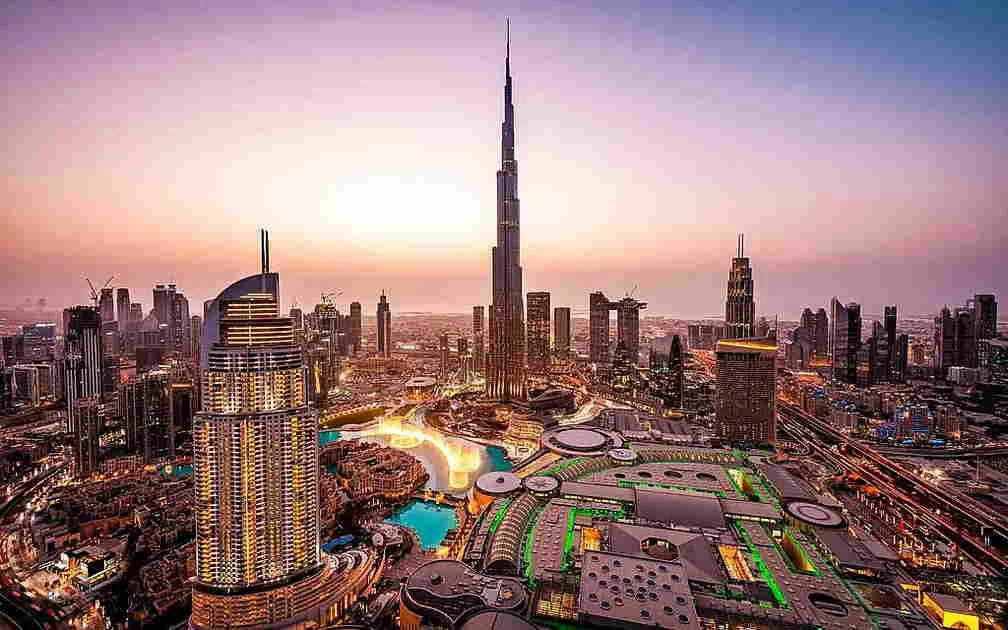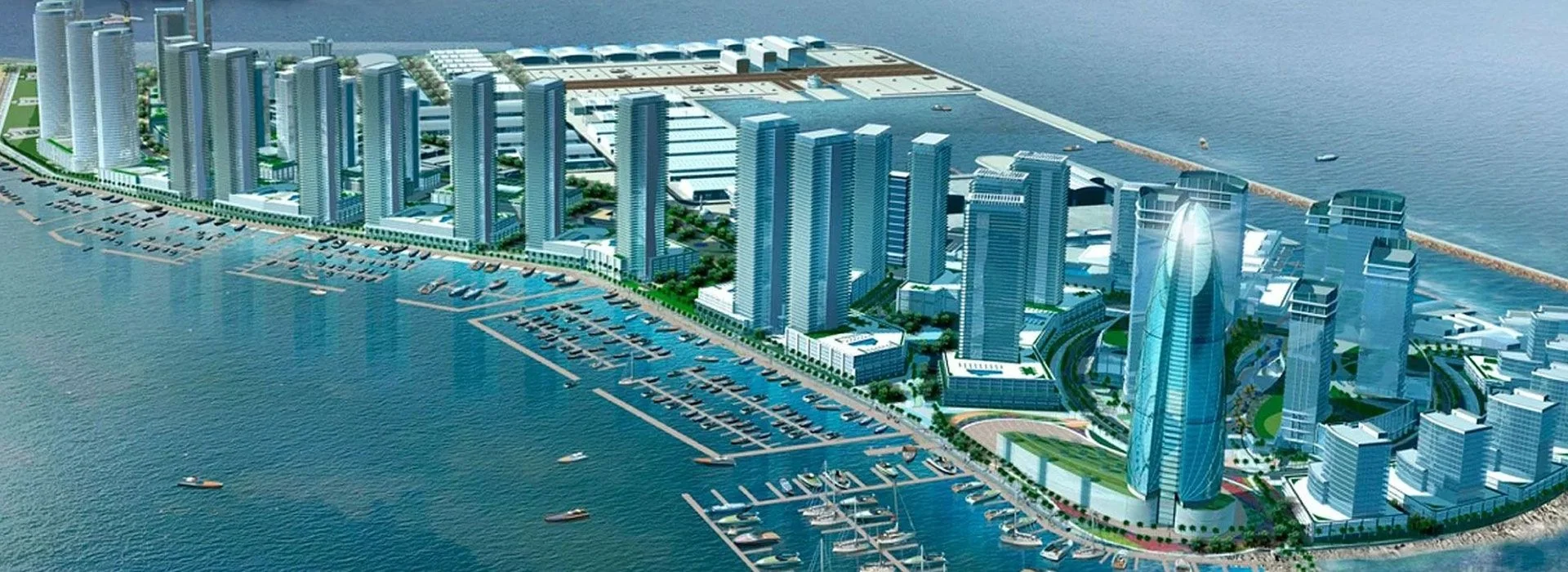
Dubai International Financial Centre has awarded the main construction contract for DIFC Heights, an AED 3 billion (about USD 817 million) tower on the last remaining plot in the original DIFC masterplan. The scheme will deliver 366 luxury residences alongside premium offices, with completion targeted for 2029.
The contract award is the meaningful part of that sentence. Launches are announcements; a main contract award is the point at which a project stops being a rendering and starts being a construction programme with a contractor, a scope and a liability. That distinction is worth more to a buyer than any adjective in the brochure. What follows is what has actually been confirmed, what the "final plot" framing is genuinely worth, and what you still cannot know — which, at this stage, is most of what determines whether a purchase here works. Comparable stock across the city is on the off plan Dubai projects hub if you want to price this against alternatives.
What has actually been confirmed
Keep the confirmed facts separate from the narrative built around them. Confirmed: the main construction contract is awarded; the development value is AED 3 billion, roughly USD 817 million; it sits on the last remaining plot within the original DIFC masterplan; it comprises 366 luxury residences plus premium office space; completion is targeted for 2029.
Everything else — unit mix, layouts, price per square foot, payment plan, release phasing, finish specification, amenity list — is either unannounced or subject to change. That is normal for this stage, and it is precisely why the correct posture is interest rather than commitment. You cannot underwrite a purchase against a development value. You underwrite against a price, a plan and a floor plate.
Why the contract award matters more than the launch
Between announcement and contract award, a project can be quietly reworked, rescoped or shelved. After award, a contractor is mobilising, a programme exists, and the developer has committed real money to a third party. It is not a guarantee of the 2029 date — construction is construction — but it materially shortens the odds compared with a scheme that exists only as marketing. When you compare this to other launches, that is the specific thing to check on each of them.
The "last plot" claim, honestly assessed
Scarcity is the central argument in this launch, so it deserves scrutiny rather than repetition.
What the claim genuinely means
Within the boundary of the original DIFC masterplan, this is the last ground-up development site. That is a real constraint, and it has a real consequence: once this tower completes, the only way to buy a new-build home or office inside that boundary is from someone who bought here first. For a district whose value rests on a specific legal framework and a specific concentration of institutions, being inside the boundary is not a marketing distinction. It is the product.
What the claim does not mean
It does not mean supply stops. Masterplans have edges, and land adjacent to a successful district gets developed and marketed on the strength of its neighbour. Buildings within the district also come to market through resale, and existing towers can be refurbished and repositioned. So the honest version is narrower than the headline: this is the last new construction inside a defined line, not the last competing product a future buyer or tenant will be able to choose from.
The other half of the honest version is that scarcity you can read in a press release is scarcity that is already in the price. Nobody is going to sell you the final plot in DIFC at a discount for being early. Scarcity supports value on exit; it does not create a bargain on entry. Both statements are true simultaneously and buyers routinely hear only the first.
366 residences and premium offices in one tower
The mixed-use format is the second defining feature, and it has real trade-offs that a rendering will never show you.
What the format does well
For an executive working in the district, the commute becomes a lift ride. That has genuine value and it supports a rent that a comparable unit elsewhere would not achieve, because the buyer is paying for time as much as space. Mixed-use towers also tend to justify better amenity and management standards, since the commercial floors demand a level of building service that residential alone might not fund.
What the format costs
Two populations share one building. Offices generate weekday footfall, deliveries, visitors and lift demand in concentrated bursts; residents want quiet and lift availability at exactly the times office traffic peaks. Well-designed towers separate the cores, the lobbies and the parking so the two never collide. Badly designed ones do not, and you cannot tell which you have from a marketing floor plan. When information is released, look for separated residential cores and lift banks, a distinct residential entrance and drop-off, and how the parking is split. These are the details that determine whether living here is pleasant or merely prestigious.
Who this stock is for
366 residences in this location is a small pool aimed at a specific buyer: professionals working in or around the financial district, and investors letting to them. That is a narrow, high-income, reliable tenant base. Narrow is the operative word — it is stable while the district is healthy, and it does not have the depth of a mainstream community if you need to exit or re-let quickly. It is a different risk shape from a mass-market building in Business Bay or Downtown Dubai, and the adjacent-district comparison is a fair one to run: our guide to off-plan property in Downtown Dubai covers how that market prices.
A 2029 completion is a long carry
The completion target is several years out, and that horizon is a decision variable, not a footnote.
What a long build does to your money
Your capital is committed and producing nothing for the duration. There is no rent, no tax relief and no use of the asset — just instalments and opportunity cost. Off-plan buyers accept this in exchange for pre-completion pricing and the option value of a market that may be higher on delivery. That trade can be good. It is not free, and the longer the build, the more of the return has to come from appreciation rather than income.
The payment plan is what makes or breaks the arithmetic on a build this long. A plan weighted to construction milestones spreads the pain; one weighted to the front end ties up your equity early for no return. When the plan is published, that is the number to model, not the price per square foot.
Delivery risk on a landmark
A prestige tower in a flagship district has strong reputational incentives behind delivery, and the contract award reduces the risk further. But a multi-year build is exposed to the ordinary hazards — contractor performance, supply chains, sequencing — and dates slip on good projects. Your protection is structural rather than promissory: instalments sit in a project escrow account and are released against milestones certified by an engineer, so your money moves as the building moves. Understand that mechanism before you sign, and understand its limit: it governs how funds are released, not whether the market is where you hoped in 2029.
What buyers still do not know
The list is longer than the list of confirmed facts, and it contains everything that determines the outcome.
- Price. No price per square foot has been established publicly, and the entire investment case turns on it. A development value tells you what it costs to build, not what it costs to buy.
- Payment plan. The structure determines your cash flow for years and materially changes the effective price.
- Unit mix and floor plates. 366 residences could be predominantly compact units or predominantly large ones. These are entirely different products with different tenants and different exits.
- Release phasing. Which units come first, and on what terms, decides whether early buyers get the better stock or simply the earlier risk.
- Levels and orientation. In a tall tower with a mixed programme, the difference between the best and worst unit at the same price per square foot is large.
Until those land, the rational move is to register interest, do the reading, and hold your position. Meanwhile the current new launches and the full projects list give you the comparison set you will need the day pricing appears.
Buying from abroad: what else changes
For international buyers, a purchase of this size interacts with more than the property market. Qualifying property investment can support an application for long-term UAE residency, which for many buyers is part of the reason the cheque gets written at all; the thresholds and the mechanics are set out in our Golden Visa through property guide. Note that off-plan purchases have their own conditions on that route, so it is a question to settle before you commit rather than after.
The other thing to plan early is the end of the process, not the start. Handover on a tower like this involves inspection, snagging and a defects-liability period, and it is where the difference between a well-built and a hurried building becomes visible. Our walkthrough of the snagging and handover process covers what to inspect and when — worth reading years before you need it, because knowing what handover involves changes what you look for in the contract today.
The bottom line
DIFC Heights is a credible project in a district with a proven track record, and the contract award moves it from proposal to programme. The scarcity argument is real within its boundary and overstated outside it. The mixed-use format has genuine advantages and design risks you cannot yet evaluate. The 2029 horizon is long enough that the payment plan matters as much as the price.
None of that adds up to a buy or a pass, because the number that decides it has not been published. Do the work now — the district, the format, the horizon, the residency angle — so that when pricing appears you are evaluating it rather than reacting to it. In a launch where scarcity is the sales pitch, being the calmest buyer in the room is the whole advantage.
Frequently Asked Questions
When will DIFC Heights be completed? Completion is targeted for 2029. The main construction contract has been awarded, which means the project has moved from planning into delivery, but multi-year builds are exposed to ordinary construction risk and dates can move.
How many apartments are in DIFC Heights? The tower will deliver 366 luxury residences alongside premium office space, in a total development valued at AED 3 billion (about USD 817 million). The unit mix, layouts and floor plates have not been published.
Is DIFC Heights really the last development in DIFC? It is being built on the last remaining plot within the original DIFC masterplan, so it is the final ground-up development inside that boundary. That does not stop adjacent land being developed, or existing DIFC buildings being resold and repositioned.
How much do DIFC Heights apartments cost? No pricing has been published. The AED 3 billion figure is the total development value, which reflects what the project costs to build rather than what a unit will cost to buy. Price per square foot and the payment plan are the two figures a buyer needs and neither is available yet.
Can buying in DIFC Heights get me a UAE Golden Visa? Qualifying property investment in Dubai can support a Golden Visa application, and residency is a common reason international buyers commit at this level. Off-plan purchases carry specific conditions on that route, so confirm eligibility for the exact purchase structure before you sign.