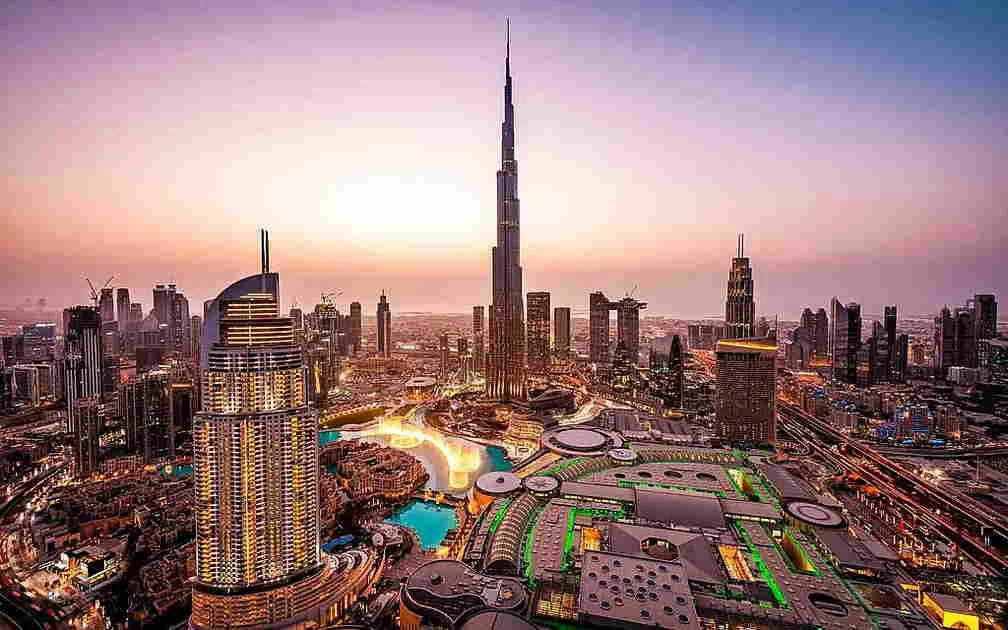
The Roads and Transport Authority is building the Dubai Metro Blue Line, the network's largest expansion since the system opened in 2009. According to the RTA and widely reported coverage, the line is scheduled to begin operations on 9 September 2029, timed to coincide with Dubai Metro's twentieth anniversary. Reported investment figures for the project have ranged around AED 18–20 billion.
For an off-plan buyer, the route is the story. Metro connectivity has historically been one of the more reliable supports for long-term rental demand and resale value in Dubai, and the Blue Line reaches districts the Red and Green Lines never did. But a station announced in advance is a strange asset to price: the market starts charging for it years before anyone rides it. This guide covers where the line goes, the mechanism by which rail access actually moves a property's income, which communities are worth watching, and how to underwrite a station that does not yet exist. Live stock across these districts sits on our off plan Dubai projects hub.
The route: 14 stations across eastern Dubai
The Blue Line is a roughly 30-kilometre corridor with 14 stations, split between elevated and underground sections. It is designed as a Y-shaped network with two branches serving communities the existing lines do not reach. Based on RTA plans and reporting by Gulf News and other outlets, the line connects a string of fast-growing eastern districts.
The districts on the line
- Dubai Creek Harbour — served by the Emaar Properties station, reported to be designed as one of the tallest metro stations in the world.
- Dubai Festival City and the Ras Al Khor area — an established waterfront and retail cluster gaining a direct rail link.
- International City, with International City 1 planned as a major underground interchange.
- Dubai Silicon Oasis and Dubai Academic City — a tech and education corridor historically underserved by rail.
- Mirdif, Al Warqa and Al Rashidiya, linking to the Red Line at the Centrepoint interchange.
Why the interchanges matter more than the stations
A station on a single line gives you access to that line. An interchange gives you access to the network. The Centrepoint connection to the Red Line is the piece that converts the Blue Line from a local corridor into a genuine cross-city route, tightening travel times across the eastern half of the city and improving access toward Dubai International Airport via that Red Line connection. International City 1 is planned as a major underground interchange, which is a different kind of value: it makes a district that has always been priced as peripheral into a place you can leave quickly.
When you are comparing two off-plan projects on the same line, the one nearer an interchange is buying a larger share of the network than the one nearer a terminus. That is not a marketing distinction. It is the difference in how many jobs a tenant can reach without a car.
What "Y-shaped with two branches" means for you
A branched line splits frequency. Two branches sharing a trunk means each branch typically sees fewer trains per hour than the trunk does, which affects wait times and therefore the practical commute — the thing a tenant actually experiences. It does not undo the benefit; it moderates it. Treat a branch station as good connectivity rather than the best connectivity on the network, and price accordingly.
Why metro access moves off-plan values
The mechanism is worth stating precisely, because "metro is good for property" is a slogan and slogans get overpaid for.
It widens the tenant pool
A station enlarges the set of people who could plausibly rent your unit. End-users who commute, and tenants without cars, place a real premium on walkable transit — for them it is the difference between an affordable life and an unaffordable one. A wider pool shortens void periods and gives you pricing power at renewal. Void is the silent killer of a rental return: a unit empty for two months has surrendered roughly a sixth of its annual income, more damage than most service-charge arguments are worth. Depth of demand is invisible when things go well and decisive when they do not.
It gets priced in before the trains run
When a station is confirmed years ahead of completion, as with the Blue Line, that expectation is often priced into off-plan launches well before anyone rides it. This is the central tension for a buyer. The upside is real, but you may be buying it from a seller who has already collected part of it. The question to ask about any launch marketed on Blue Line proximity is not "will the station help?" but "how much of the help is already in the asking price?" If the premium over an equivalent unit two kilometres away already equals what you think the station is worth, the trade has been done and you are the exit, not the entry.
Where the value actually lands
Rail access rewards walkability, and walkability decays fast. A unit you can walk to the station from in five minutes, in August, is a different asset from one that is technically 1.5 kilometres away and requires a car to reach the train — which defeats the purpose. When you evaluate a project, measure the walk in shade and heat, not on a map. The premium concentrates in the first few hundred metres and thins out quickly beyond that.
Communities to watch
Dubai Creek Harbour
Emaar's waterfront masterplan is already a flagship off-plan destination, and a landmark Blue Line station on its doorstep strengthens a connectivity story that was previously its weakest point. Creek Harbour has always sold on the water, the towers and the masterplan; what it lacked was a fast, car-free route into the rest of the city. The station addresses that. Explore listings in the Dubai Creek Harbour area guide, and read our guide to Emaar's master communities for how the developer sequences a masterplan of this size.
International City
One of Dubai's most affordable rental districts, set to gain what the RTA describes as a major underground interchange. This is arguably the most interesting case on the line, because the gap between the district's current pricing and its future connectivity is the widest. Improved transit could reshape demand across the district's phases. It could also do less than the optimists expect, because affordability, building stock and community amenity are separate variables from rail access and a station does not upgrade any of them.
Dubai Silicon Oasis and Academic City
A tech and residential hub next to Academic City, historically underserved by rail, and one where the tenant profile — students, staff, younger professionals — maps unusually well onto transit demand. These are the tenants most likely to choose not to own a car, which is exactly the demand a station creates.
Dubai Festival City, Mirdif and Al Rashidiya
Established communities with existing retail and hospitality anchors, gaining direct rail. The value case here is different from a new masterplan: there is no supply wave to absorb and no community to wait for. What changes is access. That tends to show up as a firmer floor under existing values rather than a dramatic repricing.
How to underwrite a station that does not exist yet
Match your hold period to the timeline
The line targets operations in 2029. If your plan is to flip before handover, the station is a marketing line on your resale brochure, not a rent you will ever collect — and the next buyer knows it too. If your plan is to hold and let, the station is a real input, but only from the year it opens. Be honest about which investor you are. Our comparison of off-plan versus ready property works through how hold period changes the maths.
Underwrite the community as it is today
The safest way to buy near a planned station is to buy something that works without it. If the rental demand, the developer's record, the service charges and the payment plan all stand on their own merits at today's rents, the station is upside. If the deal only works once the trains run, you are underwriting a construction schedule rather than a property. Use our ROI framework on today's numbers first, and add the station second.
Expect the construction years to be noisy
Between now and opening, the corridor is a worksite. Road diversions, hoarding and noise are the near-term reality for units close to the alignment, and a tenant living through that discounts for it. The premium arrives at the end of the disruption, not at the start of it. That gap is a cost, and it belongs in your model.
What buyers should keep in mind
Infrastructure timelines can shift, and the 2029 target is subject to construction progress. Treat the opening date as a reported target rather than a fixed promise. Station locations and interchange designs reported today are plans, and plans get revised — a station moving several hundred metres is a rounding error to a network and a material change to a specific building's walk time.
That said, the Blue Line is a genuine, government-backed project already under construction, not a speculative proposal. That distinction matters. Dubai's landscape is full of announcements; this one has a contractor and a budget. For buyers weighing eastern-Dubai communities, it is a meaningful addition to the investment case — provided the fundamentals underneath it hold up on their own. Focus on the strength of the masterplan, the developer's track record, the service charges and the realistic rental demand in the area today. Then browse current launches across these districts on the off-plan projects page or check what has come to market recently under new launches.
Frequently Asked Questions
When does the Dubai Metro Blue Line open? The line is scheduled to begin operations on 9 September 2029, timed to coincide with Dubai Metro's twentieth anniversary. Treat that as a reported target rather than a guarantee — infrastructure timelines are subject to construction progress, and any date five years out carries schedule risk.
How many stations does the Blue Line have and where does it go? It is a roughly 30-kilometre corridor with 14 stations across elevated and underground sections, arranged as a Y-shaped network with two branches. It serves Dubai Creek Harbour, Dubai Festival City and Ras Al Khor, International City, Dubai Silicon Oasis and Academic City, and Mirdif, Al Warqa and Al Rashidiya, connecting to the Red Line at Centrepoint.
Will the Blue Line raise property prices in these communities? Metro access has historically supported rental demand and resale value in Dubai by widening the tenant pool, particularly among commuters and people without cars. But confirmed stations tend to be priced into off-plan launches years before the trains run, so the practical question is how much of that benefit is already in the asking price you are being quoted.
Should I buy off plan now to get ahead of the station? Only if the purchase works on today's fundamentals. Buying into a community during its off-plan phase ahead of a confirmed infrastructure upgrade is one way to position for the demand that follows once a station opens, but the outcome still depends on the developer, the payment plan and the wider market cycle. Nothing about a metro line is a guarantee.
Which Blue Line community has the most upside? International City has the widest gap between current pricing and future connectivity, since it is one of the city's most affordable rental districts and is set to gain a major underground interchange. Dubai Creek Harbour has the strongest masterplan behind it. Which is the better buy depends on whether you want the cheaper entry or the more established delivery record.
Does being near a station always add value? The premium concentrates in genuine walking distance and thins out quickly beyond it. A unit that is technically close but requires a car to reach the platform captures little of the benefit, because the tenant paying for transit access is the tenant who does not want to drive. Measure the walk in real conditions, not on a map.