Emaar Properties has announced the most ambitious development in its history: a new Dubai megaproject with an estimated value of AED 200 billion, or around US$54.5 billion. Unveiled on 11 June 2026, the master-planned district is designed as a self-sustaining city within a city that will eventually house nearly 150,000 residents. For anyone tracking off plan Dubai projects, it is the most consequential announcement in years, and the honest position for a buyer right now is that the headline is confirmed and almost everything actionable is not.
That gap matters. A masterplan announcement is not a sales launch. As of mid-June 2026 Emaar had not released prices, payment plans or an official launch date; the full unveiling was described as imminent. What follows is what is actually known, what the scale of the thing implies mechanically, and what a serious buyer should be doing in the window before the first phase opens rather than after it.
What Emaar has actually announced
The disclosed facts are the value, the footprint and the structure. Total value: AED 200 billion. Built-up area: more than 4.5 million square metres. Population target: close to 150,000 residents. Rather than a single tower or a cluster of them, it is a complete urban district, an integrated ecosystem combining homes, workplaces, retail, hospitality and culture in one place.
The five zones
The master plan is organised around five distinct zones, and the split tells you who Emaar expects to buy:
- A business district: offices and commercial space at the core.
- A vibrant urban area: high-density, walkable city living.
- A zone for young families, designed around schools, parks and community life.
- A community-focused family area of mid-density homes with green space.
- An exclusive luxury villa and palace enclave, Emaar's top-tier product.
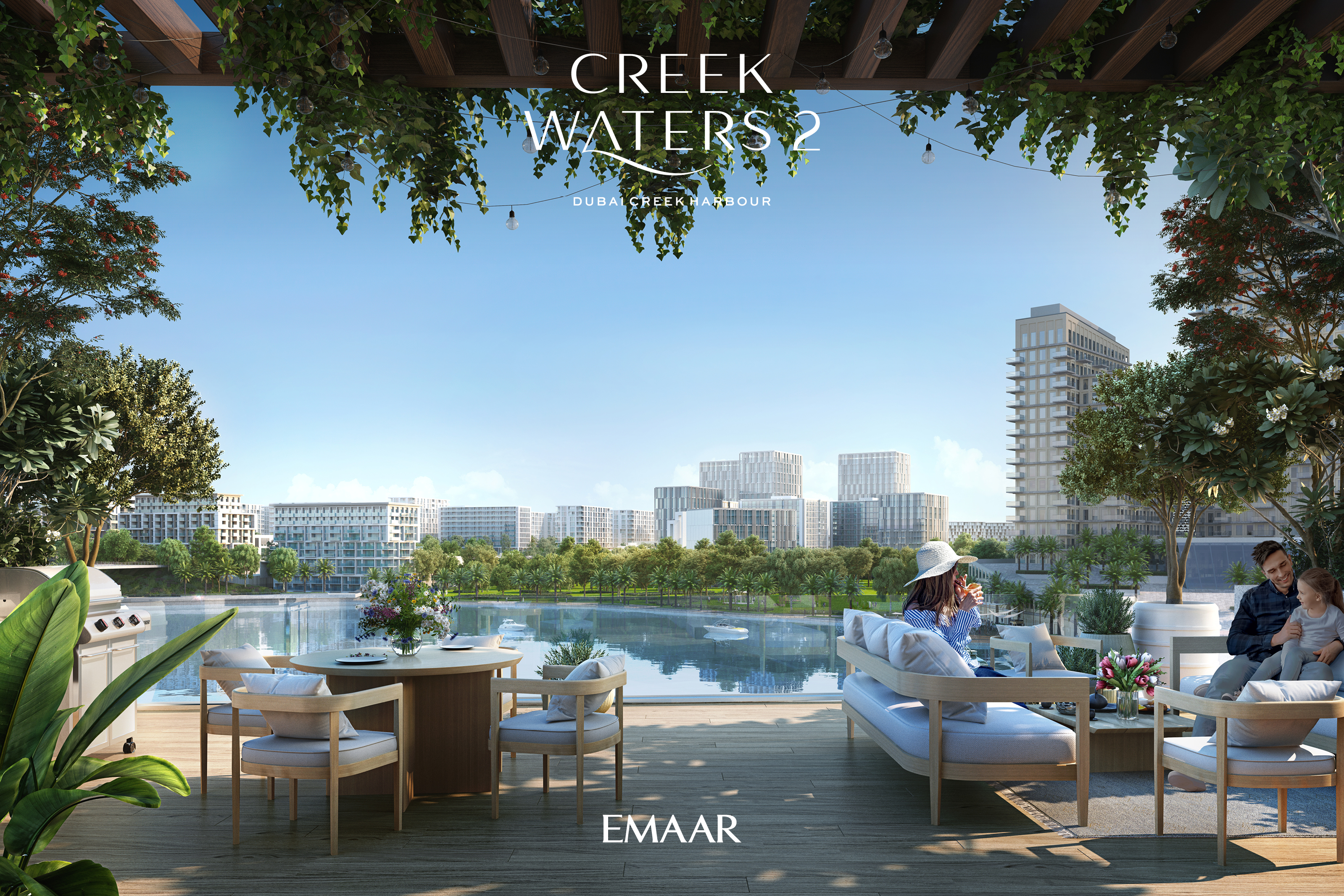
Across these zones the project blends luxury residential towers, villas and palaces with commercial offices, retail destinations, hotels and civic and cultural facilities, wrapped in the parks, lagoons, lakes and landscaped open space that define Emaar's recent communities.
Why a commercial core changes the investment logic
The presence of a business district at the centre is the detail most commentary skips. A residential masterplan depends on residents commuting out; a mixed-use one manufactures its own daytime population. That matters to a landlord because rental demand in a district with employment inside it is less dependent on the road network and less correlated with whichever neighbouring district is currently fashionable. It also front-loads the retail: cafes and services open earlier when there are desks to serve, not just bedrooms. Emaar has run this playbook before, and the outcomes are visible in Downtown and in Dubai Creek Harbour.
The man behind it: Mohamed Alabbar
Announcing the project, Emaar's founder put it in characteristically grand terms: "We have always been driven by a firm conviction that great cities are not built with stones, but with dreams." He described what Emaar is preparing to unveil as his most ambitious dream yet. To understand why a new Emaar masterplan is treated as market-moving rather than as marketing, you have to understand Mohamed Ali Alabbar.
From a dhow captain's son to city-builder
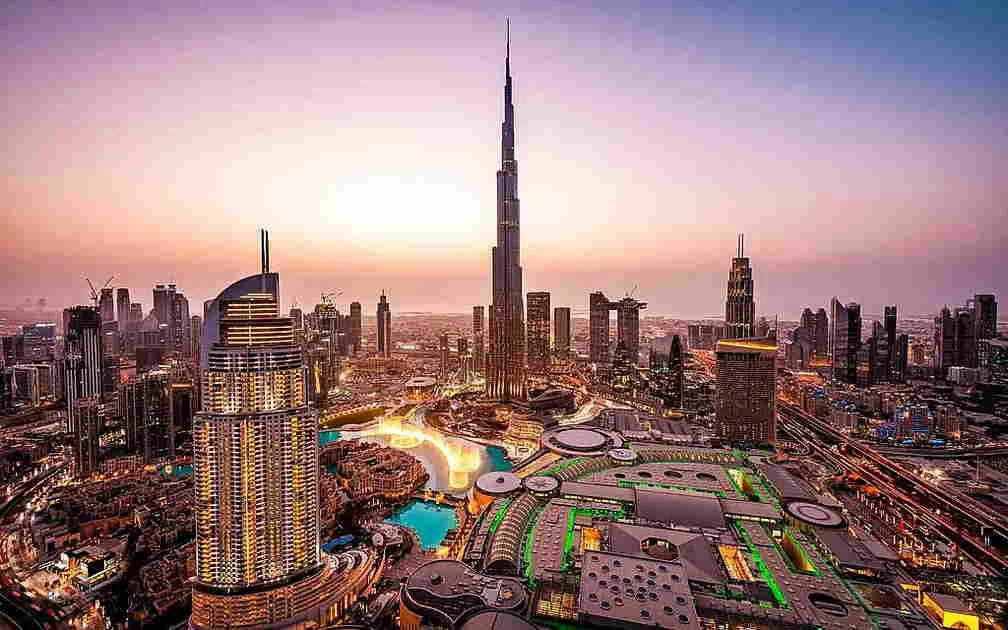
Born in Dubai in 1956, Alabbar's beginnings were humble: the eldest of twelve children, the son of a dhow captain who sailed the traditional trading vessels of the Gulf. A government scholarship took him to the United States, where he studied finance and business at Seattle University before returning home to play a central role in opening up Dubai's economy. In 1997 he founded Emaar Properties, and over the following decade he did not just build projects, he built the Dubai the world now recognises. Dubai Marina, announced in 2000, created an entirely new waterfront city. Downtown Dubai, launched in 2003, gave the emirate its heart, anchored by The Dubai Mall and the Burj Khalifa. Alabbar has long spoken of the square kilometre around the Burj as among the most prestigious in the world, and of the tower as proof that Dubai could achieve what once seemed impossible.
His reach extends beyond real estate: he founded Eagle Hills, the developer behind landmark projects across the Middle East, North Africa and Europe; he launched the e-commerce platform Noon.com; and he chairs the food giant Americana Group.
Why a founder's record is a risk metric, not a fan club
This is not hero worship, it is underwriting. In off-plan property the dominant risk is not that you overpay by five percent. It is that the building arrives late, arrives worse than the brochure, or does not arrive. Every other risk is recoverable; that one is not. Track record is the only evidence available before a project exists, and Alabbar's is the longest in the market. That does not make delivery certain. It makes the probability distribution narrower than it is for a first-time developer with a rendering and a plot. If you want the wider portfolio view, our Emaar master communities guide covers how the company's completed districts have actually performed.
What it means for off-plan buyers
First-phase pricing and how the mechanism works
The opening release of a major Emaar masterplan is typically the lowest entry point in the project's life, and the reason is structural rather than generous. At launch, the developer is selling a plan, an address that does not exist and infrastructure that has not been poured. Buyers are compensated for that uncertainty with price. As each phase completes, roads open and the first residents move in, the uncertainty discount shrinks, and later phases are released at higher prices against the same masterplan. Early buyers in Downtown, Dubai Marina and Dubai Creek Harbour captured meaningful appreciation as later phases launched above them.
Where that mechanism fails
It fails when the discount was never really there. In a hot market, launch prices can already embed the expected appreciation, so the "early" buyer is paying tomorrow's price today and waiting years to break even. It also fails when a masterplan is released too quickly: if phase two lands six months after phase one at a similar price, there is no escalation to capture. And it fails on exit, because selling before handover requires the developer's approval and a minimum share of the price paid. The mechanics of that are covered in our guide to reselling off-plan units before completion. Assume you may have to hold to handover, and the plan still has to work.
The market this lands in
Context matters for how fast phases will move. Dubai sales hit AED 176.7 billion in Q1 2026, with off-plan running at roughly 74% of all transactions. A market where three in four deals are off-plan is a market where launch-day allocation, not price negotiation, is the scarce resource. Strong demand tends to mean faster phase sell-outs and steeper escalation between releases, which is good for the person already in and expensive for the person deciding.
It cuts the other way too. Demand at that level is a sentiment measure, and sentiment is the least durable input in any property model. A district delivering into the late 2020s and 2030s will meet at least one softer cycle before it matures. That is not a reason to avoid it; it is a reason to buy on economics you can defend at a lower price, not on the assumption that the current run rate continues.
Risks worth naming before the launch
- No published numbers. Without prices, payment plans or a handover schedule, nobody can model a return on this project yet. Anyone quoting you one is guessing.
- Long build horizon. A 4.5 million square metre district is delivered over many years. Early phases live on a construction site, and the amenity render arrives last.
- Zone selection dominates. A luxury palace enclave and a mid-density family area are different asset classes with different buyers and different liquidity. The masterplan name will not save a unit bought in the wrong zone for your objective.
- Escrow protects payments, not outcomes. Your instalments sit in a regulated escrow account released against certified construction milestones, which controls misuse of funds. It does not guarantee the price you paid.
How to be ready before the first phase opens
Launches of this profile allocate rather than sell. The work that decides whether you get a unit at the first-phase price happens before the price exists.
- Decide the zone and the product first. Yield-focused apartment in the urban core, or family villa in the low-density enclave? These are different decisions with different exits.
- Have funds positioned. Booking deposits on first-phase Emaar releases move in days, not weeks. Money in transit is money that missed.
- Know your total cost, not the price. The 4% DLD fee plus registration and trustee charges sit on top; our DLD fees and transaction costs guide lists the full checklist.
- Understand the paperwork. Off-plan ownership is recorded through Oqood before a title deed exists. Read the Oqood registration guide so the SPA is not the first time you see it.
In the meantime, the sensible comparison set is what is already selling. Browse current new launches and the live Emaar project list, and use them to calibrate what a first-phase price in this masterplan should look like when it finally lands.
Frequently Asked Questions
What is Emaar's AED 200 billion project? It is a new Dubai masterplan announced on 11 June 2026, Emaar's most ambitious to date. With a built-up area of more than 4.5 million square metres, it is designed as a self-sustaining city within a city for nearly 150,000 residents, organised across five zones covering business, high-density urban living, two family tiers and a luxury villa and palace enclave.
Who is Mohamed Alabbar? Mohamed Alabbar is the founder and chairman of Emaar Properties. Born in Dubai in 1956, he is the developer behind the Burj Khalifa, The Dubai Mall, Downtown Dubai and Dubai Marina, and is widely regarded as the architect of modern Dubai. He also founded Eagle Hills and Noon.com and chairs Americana Group.
When does the project launch and what are the prices? As of mid-June 2026, Emaar had not released official prices, payment plans or a launch date, and the full unveiling was described as imminent. Any specific price circulating before Emaar publishes one is speculation, and should be treated that way.
Can foreign investors buy in the new development? Emaar's Dubai masterplans are sold on a freehold basis to buyers of any nationality, with no residency requirement to purchase, and there is no indication this project differs. Confirm the freehold designation in the SPA for the specific unit rather than relying on the masterplan's general status.
Is buying in the first phase always cheaper? Usually, but not automatically. First-phase pricing reflects a discount for uncertainty that narrows as the district gets built. In an already-hot market that discount can be thin, and if later phases release quickly at similar prices there is no escalation to capture. Judge the launch price against comparable Emaar communities, not against the promise of a future one.
How long until handover on a district this size? Emaar has not published a schedule. Mechanically, a 4.5 million square metre mixed-use district is delivered in phases over many years, with the first residential releases handing over well before the retail, civic and cultural components are complete. Budget for the possibility of living in or letting a home on an active construction site for a period after handover.