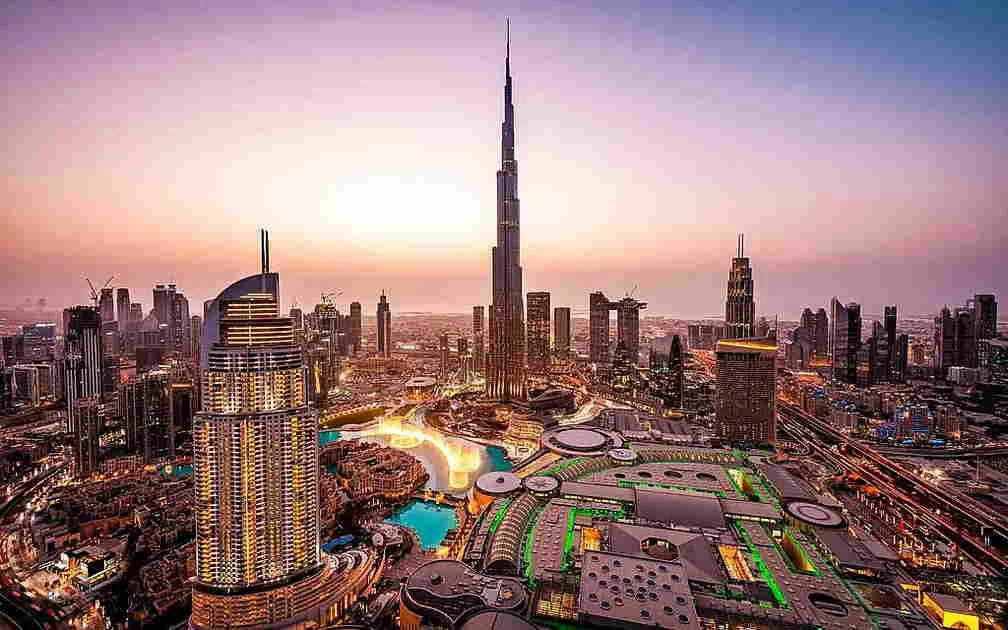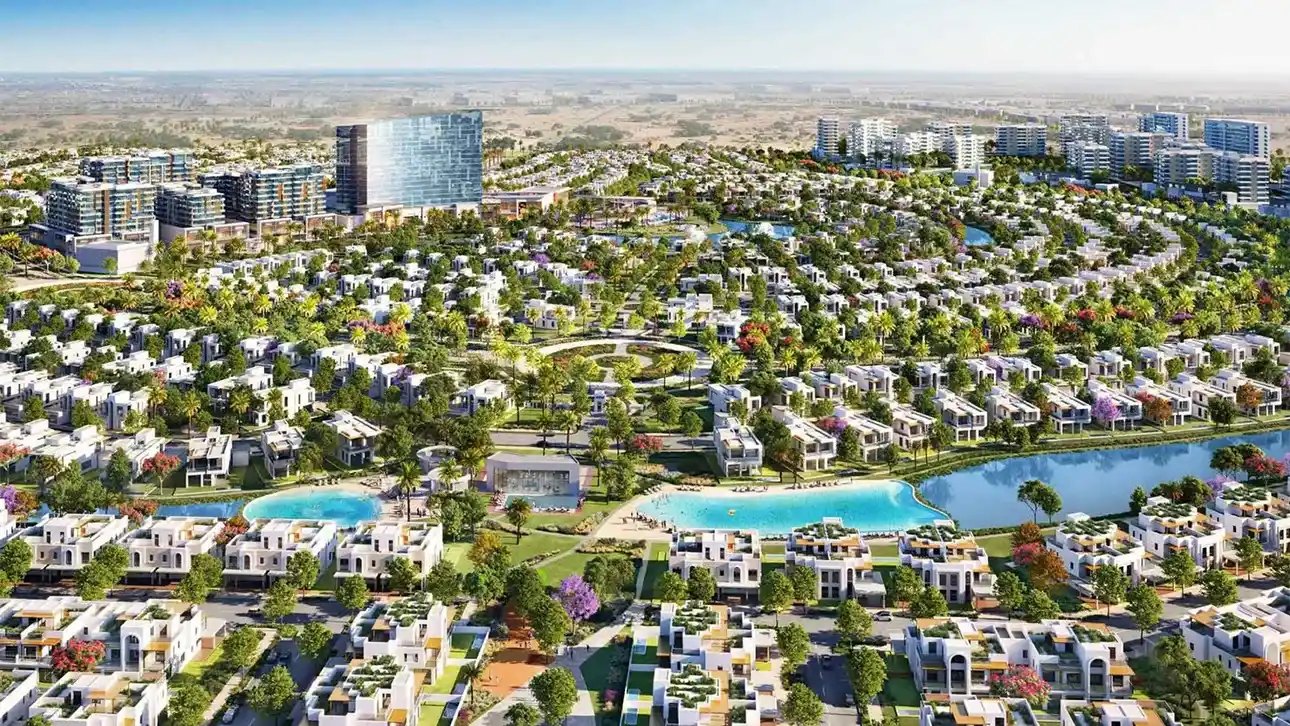
Emaar is the default answer to a question most off-plan buyers are really asking: who is most likely to actually finish this building? The company built the Burj Khalifa and the Dubai Mall, and it master-planned entire districts — Downtown Dubai, Dubai Hills Estate, Dubai Creek Harbour — that are now functioning neighbourhoods with schools, malls, roads and tenants. For a buyer paying in instalments for something that does not yet exist, that record is the product.
This guide is about what you are buying when you buy Emaar off plan in 2026: how a master community actually creates value, what the payment plans do to your cash flow, what the delivery premium costs you in yield, and where the real risks sit. Emaar is not a risk-free trade, and a page that pretends otherwise is not worth reading before you commit AED 1.5m or more. You can browse off plan Dubai projects across developers alongside this, or go straight to the Emaar developer page to see live inventory.
Why Emaar is treated as the blue-chip developer
"Blue-chip" gets used loosely in Dubai marketing. With Emaar it points at three specific, observable mechanisms rather than a reputation.
Delivery history is the best available predictor of delivery
Off-plan risk is, at its core, completion risk. Every other worry — a soft rental market, a service charge surprise, a view that gets built out — is survivable if the building gets finished. Emaar has handed over tens of thousands of homes across Dubai and has completed large, complex, multi-phase communities repeatedly. That pattern does not guarantee the next tower, but it is the strongest evidence a buyer can get, because the alternative is a developer's promise with nothing behind it.
This matters most for buyers who cannot easily absorb a delay. A two-year slip on a unit you planned to rent out from handover is not a rounding error: it is two years of no income against instalments you still owe. Paying a premium to reduce the probability of that outcome is a rational trade, not sentiment. Our guide to whether off-plan property is safe in Dubai sets out what the regulatory protections do and do not cover.
The master community, not the tower, does the work
Emaar's real differentiator is that it does not sell isolated buildings into someone else's neighbourhood. It plans the district: the road network, the park, the retail spine, the school plots, the mall. When you buy an apartment in a half-built Emaar community, you are betting that Emaar will build the surrounding amenity because it owns the surrounding land and has already sold future phases against the promise of it. Its commercial interest is aligned with yours.
Compare that with a single tower launched on a plot inside a district nobody controls. The tower may be excellent, but its value depends on decisions the developer cannot make. That structural difference is why Emaar communities tend to fill in rather than stall half-formed.
Resale liquidity is a feature you only notice at exit
Brokers can sell an Emaar address in a phone call. Buyers recognise the name, banks lend against it comfortably, and the secondary market for the popular communities is deep. That liquidity is invisible while you hold, and decisive when you sell into a soft market — it is the difference between a small discount and taking whatever is offered.
The flagship master communities and what each is for
Emaar's communities are not interchangeable. They serve different buyers, and buying the wrong one for your objective is the most common mistake in this segment.
Downtown Dubai — the trophy asset
Downtown is the prestige core: Burj Khalifa, Dubai Mall, the fountain. It carries premium rents, permanent global recognition and the deepest liquidity of any Dubai address. What it does not carry is a high yield percentage, because the denominator is large. Buy here for capital resilience, for a short-let-capable unit, or because you want the address. Do not buy here expecting the income ratio of a value community. The district's economics are unusual in one respect worth knowing: Downtown supports both long-let and short-stay demand, so a unit here carries optionality that a purely residential community does not, and that optionality is part of what the price reflects.
Dubai Creek Harbour — the growth play with a waiting cost
Creek Harbour is a waterfront master community still filling in. The bet is straightforward: values and rents rise as retail, schools and transport arrive. So is the risk. You may take handover of a finished apartment in a district that is still partly a construction site, and rent it at a level well below what the launch brochure implied, for a year or two, while the neighbourhood catches up with your tower. Buyers who understand this and can carry the unit have historically done well. Buyers who assumed the community would be complete on the day their keys arrived have not.
Dubai Hills Estate — the family end-user community
Dubai Hills Estate is built around a golf course and its own mall, and it attracts affluent families who intend to live there. End-user demand is structurally less cyclical than investor demand, because a family choosing a school district does not exit when sentiment turns. That is the source of the community's steadiness. The trade-off is that you are competing with people buying a home rather than a spreadsheet, so entry pricing reflects lifestyle value you may not monetise in rent. A family will pay for proximity to a school and a park in a way that shows up in the purchase price long before it shows up in the rent roll.
Emaar Beachfront and Dubai Marina — waterfront and mature rental
Emaar Beachfront is a gated island setting between the Marina and the Palm: scarce, view-led, and priced accordingly. Dubai Marina is the opposite profile — a mature, fully-built, permanently in-demand rental market where you are buying into proven cash flow rather than a forecast. Marina rarely surprises anyone in either direction, which is precisely its appeal to income buyers.
How Emaar payment plans affect your cash
Emaar typically uses structured plans on its launches, frequently an 80/20 — 80% paid during construction, 20% on handover — on flagship projects. Some projects carry a post-handover component. The structure looks like a detail and behaves like the main term of the deal.
What a construction-weighted plan actually demands
An 80/20 front-loads your money. You are paying the large majority of the price before the asset produces a single dirham of rent, funded entirely from savings or income. That is a real cost even though nobody invoices you for it: your capital is deployed and idle for the whole build period.
The reason Emaar can ask for it is demand. A developer with a queue does not need to finance your purchase. Developers with softer books offer gentler, longer, post-handover-weighted schedules to attract buyers — which is a signal worth reading rather than simply a better deal. Our payment plans hub compares the structures, and post-handover plans explained covers what happens when instalments continue after you have the keys.
Where your instalments go
Your payments do not go to Emaar's general account. They go into a project escrow account, and are released against construction milestones certified by an engineer. This is why an off-plan developer cannot simply take deposits and walk: the money is ring-fenced to the specific project and unlocked by verified progress. It is the single most important protection in the system, and it is worth understanding its limit precisely: escrow governs where your money goes, not how fast the building rises. It protects you against misappropriation. It does not protect you against delay, and no mechanism does.
Your ownership before the building exists
Between signing and handover you hold an interim registration recorded through Oqood, not a title deed. It is a real, registered, tradeable interest — it is what lets you assign the unit to another buyer before completion, subject to the developer's minimum-payment threshold and an NOC. Do not assume you can flip freely: the threshold is set in your SPA, it varies by developer and project, and it is the thing that decides whether an early exit is available to you at all.
The premium: what Emaar costs you
Be direct about this. You generally pay more per square foot with Emaar than with a lesser-known developer offering a comparable unit in a comparable location, and you generally accept a lower gross yield. Dubai's residential gross yields commonly sit in a 6–8% band; Emaar's premium communities sit toward the lower end of it.
What you buy for that premium is a lower probability of the bad outcomes: non-delivery, a community that never gets its amenity, an address nobody has heard of when you try to sell. Whether that is worth it depends entirely on your objective. A yield-first investor with a tight budget and the appetite to underwrite a smaller developer may do better elsewhere. An investor who needs the unit to exist, complete, and resell without a story attached is buying exactly the right thing.
It is also worth being honest that "Emaar" is not a uniform guarantee of return. A poorly-chosen unit in a strong community — bad floor plan, blocked outlook, wrong phase — will underperform a well-chosen unit from a mid-tier name. The developer reduces completion risk. It does not choose your apartment for you.
Who Emaar suits, and who it does not
- First-time Dubai buyers who want the completion-risk variable removed while they learn the market.
- Capital-preservation buyers who care more about what the asset is worth in ten years than what it yields next year.
- Growth buyers willing to hold through a community's fill-in period at Creek Harbour or a comparable emerging district.
- Golden Visa buyers, since many Emaar units clear the AED 2m threshold comfortably. Confirm the price of your actual unit against it rather than the project's headline entry price.
- Not for yield-maximising investors on a tight budget, who will find higher gross percentages in value communities from developers who price to compete.
How to buy an Emaar off-plan unit
The mechanics
- Choose the community and the specific unit — phase, floor, outlook and layout, not just the project name.
- Reserve with a booking deposit and a reservation form.
- Pay the first instalment plus the 4% DLD fee.
- Sign the SPA, which fixes price, payment schedule and handover date.
- Pay instalments through construction into the project escrow account.
- Snag, settle the final payment and take handover.
Foreign nationals can buy Emaar freehold without residency. The 4% DLD fee is the one government charge that materially matters at purchase — see DLD fees and transaction costs for the full list, and the snagging and handover process for the stage where a strong developer earns its premium.
Launch access is the part nobody explains
Emaar's popular launches are frequently allocated rather than sold openly, with brokers holding allocations and the best inventory moving on day one. Practically, this means the price is not the only variable you are competing on — access is. Being registered and ready with your funds before a launch date is what determines whether you get the floor and outlook you wanted or the leftovers. Watching new launches ahead of release is not optional if you care which unit you end up with.
How Emaar compares with the other major names
Every major Dubai developer has a distinct character, and the comparison is more useful than a ranking. DAMAC leans into branded, design-led product with flexible payment plans. Sobha competes primarily on in-house build quality and finish, which is a genuinely different proposition — see the Sobha build-quality guide. Nakheel owns some of the most distinctive land in the city.
Emaar's edge is the combination rather than any single category: proven delivery, master-community control, prestige locations and resale liquidity together. You will rarely get the lowest entry price or the most aggressive post-handover plan from Emaar. You are not supposed to. That is what the premium is.
Frequently Asked Questions
Is Emaar a good developer to buy off-plan from? For buyers whose main concern is completion risk, it is about as strong as the Dubai market offers: a long record of delivering large, complex communities, master-plan control over the surrounding district, and deep resale liquidity. That does not make any individual unit a good investment — a poor floor plan or a blocked view underperforms regardless of the name on the hoarding.
What payment plan does Emaar usually offer? Emaar typically uses structured plans on its launches, frequently an 80/20 on flagship projects — 80% during construction, 20% on handover — with post-handover components on some projects. Plans vary by project and phase, so read the SPA schedule rather than assuming the standard.
Do I pay more for an Emaar property than for a comparable unit elsewhere? Generally yes, on a per-square-foot basis, and you usually accept a gross yield toward the lower end of the market's range. What that premium buys is a lower probability of delivery failure, an amenitised community and an address that resells without explanation.
Can I sell an Emaar off-plan unit before handover? Yes, subject to the developer's minimum-payment threshold and an NOC. Emaar sets a share of the price that must be paid before it will approve an assignment, and the transfer is recorded through the Oqood system. Check the threshold in your SPA before you plan an exit around it.
Can I buy Emaar off-plan without living in the UAE? Yes. Freehold ownership in designated zones is open to foreign nationals with no residency requirement, and much of the reservation and signing process can be handled remotely, with funds transferred into the project escrow account.
Which Emaar community should I buy in? It depends on the objective, not the ranking. Downtown for prestige and liquidity, Dubai Hills Estate for end-user family demand, Creek Harbour for growth if you can carry the fill-in period, Marina and Emaar Beachfront for waterfront and proven rental depth. Decide what the money is for first, then let that choose the community — buyers who reverse the order end up owning a fine asset that does the wrong job.