If you are exploring off-plan property in Dubai, one name comes up more than any other. Emaar Properties built the Burj Khalifa and a string of the city's best-known communities, and for a large share of international buyers it is the default answer before they have compared anything. That default is worth examining, because it is priced in.
This guide is not a brochure. It covers who Emaar is, what its signature communities actually offer, how an Emaar off-plan purchase works mechanically, what the brand premium buys and what it does not, and when another developer is the better decision. You can see live stock on our Emaar developer page or browse off plan Dubai projects across every developer to compare.
Who Emaar Properties is
Founded in 1997 and publicly listed on the Dubai Financial Market, Emaar is one of the largest and most recognised real-estate developers in the UAE and the wider region. Over more than two and a half decades it has delivered tens of thousands of homes alongside landmark retail, hospitality and leisure destinations. Its portfolio runs from ultra-prime downtown apartments to family villa communities, which means a wide range of price points and lifestyles sit under one brand.
Two facts in that paragraph matter more than the rest. The listing matters because a publicly traded developer files accounts, answers to shareholders and is visible in a way a private one is not — you can form a view on its financial capacity to finish what it starts. The delivery history matters because off plan is fundamentally a bet on completion, and a long record of completing is the only evidence that exists on that question. Everything else in a developer's marketing is a claim. The delivery record is data.
The communities, and what each one is really selling
Emaar's reputation rests on master-planned communities that combine homes, parks, retail and amenities in one integrated destination. The distinction that matters when you buy is that Emaar controls the whole masterplan, not just the tower. That determines whether the park, the school and the retail actually arrive, which is the difference between a community and a cluster of buildings.
The established core
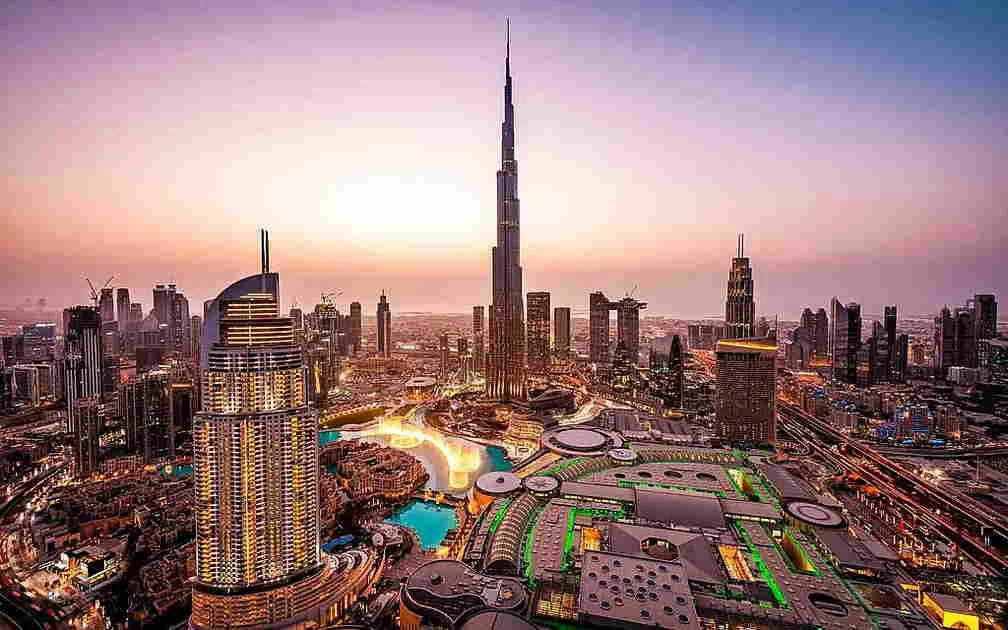
Downtown Dubai is home to the Burj Khalifa, The Dubai Mall and the Dubai Fountain, and remains the city's most iconic address. Dubai Marina, one of the world's largest man-made marinas, is a dense waterfront neighbourhood of towers, dining and yachting. Both are finished. Buying off plan in a completed district means you know exactly what the neighbourhood is — no waiting for the retail to open — but you are also buying at mature pricing, and the infill sites are the ones left over.
Dubai Hills Estate is a green, golf-centred community of apartments, townhouses and villas that has been among Emaar's strongest performers for capital appreciation. Arabian Ranches is an established, family-focused villa community that helped define suburban living in Dubai.
The build-out communities
Dubai Creek Harbour is a large mainland waterfront master community along Ras Al Khor Road and the future site of the redesigned Dubai Creek Tower. Emaar Beachfront is a gated island community planned around 27 residential towers, roughly 10,000 homes and 1.5 km of private beach. The Valley is a newer, nature-inspired community of townhouses and villas offering some of Emaar's more accessible entry points. Emaar South sits near Al Maktoum International Airport and Expo City and is popular with value-oriented off-plan buyers.
Be honest with yourself about what buying in a build-out community means. Your tower may complete before the neighbourhood does. That gap — keys in hand, community half-finished, rents below the brochure assumption — is real, it is usually measured in years rather than months, and it is the single most common gap between what off-plan buyers expected and what they got. It is survivable if you planned for it and painful if you did not.
How an Emaar off-plan purchase works
Staged payment plans
Rather than paying in full upfront, buyers pay in instalments tied to construction milestones, with a portion typically due on handover. This lowers the entry barrier and spreads cost over the build period. The mechanism underneath is the part worth understanding: your payments go into a project escrow account, and the developer draws from it against construction progress certified by an engineer. That is why the schedule is tied to milestones rather than to a calendar. It is also why an off-plan payment plan is not simply a generous instalment offer — it is a control mechanism that keeps your money attached to the building's progress.
Exact splits vary by tower and by launch. Verify the schedule on the specific project rather than assuming the plan you read about applies to the unit you want.
Launch-day pricing
New releases usually open at introductory prices, which is why demand at Emaar launches is often strong and the best units sell quickly. The mechanism is straightforward: the developer prices the first phase to establish momentum and evidence of demand, then releases later phases against that evidence. Early buyers capture the difference — if the market cooperates. The caveat that never appears on a launch-day floor plan is that this only works when later phases price higher. In a flat market, launch pricing is just pricing.
Registration and buyer protection
Off-plan payments in Dubai are protected by escrow accounts regulated by the Dubai Land Department and RERA, and your purchase is recorded through interim registration during construction. Our explainers on escrow accounts and deposit protection and Oqood registration cover exactly what each protects and, more usefully, what neither protects you from. In short: escrow protects your instalments from being spent on something other than your project. It does not guarantee a handover date, a valuation, or a rent.
Golden Visa potential
Purchases at or above AED 2 million can qualify buyers for the UAE's 10-year Golden Visa. Confirm current thresholds and documentation before relying on it, and treat it as a benefit of the purchase rather than a reason for it.
What the Emaar premium actually buys
Emaar stock generally does not sell at the lowest price per square foot in its area. So it is worth being specific about what the difference pays for, because "brand" is not an answer.
Completion probability
This is the main one. Off plan's central risk is that the building does not get finished, or gets finished late enough to break your plan. A developer with decades of delivered communities and a public balance sheet has demonstrably lower probability of that outcome than one with a short record. You are paying to reduce the variance of the worst case. Whether that is worth the premium depends on how much of your net worth is in the unit — which is a personal question, not a market one.
Masterplan follow-through
When one developer controls the whole community, the amenities in the render are its own obligation rather than someone else's problem. Communities assembled from multiple developers on adjacent plots have no such mechanism, and the shared infrastructure is nobody's priority. This is why Emaar communities tend to feel finished, and it is a genuine, chargeable difference.
Exit liquidity
When you sell, the buyer pool matters more than the asset. A recognisable community with an established rental market has more bidders than a well-built tower in an anonymous location. That shortens your exit and narrows the discount you accept. Liquidity is invisible until the day you need it, and then it is the only thing that matters.
What it does not buy
It does not buy immunity from the market. An Emaar unit in a community absorbing heavy simultaneous supply will still see rents flatten during lease-up. It does not buy a guaranteed handover date. It does not buy low service charges — amenity-rich communities cost money to run, and that cost lands on your net yield every year you own. And it does not buy a better yield: brand premium raises the denominator, which mechanically lowers the percentage return.
When Emaar is not the right answer
If your objective is the highest gross yield per dirham deployed, you will usually do better elsewhere. Yield is rent over price, and the brand premium sits in the price. Buyers optimising a percentage should compare against developers in value communities and accept the delivery risk consciously rather than paying it away.
If your budget is tight enough that the premium pushes you into a smaller or worse-positioned unit within the community, that is a bad trade. A poorly positioned unit in a great masterplan underperforms a well-positioned unit in a good one. Position within the building — floor, aspect, layout — routinely matters more than the name on the hoarding.
Emaar suits buyers who value delivery certainty, integrated amenities and a strong resale and rental market, and who are willing to accept a lower percentage return for a narrower range of outcomes. That is a real and defensible preference. It is just not the only one.
How to shortlist an Emaar off-plan unit
Start on the Emaar developer profile to see live and upcoming projects, then compare them against the wider market on our off-plan project listings, narrowing by community, price and payment plan. Read the community before the tower: the district determines your rent and your exit, and the tower only determines your view. Then read the tower before the unit: handover date, phase, and how much of the surrounding community will exist when you take keys. Our Emaar master communities guide goes deeper on how the districts differ.
Before you reserve, confirm four things in writing: the exact payment schedule, the contractual handover date and what happens if it slips, the estimated service charge for the building, and the specific unit's floor and aspect. Every one of those has moved a buyer's return more than the developer's name ever will.
Frequently Asked Questions
Is Emaar a safe developer to buy off plan from? Emaar has one of the longest delivery records in Dubai and is publicly listed on the Dubai Financial Market, which makes its financial capacity visible. That materially reduces the probability of the worst off-plan outcome — a project that does not complete. It does not eliminate market risk, delay risk, or the chance that a specific unit underperforms.
Why is Emaar more expensive than other Dubai developers? The premium mostly pays for completion probability, masterplan follow-through and exit liquidity. Because it sits in the purchase price, it also mechanically lowers your percentage yield. If your goal is maximum gross yield per dirham, compare against value-community developers before defaulting to the brand.
How do Emaar off-plan payment plans work? You pay a deposit on booking, then instalments tied to certified construction milestones, with a portion due at handover. Payments go into a RERA-regulated escrow account and the developer draws against verified progress. Exact splits vary by tower and launch phase, so confirm the schedule on the specific project.
Which Emaar community is best for capital appreciation? Dubai Hills Estate has been among Emaar's strongest performers for capital appreciation, but past performance in one community is not a forecast for another. Appreciation depends on your entry price, the phase you buy in and how much supply the community absorbs while you hold.
Can an Emaar off-plan purchase qualify for a Golden Visa? Purchases at or above AED 2 million can qualify buyers for the UAE's 10-year Golden Visa, and off-plan purchases can be eligible. Confirm the current threshold and documentation requirements before you rely on it as part of your decision.
What is the biggest mistake buyers make with Emaar off plan? Buying the brand instead of the unit. A poorly positioned apartment in a flagship community will underperform a well-positioned one in a good community. Floor, aspect, layout, service charge and how much of the surrounding district will exist at handover all move your return more than the developer's name.

