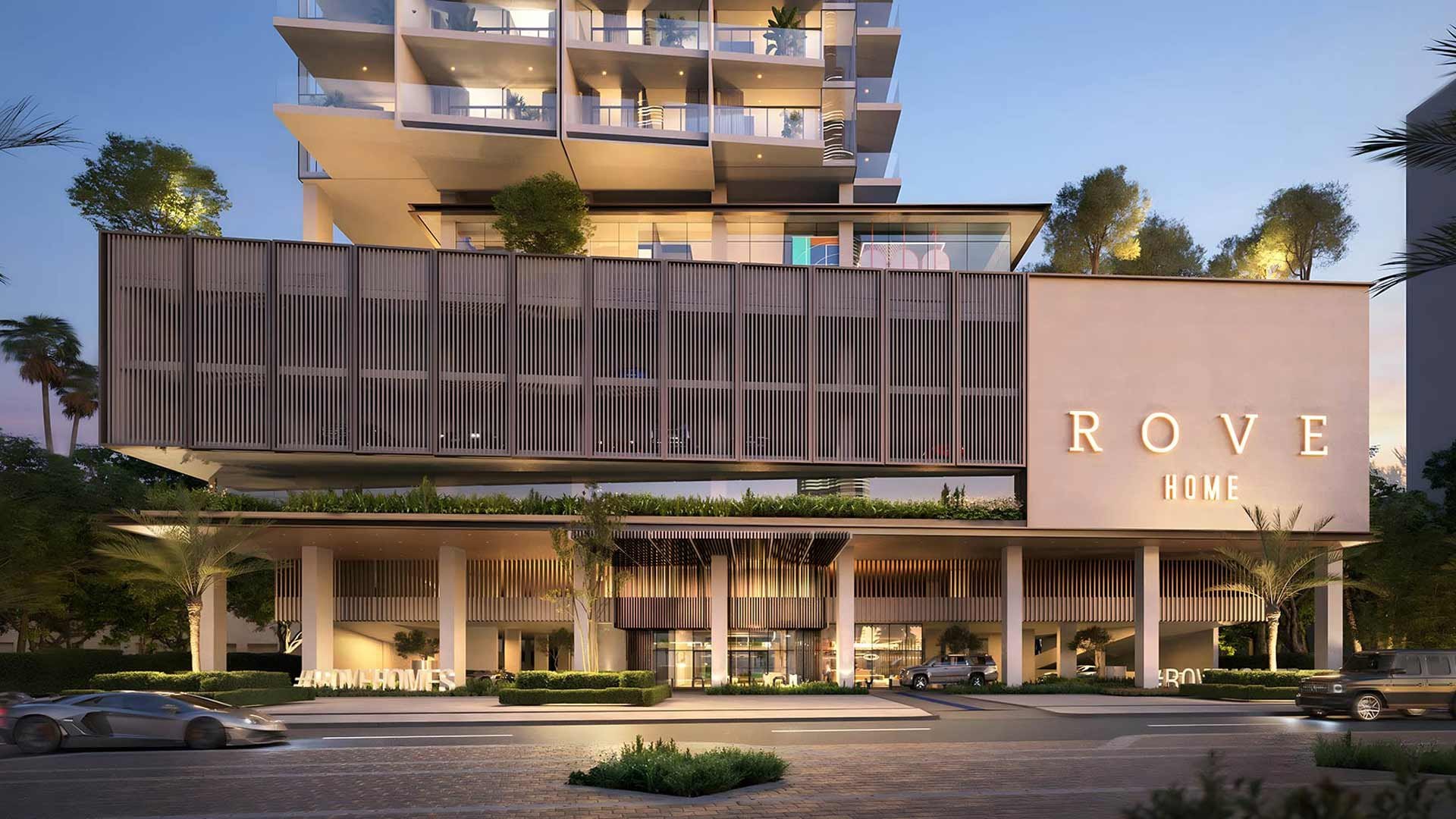
Dubai Marina is the waterfront district that put new Dubai on the map, and off-plan property in Dubai Marina remains the closest thing this market has to an all-rounder. A dense cluster of towers wrapped around a man-made canal, with beach access at one end and a promenade running through it, Marina has some of the deepest and most consistently tested rental demand in the city.
The investment logic here is different from an emerging district, and that difference is the whole point of the guide. In a new community you are partly betting on whether demand arrives. In Marina, demand already exists and can be measured. Your variables narrow to the tower, the floor, the view and the price you pay, which is a far more controllable set of risks. That does not make it a safe bet in every configuration; a badly chosen Marina unit is still a badly chosen unit. You can compare live stock across the city from the off plan Dubai projects hub, or go straight to current Dubai Marina projects.
What makes Marina different from an emerging district
Marina is fully built and fully lived in. That maturity is its defining characteristic and the source of most of its investment case.
The demand is proven, not projected
Tenants already know the district. Tourists already come. The Marina Walk, the JBR beachfront, the metro stations and the tram all exist today, not in a masterplan. For an off-plan buyer, the practical implication is a narrower band of uncertainty: a new tower here adds modern supply to a location that needs no introduction to tenants or to future buyers. You are not underwriting a neighbourhood. You are underwriting a building.
This is worth pricing honestly. Proven demand is not free. It is precisely why Marina costs more per square foot than inland value communities, and why its gross yield percentage is lower. What you buy with that premium is a shorter list of things that can surprise you.
New supply arrives by redevelopment, not expansion
Marina is not expanding outward. New launches appear as older plots are redeveloped and gaps are filled, which means supply arrives in a trickle rather than a wave. That matters more than it sounds. In communities absorbing a heavy pipeline, several towers completing in the same quarter can flatten rents while everything leases up. Marina's constrained plot supply structurally limits that particular risk, which is one of the less discussed reasons its rents hold.
Freehold, and buyable remotely
Marina is a designated freehold zone, so foreigners can own outright and complete a purchase without being in the country. Combined with the canal and sea views that support premium rents, that is a large part of why international capital concentrates here.
Why Marina scores as the all-rounder
Most districts force a trade-off between yield, capital growth, lifestyle and liquidity. You pick two and sacrifice the others. Marina is unusual in scoring solidly on all four rather than excelling at one.
- Deep long-let demand from professionals who want to live by the water with metro access.
- A powerful short-let market driven by year-round tourism and the JBR beachfront next door.
- Strong liquidity. Marina is one of Dubai's most traded communities, so exit is rarely the problem.
- Tax-free returns, with no income tax, capital gains tax or annual property tax, only the one-off 4% DLD fee, which means the gross figure survives to the net line more intact than it would in most markets.
The consequence is that Marina is a low-regret choice rather than a maximising one. If your objective is the highest possible percentage yield, inland value communities will beat it. If your objective is a unit that performs acceptably in most scenarios and can be sold quickly in a bad one, that is what Marina is for.
Unit mix, and who buys what
Marina is an apartment market. It runs from studios and one-bedrooms that power the rental and short-let engine up to large three-bedrooms and penthouses with full sea views, and new off-plan supply increasingly skews toward branded and design-led towers.
Who buys in the Marina
Buyers split into two camps that want different things from the same district. Income investors want a liquid, easy-to-let unit and are indifferent to using it. Lifestyle buyers, usually international, want a holiday home that also earns, and will accept a lower return for a unit they actually enjoy. The waterfront premium attracts a more affluent tenant than value districts inland, which shows up in rent resilience rather than in headline yield.
Layout strategy: the decision that drives the return
Compact units maximise yield and short-let flexibility, because rent does not scale linearly with size; a one-bed does not rent for half what a two-bed does. View-led larger apartments target capital preservation and premium long-lets instead. The mistake is buying a large unit for yield or a small unit for capital growth. Decide which job the unit is doing before you pick the floor plan. Our 1-bedroom off-plan guide covers why that format is the most liquid in the city.
One Marina-specific point on views: the district is dense, and a view is only durable if the plot in front of it cannot be built on. Check what is behind the render before you pay a premium for a sightline, because a canal view that becomes a wall view in three years was never a canal view.
Yield character, and what the premium costs you
On a long-let basis, Marina yields typically sit in the middle of Dubai's 6-8% range. The waterfront premium on price tempers the gross yield slightly against inland value areas, and that is arithmetic rather than a market view: a higher denominator produces a lower percentage on comparable rent.
What offsets it is occupancy, rent resilience and short-let optionality. A unit that is never empty at 6.5% beats a unit that sits vacant for two months a year at 7.5%. Void period is the silent killer of a return, and it is the thing Marina's demand depth protects you against. That is the trade, stated plainly.
Long-let versus short-let
Marina's real advantage is genuine optionality between the two, and the right answer depends on how hands-on you want to be. Long-let delivers stable, low-effort income from professional tenants and suits a passive investor entirely. Short-let can lift effective returns thanks to the beach, promenade and constant tourism, but it requires a holiday-home permit, furnishing, and either active management or a management company taking a cut. Many Marina owners begin with long-lets for simplicity and move to short-lets once they understand the building's actual demand pattern, which is a sensible order to do it in.
Service charges and net yield
As a premium waterfront with extensive amenities, Marina towers typically carry above-average service charges. That is the pools, gyms, security and promenade upkeep that tenants pay a premium to have. Those charges are a permanent drag on your net yield and must be modelled at purchase, not discovered at handover. The reassurance is that Marina's resilient occupancy means they are comfortably covered by rent in normal conditions; the warning is that they vary meaningfully between buildings, and a high-amenity tower can cost you a full percentage point of net return against a simpler one. Our service charges guide explains how to assess a specific building before you commit.
Connectivity and lifestyle
Marina is served by two metro stations and the Dubai Tram, with Sheikh Zayed Road on its doorstep. That is rare connectivity for a beachfront district anywhere, and it is the structural reason the long-let demand is as deep as it is: a tenant here can live by the water and still commute without a car. The lifestyle layer sits on top: the 7km Marina Walk, JBR's beachfront retail and dining, yacht berths, and a wall-to-wall café and restaurant scene. This is live-work-play by the water, and it is why tenants keep paying to be here rather than moving inland for cheaper rent.
Emaar shaped much of the surrounding area and remains a benchmark developer for nearby waterfront product; the Emaar developer profile covers its current portfolio.
Who Marina suits, and who it does not
- All-rounder investors who want resilience across yield, growth and liquidity rather than a maximum on any one.
- Short-let operators targeting beach-and-marina tourism, who can use the permit and management route properly.
- International lifestyle buyers wanting a usable, lettable waterfront base.
- Risk-averse first-timers who prefer proven demand to emerging-area speculation.
It suits you less if you are chasing the highest gross percentage yield, which lives inland, or if you want the steepest capital-growth curve, which lives in districts that are still filling in. If you want a brand-new waterfront with more growth upside and are willing to accept a thinner track record, weigh Marina against off-plan on Palm Jumeirah or look at Dubai Creek Harbour, where the neighbourhood is still arriving around the towers.
Frequently Asked Questions
Is Dubai Marina still a good investment? It remains one of the most resilient choices in the city because its demand is proven rather than projected, its supply arrives by redevelopment rather than in waves, and it is among Dubai's most liquid communities. It is a low-regret district rather than a maximum-yield one, and it is priced accordingly.
What returns can I expect in Dubai Marina? Long-let gross yields typically sit in the middle of Dubai's 6-8% range, since the waterfront premium raises the price denominator. Occupancy strength and short-let optionality are what offset that, and above-average service charges are what pull the net figure back down, so model net rather than gross.
Can foreigners buy off-plan in Dubai Marina? Yes. Marina is a designated freehold zone, so foreign buyers can own outright and complete the purchase remotely, registering their interest via Oqood before handover and converting to a title deed at completion.
Are service charges high in Dubai Marina? They are typically above average, because the amenity load that attracts premium tenants also costs money to run. They vary significantly between towers, so compare the specific building rather than the district, since the difference can amount to a meaningful share of your net yield.
Should I buy a small unit or a large one in the Marina? Decide the job first. Compact units maximise yield and short-let flexibility because rent does not scale linearly with size; view-led larger apartments target capital preservation and premium long-lets. Buying a large unit for yield or a small one for growth is the common and expensive mistake.