Palm Jumeirah is the world's most recognisable man-made island and Dubai's best-known luxury address. Buying off plan here is a different transaction from buying off plan anywhere else in the city, and the difference is not the price. It is the supply. New off-plan launches on the Palm are infrequent by design, because the island is essentially built and its developable land is fixed. You are not choosing between dozens of comparable towers. You are competing for a small number of genuinely scarce releases.
That changes the strategy, the risk profile and the maths. This guide covers what scarcity is actually worth, why the yield here behaves the way it does, what the running costs do to your net position, and who this asset genuinely suits. If you want the full field of off plan property in Dubai for comparison, you can browse off plan Dubai projects across every community while you read.
What makes the Palm structurally different
Palm Jumeirah is Nakheel's palm-shaped island: beachfront villas along the fronds, apartments and mixed-use along the trunk, and resorts at the crescent. It is a designated freehold area, open to foreign ownership and to remote purchase, like the rest of the international market.
What it is not is a district with a pipeline. Most Dubai communities have land banks, phases and a stream of new towers arriving. The Palm is functionally complete. New off-plan product typically arrives as the redevelopment of a prime plot or as a new branded residence on one of the few remaining positions. That is a small number of releases competing for global demand, and it produces a specific market dynamic: allocations go early, at launch pricing, to buyers who were in the conversation before the price list existed. Securing an allocation at launch is frequently the single largest determinant of eventual return here, more than the specification and more than the timing of the exit.
Why "there is only one Palm" is an economic statement
The phrase is used as marketing, but it describes a real constraint. Beachfront land on a globally recognised island cannot be increased. Elsewhere in Dubai, if demand rises for a community, the supply response is to build more of it, which caps the price. Here the supply response is limited to whatever the remaining plots allow. That asymmetry is the thesis. It is also not a promise: scarcity supports pricing power over long horizons, it does not eliminate cycles, and an ultra-prime asset bought at the top of one is still an asset bought at the top of one.
What investors are actually buying
The Palm is bought for what it preserves and represents rather than for what it yields month to month. Four things carry the case, and it is worth separating the durable ones from the sentimental.
- Scarcity. Finite beachfront on a fixed island. This is the durable argument and the only one that is structural rather than cyclical.
- Recognition. A Palm Jumeirah address is known globally, which matters for resale liquidity in a way that is hard to quantify but easy to observe: the buyer pool is international rather than local.
- Capital preservation. Ultra-prime, scarce assets have historically been more resilient stores of wealth through cycles than mid-market stock. Historically is doing real work in that sentence.
- Tax efficiency. No income tax, no capital gains tax and no annual property tax, against a one-off 4% DLD fee. When you are holding a large sum for a long time, the absence of an annual erosion compounds into a meaningful number.
Our Nakheel off-plan guide covers the developer behind the island, and the best areas to buy off-plan comparison places the Palm against the yield-led alternatives it is usually contrasted with.
The formats and how they behave differently
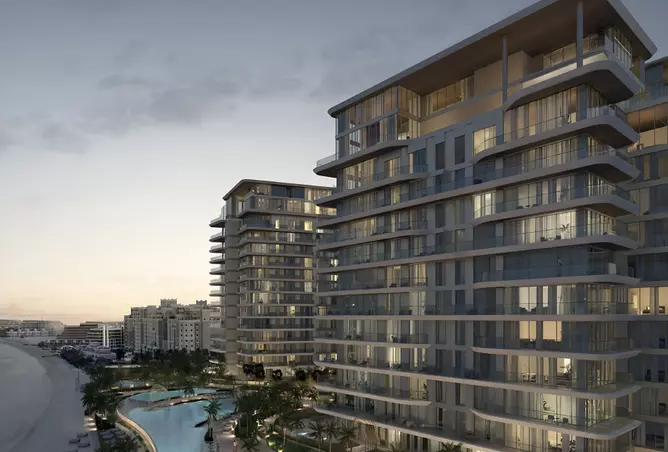
The Palm spans signature beachfront villas on the fronds, luxury and branded apartments along the trunk, and penthouses with private sea frontage. Treating these as one market is a mistake; they have different buyers, different liquidity and different risk.
Frond villas and penthouses
The trophy core. Maximum scarcity, maximum price, and the thinnest buyer pool of anything in Dubai. That thinness is the trade-off nobody mentions: when there are very few comparable assets, there are also very few comparable buyers, and an exit can take time. This is fine if your horizon is long and your need for the capital is zero. It is a problem if either of those is untrue.
Branded and trunk apartments
The more accessible entry to the address, and materially more liquid. An apartment on the trunk has a wider buyer set than a frond villa, which means faster price discovery and a shorter exit. You give up some of the scarcity premium in exchange. For most investors rather than most lifestyle buyers, this is the more sensible instrument, and it is the one that behaves most like a normal Dubai transaction.
Yield: what the number actually does here
Be direct about this. Given the price points, the Palm's gross long-let yields sit toward the lower end of Dubai's 6-8% range, and often below what a yield-led community produces. That is arithmetic. Rent does not scale with price at the top of a market: a unit at three times the price does not command three times the rent, because the tenant pool with that budget is much smaller than the pool one tier down.
Two factors work against that drag. The first is an exceptionally strong luxury short-let market, driven by global tourism and by the resort infrastructure already on the island, which can lift effective returns well above the long-let number for an operator who runs it properly. The word "properly" is carrying weight: short-let is an operating business with occupancy risk, management cost and seasonality, not a passive yield. The second is capital resilience, which is a return you only collect on exit.
The honest summary is that investors here optimise for scarcity-backed value and premium short-stay income rather than maximum gross yield. If your objective is the highest net percentage on deployed capital, this is not the asset and a dense, low-entry community will beat it every time. Work the maths through our ROI calculation guide before you decide which of those you actually want.
Costs, service charges and the net position
Ultra-prime Palm properties carry premium service charges, and the reason is mechanical rather than exploitative: beachfront upkeep, security, resort-grade facilities and the maintenance of a marine environment cost more per square foot than a standard tower's chiller and lifts. Those charges are levied per square foot annually, and on a large unit the absolute figure is substantial.
This is where a gross-yield conversation on the Palm becomes actively misleading. The charge scales with your unit's size, and your unit is large. Model the net position with the actual rate for the specific building, not an estimate, before you compare this against anything else. The mechanics of how the rate is set are in our guide to Dubai property service charges.
The purchase itself follows the standard protected path: reserve, sign the Sale and Purchase Agreement, pay a deposit plus the one-off 4% DLD fee, then pay instalments into a RERA-regulated escrow account released against verified construction milestones, with interim ownership recorded via Oqood. Escrow protects your cash from misuse. It does not protect your handover date or your finish quality, which is why the developer's record matters here as much as anywhere else, notwithstanding the address.
Connectivity and the lifestyle that sustains the demand
The island is connected to the mainland by a causeway and served by the Palm Monorail, with Dubai Marina, the airport and Sheikh Zayed Road within reach. The lifestyle is resort-led: private beaches, five-star hotels, Nakheel Mall, the crescent's dining, and beach clubs.
This concentration of ultra-prime amenity is not decoration. It is the mechanism that sustains both the prestige and the premium tenant demand, and it is why the short-let market works here in a way it does not in a residential district with no reason for a visitor to be there. The amenity is also what you are paying for in the service charge. Those two facts are the same fact viewed from opposite ends of the ledger.
Who this suits, and who it does not
- Suits: capital-preservation buyers seeking a scarce, resilient asset with a long horizon and no need for the capital back on a schedule.
- Suits: lifestyle purchasers wanting a beachfront home with global recognition, for whom the yield is a secondary consideration rather than the reason.
- Suits: luxury short-let operators who will actually operate it, targeting affluent tourist and resort demand.
- Suits: Golden Visa buyers, since Palm purchases clear the AED 2M threshold comfortably. Our Golden Visa guide covers the requirements.
- Does not suit: yield-maximising investors, who will do better on percentage returns in a lower-entry community.
- Does not suit: buyers who need a fast, certain exit, particularly in the thin frond-villa market.
None of that is a criticism of the island. It is a statement about matching an instrument to an objective. The Palm is an excellent answer to a specific question, and a poor answer to a different one, and most of the disappointment in this market comes from buyers who asked the second question and bought the first answer. The comparison is set out in our guide to off-plan versus ready property, and the wider field is on the new launches feed.
Frequently Asked Questions
Is Palm Jumeirah a good investment? It is a strong capital-preservation and prestige asset and a weak yield-maximisation asset. Its case rests on genuinely finite beachfront land, global recognition that widens the buyer pool on exit, and a tax structure that does not erode a long hold. If your objective is the highest net percentage return, a lower-entry community will beat it.
What kind of off-plan property is available on Palm Jumeirah? New launches are infrequent because the island is essentially built. What does arrive is typically the redevelopment of a prime plot or a new branded residence: beachfront villas and penthouses on the fronds, and luxury or branded apartments along the trunk.
Can foreigners buy off-plan on Palm Jumeirah? Yes. It is a designated freehold area, so non-UAE nationals can own the property and land outright in their own name, with no local sponsor and no residency requirement. Purchase can be completed remotely.
Why are Palm Jumeirah yields lower than other Dubai areas? Rent does not scale with price at the top of a market. A unit at several times the price does not command several times the rent, because the tenant pool at that budget is much smaller. Premium service charges on large units widen the gap between gross and net further.
Are service charges high on Palm Jumeirah? They are premium, and the reason is mechanical: beachfront upkeep, security, resort-grade facilities and marine-environment maintenance cost more per square foot than a standard tower. Since the charge scales with unit size and Palm units are large, the absolute annual figure is substantial and must be modelled with the actual rate for the specific building.
How hard is it to sell a Palm Jumeirah property? It depends entirely on the format. Trunk and branded apartments have a wide buyer set and reasonably fast price discovery. Frond villas and penthouses have the thinnest buyer pool in Dubai, which is the flip side of their scarcity: very few comparable assets also means very few comparable buyers, and an exit can take time.