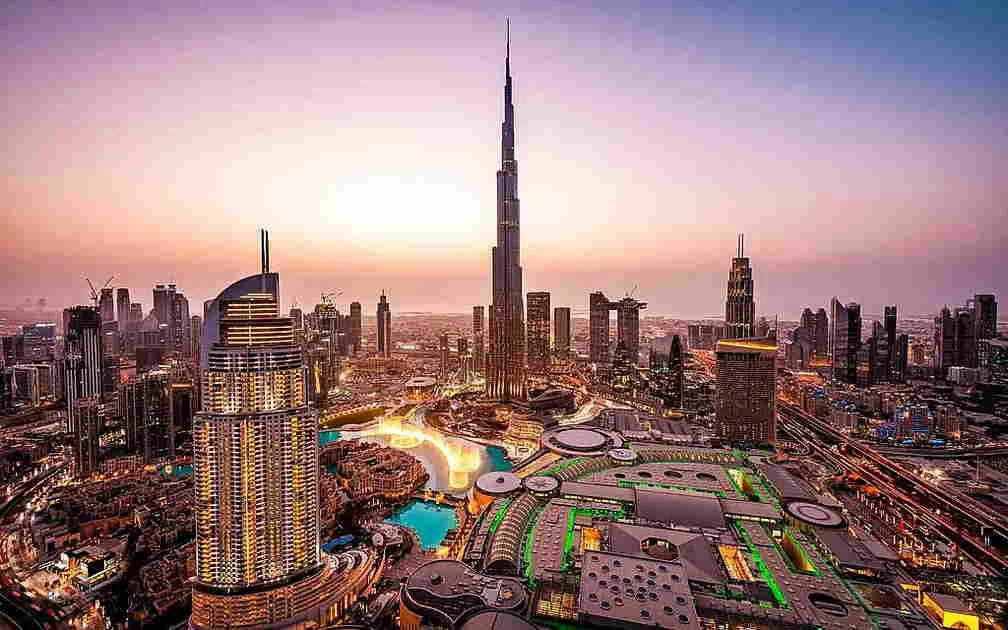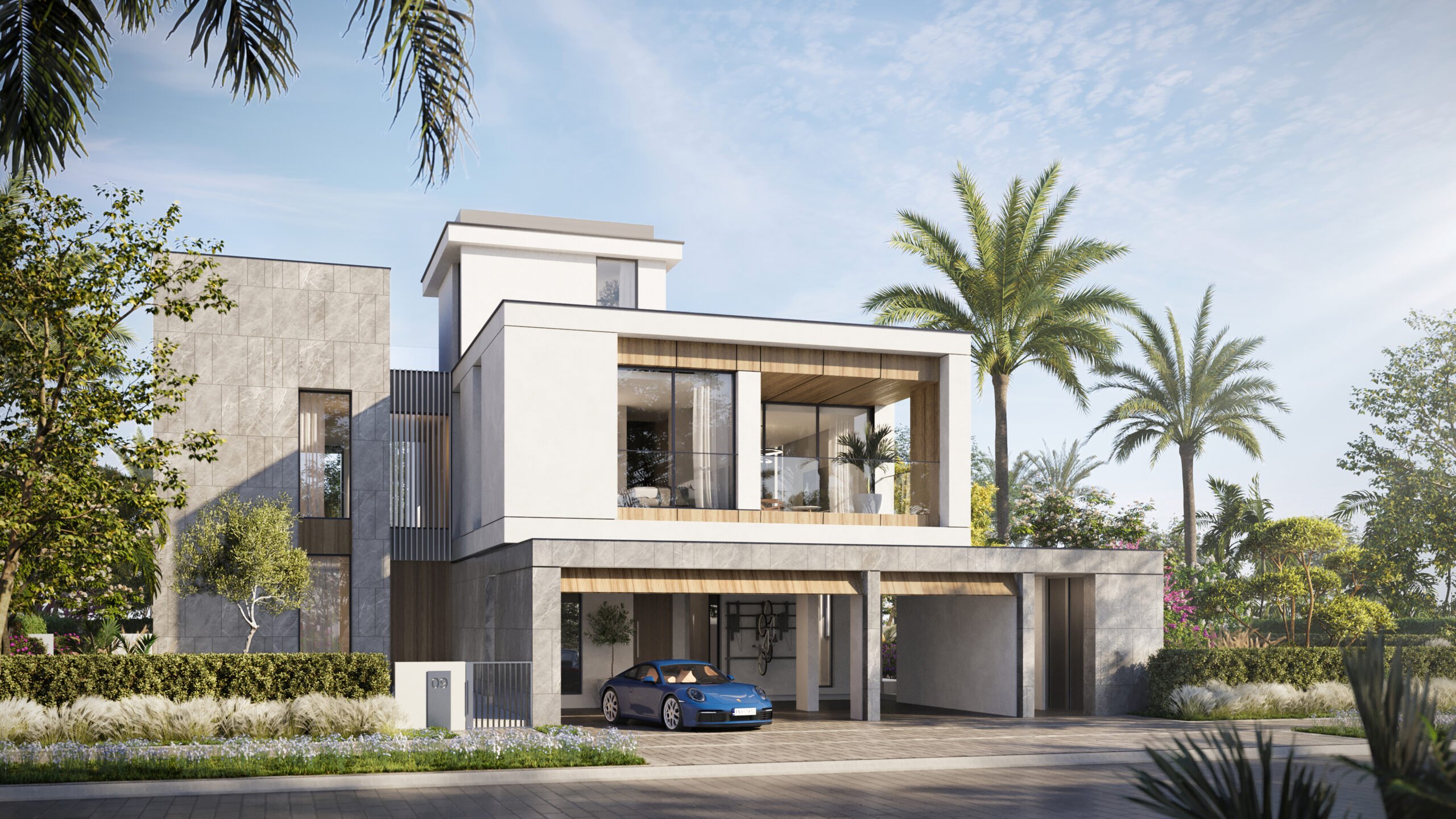
Mohammed Bin Rashid City — MBR City — is the rare Dubai district that puts parks, lagoons and low-rise green living within minutes of Downtown. Most of the city forces a choice: central and dense, or green and distant. MBR City refuses the trade, and that refusal is the entire investment case. It is also why the district prices the way it does.
This guide explains the mechanism behind MBR City's premium, what a Sobha Hartland address actually buys, what yield you surrender for the location, and how to choose the right unit and phase — because in a premium district those two choices matter more than the community choice you have already made. You can browse off plan Dubai projects across the city for comparison as you read.
A central green district, not a suburb
MBR City's defining feature is geography. It wraps around the Downtown and Business Bay core, so residents get genuine centrality — minutes from the Burj Khalifa, the Dubai Mall and the canal — while living among landscaped boulevards, swimmable lagoons and generous open space.
Why scarcity is the whole thesis
Central land in Dubai is finite, and land in the centre that has been master-planned as low-rise and green is close to irreplaceable. Nobody can manufacture more of it, because the alternative use of a plot adjacent to Downtown is a tower, and a tower is worth more per square metre to whoever owns the land. That MBR City exists as a green district at all is a planning decision, not a market outcome, which is exactly why it cannot easily be replicated next door.
For an investor, this is the difference between a scarcity story and a marketing story. A community with a pool has a feature. A community occupying land that will never be zoned this way again has a moat. That moat is what protects value through cycles, and it is what you are paying the premium for.
What centrality does to demand
Central-plus-green draws a specific resident: affluent, professional or family, wanting proximity and lifestyle at once, and willing to pay for both rather than choosing. That tenant is less price-sensitive and moves less often than a yield-chasing district's tenant. Occupancy holds up better and rents are stickier, which shows up in your net return far more than the headline gross percentage suggests.
Sobha Hartland and the premium sub-communities
MBR City is a masterplan containing sub-communities, and they are not equivalent. Sobha Hartland is the best-known: waterfront and forest-themed living, associated with high build quality and a name that travels with buyers.
Why build quality is a financial variable, not a taste one
At this price point, finish quality stops being cosmetic. It determines what the unit shows like at re-let three years in, what the maintenance bill looks like at year five, and whether an affluent resale buyer — who is comparing your unit against a brand-new launch — offers a price or walks. Developers with genuine in-house build reputations get a resale premium because that comparison keeps happening for the life of the asset. Our Sobha off-plan build-quality guide covers what specifically differentiates it, and you can browse inventory on the Sobha developer page.
Lagoons, parks and what amenity actually earns
Crystal lagoons, beaches and waterfront promenades are signature features of MBR City's newer phases. They do real commercial work: they differentiate the product, they justify the premium, and they create a resident experience that keeps occupancy resilient when sentiment softens. They also cost money to run, and that cost reaches you as a service charge every year. Amenity is never free. A lagoon is a maintained asset, and maintained assets appear on your service charge statement for as long as you own the unit — so model the net figure rather than the brochure yield.
The yield trade-off, stated honestly
Dubai's gross residential yields commonly sit in a 6–8% band. Premium central districts like MBR City typically deliver toward the lower end of it, because you are paying for location and quality rather than buying the smallest possible denominator.
That is not a flaw in the district — it is the definition of what you bought. Yield is rent divided by price, and you deliberately raised the price by choosing scarcity. If maximum gross percentage is your objective, a value community will beat MBR City every time and you should buy there instead. What you get in exchange here is capital resilience, a tenant base that does not evaporate, and a deeper pool of affluent buyers at exit.
The compensation is real but slow. It shows up as a shorter void, a longer tenancy, a smaller discount when you sell into a weak market — none of which appear in the headline number. Run the arithmetic properly in our ROI guide and benchmark against alternatives in the best areas to buy off-plan roundup.
Who should buy in MBR City
- End-users and lifestyle buyers who want Downtown proximity with space and greenery, and who will occupy the unit rather than model it.
- Capital-preservation investors who value a central, scarce, premium address over the last point of income.
- Golden Visa buyers, since many units clear the AED 2m threshold comfortably. Set that constraint before you shortlist, not after you have fallen for a floor plan.
- Not for yield-first investors on a tight budget, who are structurally better served by a lower entry price elsewhere.
Off-plan, escrow and the tax position
Buying off plan in MBR City follows the same protected process as anywhere in Dubai. You purchase during construction, pay in instalments under a payment plan, and your money sits in a RERA escrow account released against verified progress, with Oqood interim registration recording your interest until the title deed is issued.
What escrow does and does not do
Escrow ring-fences your instalments to the specific project and releases them against certified construction milestones. That is a strong protection against misappropriation. It is not a protection against delay, and it is not a guarantee that the lagoon in the render arrives on schedule. Understand that boundary before you rely on it. Ask which of the amenities in the render are contracted works and which are indicative, because escrow releases against the building you bought, not against the district you were shown.
Why the tax position matters more at this ticket
There is no income tax, no capital gains tax and no annual property tax on Dubai residential property. The one government charge of note at purchase is the 4% DLD fee. On a premium MBR City ticket the absent taxes are worth more in absolute dirhams than they are on a small apartment — the tax saving scales with the asset while the DLD fee is a one-off percentage. That arithmetic is part of why premium central Dubai attracts capital that would find the equivalent asset unattractive in a taxed jurisdiction. See tax-free property investment.
Choosing your unit: where the money is made
You have already made the expensive decision by choosing a premium district. The remaining decisions determine whether you get the district's benefit or pay for it without receiving it.
Size and who it serves
- One-bedrooms are the accessible entry and produce the best yield within the premium band, because the denominator is smallest.
- Two-bedrooms attract professional couples and small families who want the lifestyle and will stay for it.
- Larger and waterfront units lean toward end-users and capital plays rather than income. Accept that going in.
Phase and outlook
Phase and view matter more in a premium district than almost anywhere, because the premium is paid for exactly those attributes. A unit facing a construction site, or a parking podium, or the back of the next tower, is paying a lagoon-district price for a non-lagoon experience. That gap does not close.
- Buy early in a phase, before the amenity reveal is reflected in pricing.
- Prioritise outlook — waterfront, park or skyline views command durable premiums and let faster.
- Confirm which masterplan stage your handover lands in, so you know what is actually open when your tenant moves in.
- Check the AED 2m threshold if residency is part of the goal.
The risk of buying into an unfinished masterplan
MBR City is still being built. That means a handover into a district where the promised lagoon, promenade or retail may be a phase or two behind your tower. You would then hold a premium-priced unit with a mid-tier experience, and rent it accordingly, until the surroundings catch up. This is survivable for a buyer holding for a decade and painful for a buyer who needed the projected rent from month one. Ask which amenity is contracted and which is indicative before you sign.
Who you are renting and selling to
The tenant and buyer profile here skews affluent and discerning — professionals, families and executives who want centrality and lifestyle together. This pool is less price-sensitive and more loyal, which translates into stable occupancy and a cushion under values when sentiment softens. At exit you are selling to people who want to live there, which is the most durable form of demand there is.
It is also a smaller pool than the one underneath a value-community one-bed. Fewer buyers, each with more money and more patience. That means a slower sale at a firmer price rather than a fast sale at a negotiated one. Neither is better; they are different, and you should know which you are buying. It is worth benchmarking against Downtown and Business Bay directly, since those are the two markets MBR City sits between and competes with for the same buyer — the district's whole pitch is that it offers their centrality without their density. Live inventory is on the projects page.
Frequently Asked Questions
Is MBR City actually close to Downtown? Yes. The masterplan wraps around the Downtown and Business Bay core, which is what makes it unusual — you are minutes from the Burj Khalifa and the canal while living in a low-rise green setting. That adjacency is the source of the district's pricing and the reason it cannot be replicated elsewhere in the centre.
Will I sacrifice yield by buying somewhere premium? On gross yield, yes. Premium central districts typically deliver toward the lower end of the 6–8% band because the price is high, not because the rent is weak. The offset is a shorter void, a longer tenancy and a firmer resale — real money that never appears in the headline percentage.
What is Sobha Hartland? It is MBR City's best-known sub-community, associated with waterfront and forest-themed living and a strong in-house build-quality reputation. At this price point finish quality is a financial variable: it determines re-let condition, maintenance cost and what an affluent resale buyer will pay when comparing your unit against a new launch.
Do MBR City units qualify for the Golden Visa? Many clear the AED 2m property threshold that can qualify an owner for a renewable 10-year Golden Visa, and off-plan purchases can count under the prevailing rules. Confirm your specific unit's price against the threshold rather than assuming the community qualifies you.
What taxes will I pay on an MBR City property? On the Dubai side, none of the usual ones: no annual property tax, no tax on rental income, no capital gains tax on sale. The main government charge is the one-off 4% DLD fee at purchase. Your own country's rules on foreign assets are a separate question worth checking with an adviser.
Should I buy early in a phase? Buying early generally means launch pricing before the amenity reveal is reflected in values, which is where much of the district's upside sits. The trade is that you take handover earlier in the masterplan's build-out, so confirm which surrounding amenity is contracted and which is indicative before you commit.