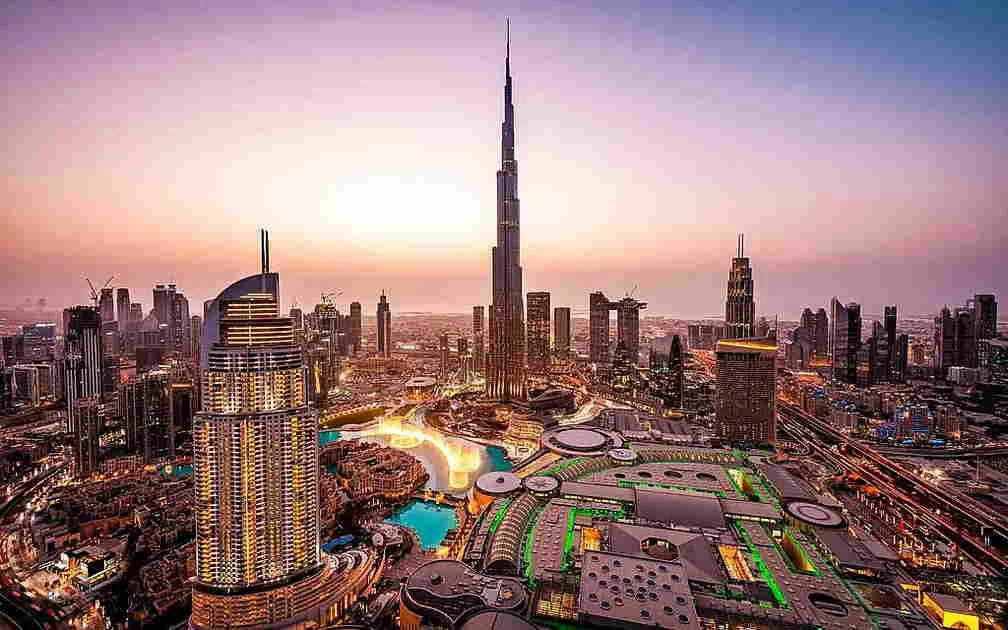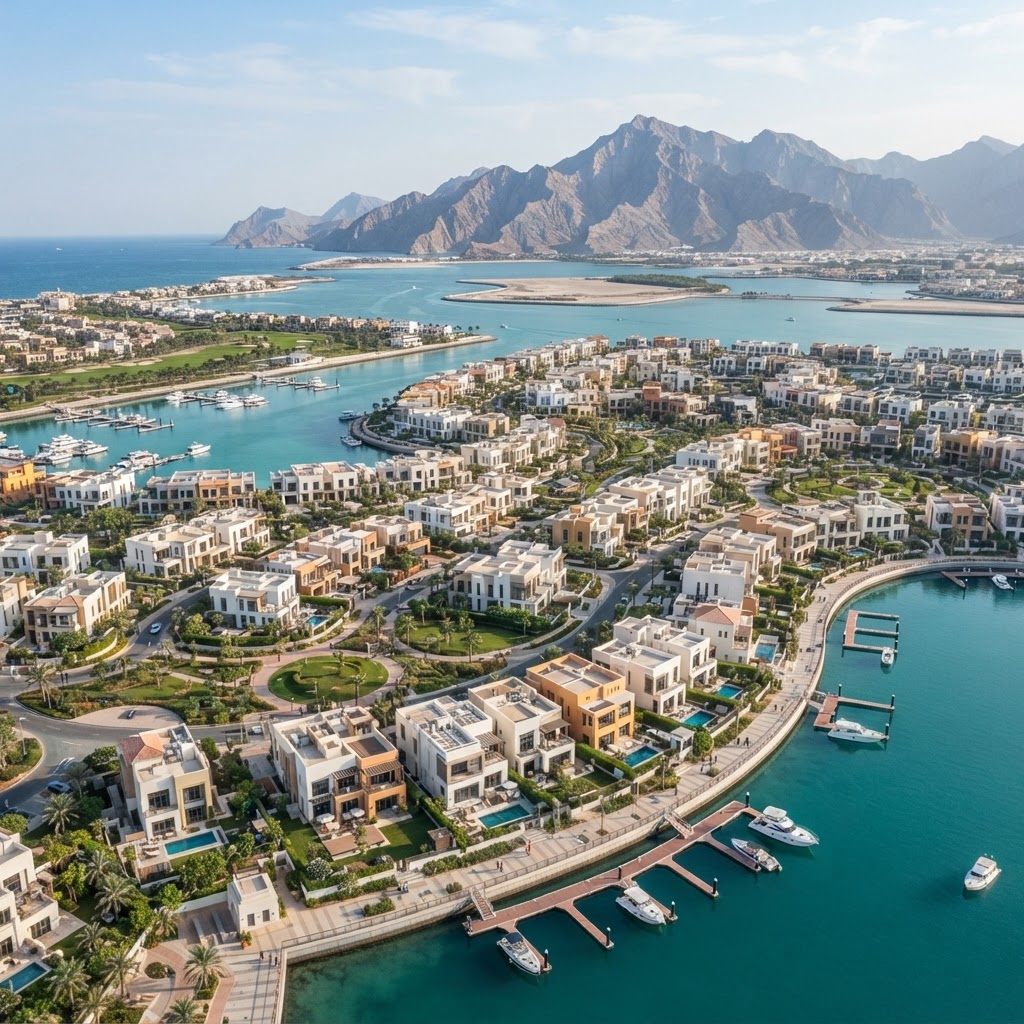
For years Dubai has been the default destination for UAE off-plan investment. Ras Al Khaimah, an hour's drive north, is now attracting serious money — and the numbers behind that shift are specific enough to argue about rather than just nod at. A study by consultancy Cavendish Maxwell puts RAK on track to add 25,600 homes by 2030. Off-plan already accounts for 85% of residential transactions in the emirate, a higher share than Dubai's own 74%.
Those two figures together describe a market that is essentially betting on its own future: almost nobody there is buying what exists, they are buying what is being built. That can be a very good trade and it is a genuinely different risk profile from the one Dubai offers. This piece sets out what is actually driving RAK, where the value case is real, where it thins out, and how the two markets fit together in a portfolio. If Dubai is your baseline, the off plan Dubai projects hub is the comparison set to hold this against.
Why Ras Al Khaimah, and why now
Emerging markets need a catalyst. RAK has an unusually concrete one.
The Wynn Al Marjan Island effect
The $5.1 billion Wynn Al Marjan Island resort, set to open in the 2027 window, will be the UAE's first casino resort. Its significance is not the building. It is what a project of that scale drags in behind it: aviation and road links, hotel keys, thousands of staff who need housing, restaurant and retail operators, and — the part that is hardest to buy — international visibility. A destination resort creates a reason for people who have never considered the emirate to arrive there.
The mechanism from resort to residential value is straightforward and worth naming, because it is where the whole investment case lives. Visitors create demand for short-stay accommodation. Staff create demand for long-term rental. Both create demand for the retail and services that make a place liveable, which in turn makes it attractive to residents who have nothing to do with the resort. That chain takes years to run and each link can break, but when it works it is exactly how a coastline turns into a market.
Al Marjan Island as the focal point
Al Marjan Island, the man-made archipelago hosting the Wynn development, has become the centre of RAK's real estate story. Developers have moved quickly with branded residences, waterfront apartments and hospitality-led communities around it, betting the resort does for Ras Al Khaimah what landmark destinations did for Dubai a generation ago.
That bet has a specific geometry you should notice: value in an emerging market radiates outward from the catalyst and decays with distance. Proximity to the Al Marjan hub is not a nice-to-have in this market, it is close to the entire thesis. A unit two minutes from the anchor and a unit twenty minutes away are not variations of the same investment. They are different investments, and only one of them is the one being advertised.
The pricing advantage, and what it actually buys
Beneath the resort story, the core of RAK's appeal is plain economics. Entry prices sit meaningfully below mature Dubai districts, so the same budget buys more space, more sea frontage, or more units. For a yield-focused investor, a lower entry point paired with rising tourism demand is an attractive equation.
Why the discount exists
This is the question most coverage skips. RAK is cheaper than Dubai for reasons, not by oversight. The market is smaller and less liquid, the tenant pool is thinner and more tied to a narrower set of industries, the infrastructure is less mature, the resale history is short, and the demand narrative depends on projects that have not opened yet. Every one of those is a real risk, and the price gap is the market paying you to carry them.
That does not make the discount a trap. It makes it a price. The judgement you are being asked to make is whether the compensation exceeds the risks — and that is a defensible judgement to answer yes to, provided you have actually enumerated the risks rather than reading the price gap as free money.
Yield is not the same as return
A lower purchase price mechanically raises the yield percentage on any given rent. That is arithmetic, not insight. What determines your actual return is occupancy, and occupancy in a tourism-led market is more seasonal and more volatile than in a market underpinned by resident employment. Model a realistic void, model management costs if you are letting short-stay, and model the fact that a lot of competing supply is being delivered into the same window. A headline yield calculated on full occupancy in an emerging market is a marketing number.
What 85% off-plan really tells you
Off-plan making up 85% of RAK transactions is usually reported as a confidence signal. It is also a structural fact with two edges, and both are worth holding at once.
The bullish reading
Buyers are locking in today's prices ahead of the Wynn opening and the supply rollout toward 2030. If you time entry well, the gap between launch pricing and post-completion value is where the return sits. In a market with a dated catalyst, buying before the catalyst arrives is the entire strategy — and the crowd doing it suggests a broad belief that the chain from resort to residential demand will actually run.
The uncomfortable reading
An 85% off-plan share means the ready market is thin. That matters for one specific reason: the ready market is where you exit. If almost all activity is in pre-completion contracts, there is limited evidence of what a completed unit trades for or how long it takes to sell. You can buy easily into this market. Selling is the part that has not been tested at scale yet.
It also means a lot of buyers are relying on the same event, at roughly the same time, for the same outcome. That correlation is invisible while the story holds and very visible if the timeline slips. It is not a reason to avoid RAK. It is a reason to size the position as what it is: a concentrated bet on a dated catalyst.
Being selective in a 25,600-home pipeline
A pipeline that size, in an emirate this size, means a wide spread of quality and a real possibility that supply arrives faster than the demand chain matures. Three things carry disproportionate weight here, more than they would in Dubai.
- Distance from the Al Marjan hub. The catalyst is geographic. So is the value.
- Developer track record. An emerging market attracts entrants without a completion history. Check what they have finished, not what they have launched.
- Delivery timing relative to 2027. Landing shortly after the resort opens is a different proposition from landing years later into a crowded field.
The same discipline that applies to any pre-completion purchase applies with more force here, because the margin for error is thinner. Our honest assessment of off-plan risk is written about Dubai, and every risk in it is larger in a younger market with a shallower resale record.
Dubai and RAK: complement, not competition
It would be a mistake to frame this as RAK replacing Dubai. Dubai remains the region's deepest and most liquid property market, with infrastructure and international demand that no other emirate approaches. What is emerging is a two-track UAE story: Dubai offers scale, liquidity and stability; Ras Al Khaimah offers a growth narrative and a lower entry point.
How the two behave differently
Liquidity is the cleanest distinction. In a mature Dubai community — Palm Jumeirah is the extreme case, but it holds broadly — there is a functioning market on both sides of the trade every day of the year. You know roughly what your asset is worth because comparable units traded last month. That certainty is a large part of what Dubai's premium buys, and it is precisely what an emerging market cannot offer at any price.
The other distinction is what drives demand. Dubai's residential demand rests on a broad resident economy across many industries. RAK's emerging demand rests substantially on tourism and hospitality. Broad bases are more stable. Narrow ones move faster in both directions.
The portfolio logic
Many investors are now building across both: a stabilising asset in a proven Dubai community alongside a higher-upside off-plan position in RAK. The reasoning is sound, provided the sizing reflects the risk rather than the enthusiasm. The RAK leg is the speculative leg. It should be sized as one.
For qualifying purchases, either emirate can support residency ambitions through the Golden Visa programme — the thresholds and conditions are covered in our Golden Visa through property guide. That adds a real incentive to larger commitments, and it is worth confirming eligibility for the specific purchase structure before you commit, since off-plan carries its own conditions.
The road to 2030
The map is unusually legible. The Wynn Al Marjan Island resort is the catalyst. The 2027 opening window is the near-term milestone. The 25,600-home target by 2030 is the horizon. Between now and then, Ras Al Khaimah has a rare chance to become a permanent fixture on the UAE investment map rather than a one-cycle story.
What determines which of those it becomes is whether the demand chain — visitors, then staff, then services, then residents unconnected to the resort — actually runs before the 25,600 homes land. If it does, early buyers were right. If supply outpaces it, the discount to Dubai will have been earned rather than exploited. Both outcomes are live, and anyone telling you otherwise is selling.
If you are choosing where the risk belongs in your portfolio rather than which market is "better", the more useful question is the one about structure: our comparison of off-plan versus ready property covers the trade-off that sits underneath both markets. Emerging markets reward those who enter before the narrative becomes consensus. They also punish those who mistake a narrative for a floor. You can compare live launches on the projects list before you decide which side of that you are on.
Frequently Asked Questions
Is Ras Al Khaimah a good alternative to Dubai for off-plan? It is a genuine alternative with a different risk profile, not a substitute. Entry prices sit meaningfully below mature Dubai districts and the Wynn Al Marjan Island resort gives the emirate a dated catalyst. What you give up is liquidity, resale history and the breadth of demand that Dubai's resident economy provides.
Why is off-plan 85% of Ras Al Khaimah transactions? Buyers are positioning ahead of the 2027 Wynn opening and the supply rollout toward 2030, so almost all activity is in pre-completion contracts. The flip side is that the ready market is thin, which means there is limited evidence of what completed units resell for or how long a sale takes.
How many homes is Ras Al Khaimah building? A study by Cavendish Maxwell puts the emirate on track to add 25,600 homes by 2030. That is a large pipeline for a market of this size, which is why proximity to the Al Marjan hub, developer track record and delivery timing matter more than they would in Dubai.
Will the Wynn resort increase property values in RAK? The mechanism is plausible: visitors and staff create rental demand, which supports the retail and services that make an area liveable for residents. The chain takes years and each link can break, particularly if the 25,600-unit pipeline lands faster than demand matures. Treat it as a thesis to test, not a certainty.
Should I buy in RAK instead of Dubai? Most investors doing this well are holding both rather than choosing: a liquid, stabilising asset in a proven Dubai community, and a smaller, higher-upside off-plan position in RAK. The RAK leg is the speculative one and should be sized accordingly, because it is a concentrated bet on a single dated catalyst.