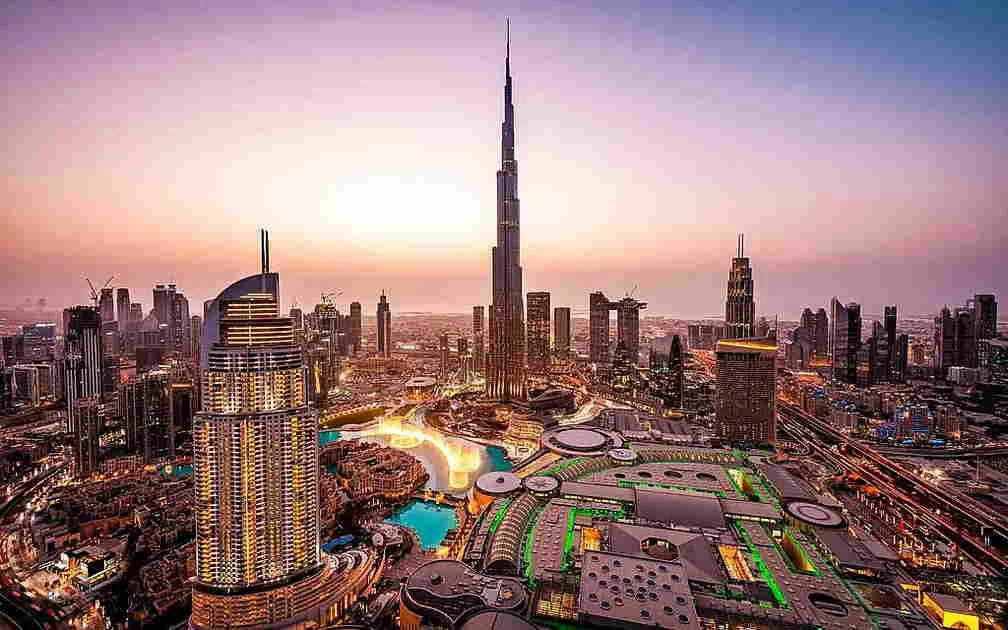
In a single generation, Dubai went from a modest pearl-diving and trading port to one of the most recognised cities on earth. That transformation has a name behind it: His Highness Sheikh Mohammed bin Rashid Al Maktoum, Vice President and Prime Minister of the UAE, and Ruler of Dubai. The story is usually told as a highlight reel of tall buildings. That version is entertaining and mostly useless, because it explains nothing about why it worked.
This is an attempt at the more useful version: the strategy underneath the skyline, the sequence in which things were built, and what a state-led development model actually means for someone deciding whether to put capital into a Dubai property. If you want to see the current phase of that build-out while you read, you can explore off plan Dubai projects across the communities described here.
From desert to global city
When oil was discovered in the region, many neighbours built their futures on it. Dubai's leadership understood early that its own oil reserves would not last, and bet the emirate's future on something more durable: trade, tourism, aviation, finance and real estate. The philosophy attributed to Sheikh Mohammed's approach is simple enough to fit on a wall — build for the day the last barrel of oil is shipped, so that day means nothing.
The strategic problem being solved
Strip out the romance and Dubai faced a specific engineering problem: how does a small emirate with modest hydrocarbon reserves and no large domestic market create economic gravity? Land alone does not attract capital. Neither does ambition. What attracts capital is the combination of access, rules and infrastructure, in that order.
The answer was to make Dubai a node rather than a destination. A place people pass through, do business in, and eventually stay in. Once you frame it that way, the apparently unrelated projects — an airline, a port, a financial centre, a set of free zones — resolve into one strategy. Each one increases the number of reasons to be here.
Sequence mattered more than scale
The detail most retellings miss is order. Infrastructure came before the towers. The port and the airline created flow; the free zones created reasons to incorporate; the property came after there were people and businesses who needed it. Cities that invert that sequence build empty districts. Dubai's mega-projects worked because demand was manufactured upstream of them.
That sequencing logic is still visible in how new communities are handled today. Roads, utilities and access come first, then the masterplan, then the phases. It is also the reason some districts feel finished and others feel like a construction site with a leasing office — you are watching different points in the same sequence.
The icons that changed the skyline
Under his leadership Dubai delivered projects the world said were impossible. The list is familiar, but each entry solved a specific problem rather than merely setting a record.
- Burj Khalifa — the tallest building on earth, and a global symbol of ambition that made Dubai legible to people who had never heard of it.
- Palm Jumeirah — an island built from the sea, visible from space, which manufactured coastline in a city that had run out of it.
- Dubai Marina, Downtown Dubai, Business Bay — entire new cities, master-planned from sand rather than grown from villages.
- Emirates Airline and Dubai International — the machinery that turned Dubai into a connecting point of the world.
- DIFC, Dubai Internet City and the free zones — magnets for global business and talent, with their own rules designed to be legible to foreign firms.
Why the icons were an economic instrument
A record-breaking tower is a marketing spend that pays for itself if it changes how a city is perceived. Burj Khalifa did not just add floors; it made Downtown Dubai an address with international recognition, which lifted the value of everything around it. The same is true of Palm Jumeirah: it created a scarce, identifiable asset class where none existed.
This is worth understanding because it is still the operating model. When a new landmark or masterplan is announced, it is not vanity. It is an attempt to create a district with a name people outside the UAE will recognise, because recognition is what supports pricing over decades.
What the icons cannot tell you
An honest caveat: the skyline is not an investment thesis. A tower being famous does not mean a unit inside it performs. Dubai Marina is one of the most recognisable waterfronts in the world and it still contains buildings that have underperformed for years because of service charges, layout or a bad view line. The city-level story and the unit-level outcome are different questions, and confusing them is the most expensive mistake a Dubai buyer makes.
More than buildings: a model for the region
The real achievement is not concrete and steel. It is a system. Dubai built a city where business is fast, safe and welcoming; where people of more than 200 nationalities live side by side; where world-class infrastructure, rule of law and ambition combine.
The boring parts are the valuable parts
The features that actually move capital are unglamorous: a functioning land registry, enforceable contracts, escrow requirements on developer money, a tax regime that does not surprise you, and government services that close in days rather than months. None of those make a postcard. All of them are why a buyer in London or Mumbai will wire a deposit to a project that does not exist yet.
The absence of personal income tax and of annual property tax is part of the same design: reduce the friction of being here. Our guide to tax-free property investment in Dubai covers what that does and does not cover, because "tax-free" is a phrase that gets used loosely and buyers still meet real costs.
A template for the region
In doing this, Dubai gave the wider Middle East a new template: that an Arab city could be modern, open, ambitious and globally respected without losing its identity. That template is now being copied around the region, which is itself a competitive risk worth noting. Dubai's advantage was being first. It is no longer alone.
Vision turned into policy
From the Dubai Plan and the D33 economic agenda to the Golden Visa and 100% foreign business ownership, the leadership turned bold ideas into the rules that make Dubai work. Initiatives in education, space, happiness, AI and sustainability all flow from the same instinct: be first, be best, and do not stand still.
Policy is the transmission mechanism
Here is the part that matters to a buyer. A vision statement does nothing to your asset. A policy does. When residency was decoupled from employment through the Golden Visa, it changed who could plausibly own a Dubai home and how long they would stay — which changes the tenant pool, the buyer pool and the holding period. When foreign business ownership was liberalised, it changed how many companies would base people here.
That is the causal chain: vision, then policy, then demand, then price. If you want to anticipate the property market, watch the policy layer rather than the announcements. Buyers looking at the residency route specifically should read the Golden Visa through property guide for the thresholds and mechanics rather than relying on summaries.
What it means for property investors
Every off-plan investor in Dubai is, in a sense, buying into this model. The reason a unit bought today may be worth more at handover is not luck. It is relentless, government-led city-building: new communities, new infrastructure, new reasons for people and capital to keep arriving.
What the model gives you
A state that plans decades ahead reduces one specific risk: the risk that your community never gets finished around you. When roads, metro, schools and retail are committed at the masterplan level, the neighbourhood catching up with the tower is a question of when, not if. That is a genuinely different proposition from buying into a speculative suburb in a market where nobody is coordinating the build-out.
What the model does not give you
It does not give you a floor under prices. Dubai has had real corrections, and the state-led model did not prevent them. It does not protect you from a developer who builds badly, a district that absorbs too much supply at once, or a service charge that eats your yield. And it does not make timing irrelevant — buying into a community at the top of its supply wave is a bad trade regardless of how good the city's long-range plan is.
The correct reading is that the model raises the floor on the city, not on your unit. Selection still does the work. Our guide to the best areas to buy off plan deals with that selection problem directly, and the Emaar developer profile is a useful starting point for how track record factors into it.
A legacy still being written
Dubai's story is not finished. Long-range planning under the 2040 Urban Master Plan anticipates further growth, with population climbing, mega-projects underway and a national agenda aimed at making Dubai one of the best cities in the world to live and do business in. The trajectory set in motion decades ago continues.
For an investor, the most important fact is also the most sober one: you are buying into a city that is still deliberately being built, by a leadership that has delivered improbable things before. That is a strong tailwind. It is not a guarantee, and anyone who sells it to you as one is selling. Look at the latest off-plan launches with that framing — the city-level bet is sound; the unit-level bet is yours to get right.
Frequently Asked Questions
Why did Dubai diversify away from oil? Dubai's own hydrocarbon reserves were modest compared with regional neighbours, and the leadership concluded early that an oil-based economy had an expiry date. The strategy was to build durable alternatives — trade, aviation, tourism, finance and real estate — so that the end of oil revenue would be economically irrelevant.
What is the Dubai 2040 Urban Master Plan? It is the long-range framework guiding how Dubai grows: where population is expected to concentrate, where new communities and infrastructure go, and how land is allocated across residential, commercial and green use. For property buyers it matters because it signals which districts are being planned for density and connectivity.
Does government-led development mean Dubai property prices cannot fall? No. Dubai has experienced real price corrections, and long-range planning did not prevent them. State-led city-building improves the long-term demand picture; it does not underwrite the price of any individual unit in any given year.
How does policy affect Dubai property demand? Through the chain of residency, business and mobility rules. Measures such as the Golden Visa and 100% foreign business ownership change who can live and operate here and for how long, which in turn changes the tenant pool, the buyer pool and typical holding periods.
Is buying into Dubai's growth story enough of an investment case? Not on its own. The city-level trajectory is a tailwind, but returns are decided at community, developer and unit level — supply timing, build quality, service charges and layout. The macro story tells you the market is worth being in; it does not tell you what to buy.