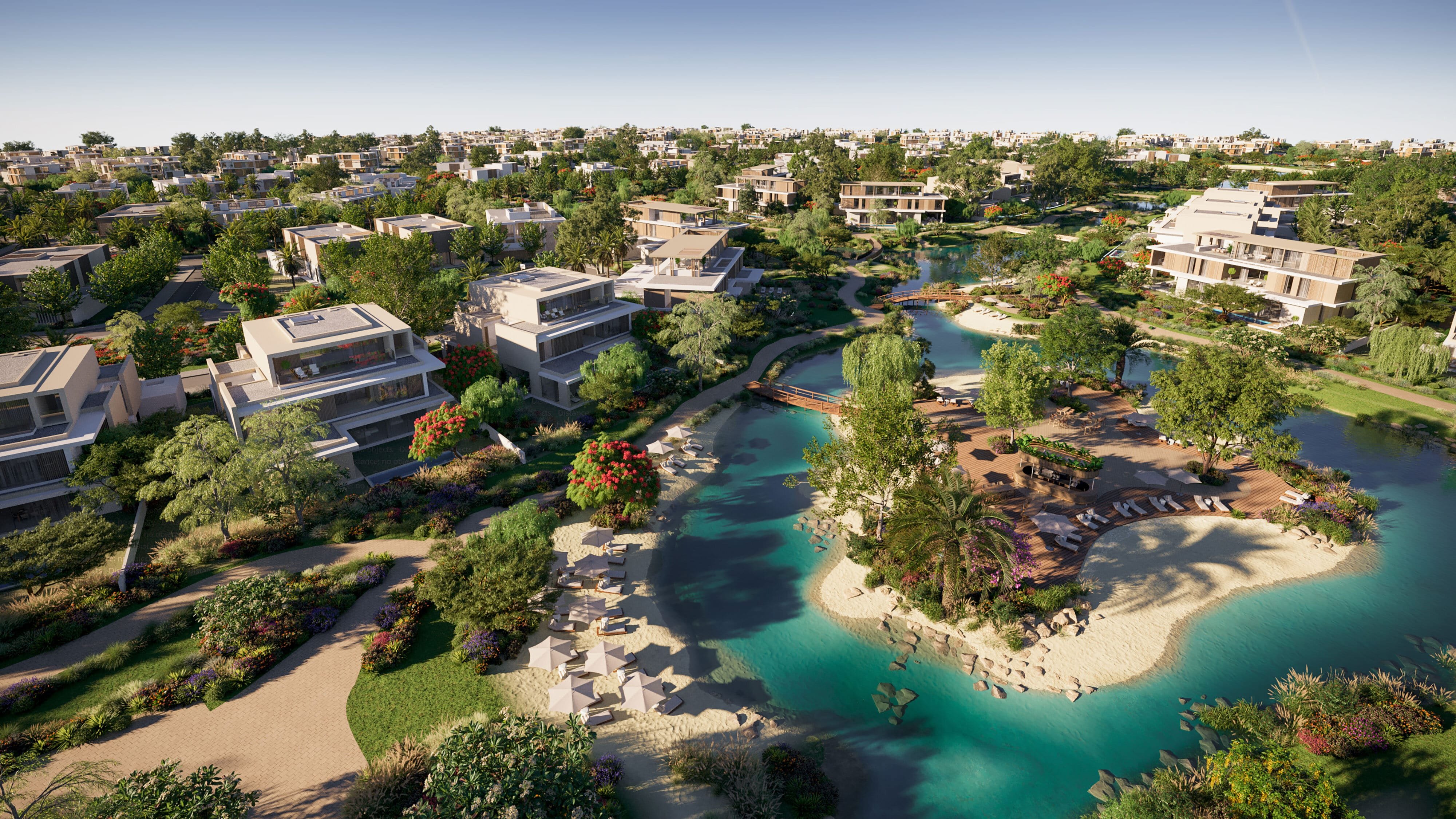
Most Dubai developers sell apartments. Meraas sells destinations. From the Mediterranean-style marina at Port de La Mer to the island-resort energy of Bluewaters and the boutique retail of City Walk, Meraas builds places people travel to visit and then want to live in. For a buyer that distinction is not marketing — it changes what you are actually paying for, and therefore what has to go right for the purchase to work.
This guide covers Meraas off-plan property in Dubai: what makes the developer structurally different, the character of its signature destinations, how its payment plans behave, the investment case, and — the part worth reading twice — who should not buy one. Live stock across the market sits on our off plan Dubai projects hub if you want to compare while you read.
What makes Meraas distinctive
Meraas is best understood as a destination developer. Where volume builders optimise for unit count and price per square foot, Meraas optimises for place-making: the public realm, the retail mix, the waterfront, the walkability. The residential is built around that activity rather than the other way round.
Three threads run through the portfolio
- Design-led architecture. Projects tend to be lower-density and more considered than typical mass-market towers, with real attention to facade, landscaping and the experience at street level.
- Lifestyle and destination focus. Cafes, beaches, promenades, marinas and curated retail are designed in from the start rather than bolted on, so residents inherit a working neighbourhood on day one instead of waiting for it.
- Premium positioning. Meraas sits at the upper-mid to premium end of the market and attracts end-users and lifestyle-led investors rather than the most price-sensitive buyers.
Why that matters commercially
The destination model changes the timing of your risk. In a conventional growth community you buy a tower and then wait — sometimes years — for the retail, the schools and the footfall to arrive, hoping rents catch up to the brochure. That waiting period is real and it is where a lot of off-plan disappointment lives. A Meraas address in an established destination has largely already done that work: the promenade exists, the restaurants are trading, the visitors are already coming.
You pay for that in the entry price. The premium is the price of skipping the wait, and whether it is worth paying depends entirely on whether you were ever going to be able to wait. It is a different proposition from the scale of Emaar's master communities or the branded-luxury angle of DAMAC. Meraas competes on place, not on product spec.
Signature destinations
Meraas's reputation rests on a handful of recognisable places. Treat what follows as character notes — the profile each destination is known for — rather than a live sales list, which changes launch to launch.
City Walk
A low-rise, European-style urban district near Downtown, City Walk pairs apartments with ground-floor boutiques, restaurants and genuine pavement culture — still rare in a city built largely around podium towers and car access. It suits buyers who want a walkable, central lifestyle without high-rise density. The tenant profile skews to well-paid professionals who are choosing the street, not the square footage, which tends to mean longer tenancies and less price sensitivity at renewal.
Bluewaters Island
Home to Ain Dubai and minutes from JBR and Dubai Marina, Bluewaters delivers an island-resort feel inside the city. Residences carry a leisure-destination premium and strong short-stay appeal. That appeal is an asset and a variable: destination demand tracks tourism, which is more cyclical than corporate long-let demand. Read it alongside our Dubai Marina off-plan guide for how the surrounding rental market behaves.
Port de La Mer and the Jumeirah coast
The Mediterranean-marina concept on the Jumeirah seafront offers beach-side, low-rise living with a harbour at its centre. This is an end-user product first: coastal second homes and owner-occupiers, with investors following. Low-rise waterfront is inherently supply-constrained, which supports value — the coastline does not get longer — but it also means a thinner, slower buyer pool at exit than a mainstream tower has.
Across these and newer launches the common denominator holds: you buy the location and the lifestyle first, the floor plan second. To see what is currently launching across developers, browse live off-plan projects or the new launches feed.
Payment-plan character
Like most Dubai off-plan, Meraas launches are sold on instalment payment plans structured around construction milestones, with payments held in RERA-supervised escrow and released against verified progress. That mechanism does not change by developer — what changes is the shape of the schedule.
Because Meraas sits at the premium end, its plans tend to be milestone-weighted rather than the ultra-aggressive 1% monthly structures associated with some volume developers. Terms vary launch to launch, and the practical implication is that your instalments are lumpier: fewer, larger payments tied to construction stages rather than a flat monthly figure. Buyers used to the monthly model should model the cash flow before committing, because a milestone plan can front-load more than expected.
- Construction-linked instalments across the build, easing cash flow against a ready purchase.
- Occasional post-handover components on select launches, letting you pay part of the price after keys — the structure is explained in our post-handover payment plans guide.
- The one-off 4% DLD fee at registration, the main transaction cost alongside the deposit.
For the full mechanics of how these structures work across developers, see our payment plans hub.
The investment case
The Meraas argument is about defensible demand. Lifestyle destinations with genuine footfall, beachfront or marina settings and design-led architecture tend to hold tenant and buyer interest through cycles, which supports both occupancy and resale liquidity. Scarcity does the work: a plain residential tower can be replicated on the next plot, a waterfront promenade cannot.
Layer on Dubai's structural framework and the case strengthens. There is no income tax on rent, no capital gains tax and no annual property tax — only the one-off 4% DLD fee, as set out in our tax-free investment guide. Destination addresses command rent and resale premiums that plain residential clusters cannot. And property at AED 2M or more can qualify the buyer and family for the renewable 10-year Golden Visa, which many Meraas units clear comfortably; the eligibility mechanics are in our Golden Visa guide.
The trade-off, stated plainly
Premium lifestyle stock prioritises capital growth and tenant quality over the headline gross yields seen in value communities. If your objective is maximum cash yield per dirham deployed, a Meraas address will not deliver it and no amount of place-making changes the arithmetic: yield is rent over price, and the price carries a premium the rent does not fully repay in percentage terms.
There is a second cost that buyers underweight. Destination buildings are expensive to run. Promenades, marinas, landscaped public realm and high-specification common areas all appear in the service charge, and on a premium unit that figure is material. Get the number for the specific building before you sign — our service charges guide explains how it is set and why it moves. And note that a lifestyle destination's exit market is narrower than a mainstream one: your buyer pool is people who specifically want that place, which is powerful in a strong market and slower in a soft one.
Who Meraas suits
Meraas is a strong fit if you are an end-user or a lifestyle-led investor who wants a walkable, design-forward, destination address and is willing to pay a premium for it. It suits buyers prioritising long-term value, resale strength and short-stay appeal over the highest cash yield, and buyers who want the neighbourhood to already exist rather than to be promised.
It is a poor fit for the price-sensitive, yield-maximising investor, who is better served by value master communities — the contrast is drawn out in our best areas to buy off-plan guide. It is also a poor fit for a buyer whose case depends on flipping before handover, because premium end-user stock trades on a slower clock than mainstream investor stock.
What to check before committing
- The service-charge estimate for that building, not the community average, and what the public realm costs to maintain.
- The payment schedule shape — milestone-weighted plans front-load differently from monthly ones.
- Short-let permissions, if the destination premium is part of your income case.
- The unit itself. The destination is the reason to look; a poorly oriented unit inside a great destination is still a poorly oriented unit.
New buyers should read our step-by-step guide to buying property in Dubai and the honest risk picture in is off-plan property safe before committing to any launch, Meraas or otherwise.
Frequently Asked Questions
What is Meraas best known for? Destination developments rather than standalone residential towers — places like City Walk, Bluewaters Island and Port de La Mer, where retail, waterfront and public realm are designed in from the start. The residential sits inside a working leisure destination, which is what distinguishes Meraas from volume developers optimising for unit count.
Can foreigners buy Meraas off-plan property? Yes. Meraas developments sit in designated freehold areas, so foreign buyers can purchase without UAE residency and can generally complete the process remotely. Instalments are held in RERA-supervised escrow and your interest is recorded via Oqood interim registration until the title deed issues at handover.
Is Meraas a good investment for rental income? It is a better fit for capital growth and tenant quality than for maximum gross yield. Premium lifestyle stock carries a price premium that rents do not fully repay in percentage terms, and destination buildings carry higher service charges. If headline cash yield is the objective, value communities do that job better.
How do Meraas payment plans compare to other developers? They tend to be milestone-weighted rather than flat 1% monthly structures, reflecting the premium positioning, though terms vary by launch. Some launches include a post-handover component. The underlying escrow and DLD mechanics are the same as any Dubai off-plan purchase.
Do Meraas properties qualify for the Golden Visa? Property valued at AED 2 million or more can qualify the buyer and family for the renewable 10-year Golden Visa, and many Meraas units sit comfortably above that threshold. The qualification is based on the property value rather than the cash paid to date on a payment plan.
What is the main risk with a destination development? A narrower buyer and tenant pool. Destination demand is powerful but specific — it depends on people wanting that particular place, and in leisure-led locations it tracks tourism, which is more cyclical than corporate long-let demand. That supports value in a strong market and slows the exit in a soft one.