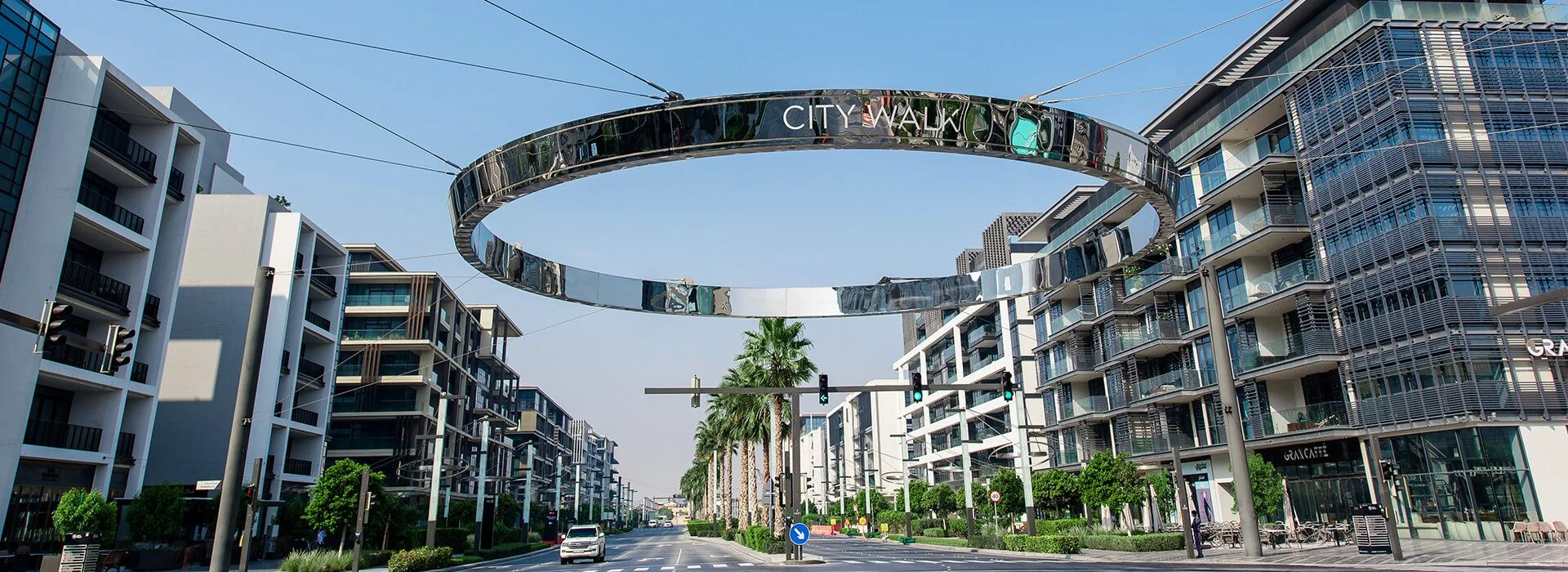
City Walk is one of the few places in Dubai where you can leave your building, walk to dinner, and never touch a car. That sentence is doing more work than it appears to. Walkability is structurally scarce in this city because the road network, the plot sizes and the climate all push against it, and scarce attributes are the ones that hold value. It is the reason City Walk commands a premium, and it is the reason off-plan buyers keep circling back to an address that never advertises a bargain.
City Walk is a low-rise, open-air lifestyle community by Meraas, sitting between Downtown energy and Jumeirah calm. Its off-plan launches offer a way into a design-led, walkable neighbourhood before it is fully built out. This guide covers what City Walk is, who builds it, what the premium is actually buying, and how to decide if it fits your goals. To compare it against every other district, browse off plan Dubai projects by area and payment plan.
What and where City Walk is
City Walk is a master-planned urban village spread across roughly 10 million square feet in the heart of Dubai, moments from Downtown Dubai, DIFC and the Jumeirah beachfront. Instead of the tower clusters found elsewhere, it is defined by dozens of low-rise residential buildings woven between pedestrian streets, boutiques, cafes and green space. The feel is deliberately European: tree-lined avenues, ground-floor retail, and daily life happening on foot rather than behind a windscreen.
Why low-rise in central Dubai is an expensive decision
This is the point most guides skip. On a central plot, the profitable move is to build up. Height converts expensive land into sellable square footage, and the more floors you stack, the lower the land cost carried by each apartment. City Walk does the opposite: low buildings on some of the most valuable land in the emirate.
That choice has to be paid for, and it is paid for by you, in the price per square foot. The compensation is that the same choice is what produces the streets, the light, the scale and the walkability — and no competitor can replicate it nearby without accepting the same economics. In effect, the premium buys a supply constraint. Whether that is worth it is a genuine question, but it is a clearer question than "is City Walk expensive". Of course it is expensive; the interesting part is what the expense is structurally protecting.
The central position
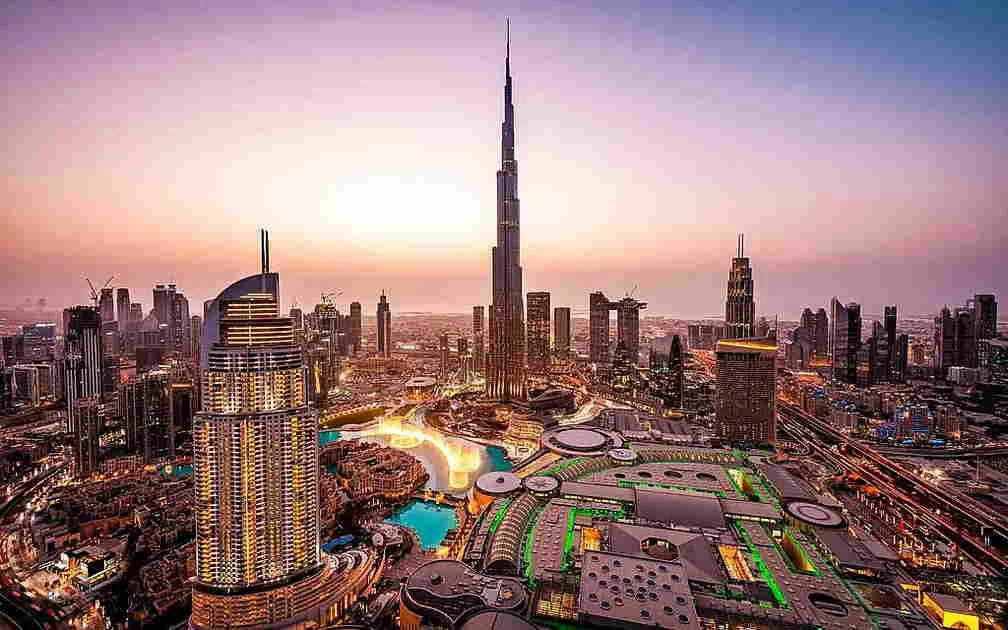
You can reach Downtown, Burj Khalifa, La Mer's beaches and the DIFC business core in minutes, while still living in a self-contained neighbourhood with its own dining, wellness and retail. For a comparison against the highest-density alternative nearby, our Downtown Dubai off-plan guide sets out the opposite trade, and the Downtown area page lists live stock there.
The developer: Meraas
City Walk is a flagship community from Meraas, part of Dubai Holding and one of the emirate's most recognisable lifestyle developers. Meraas is behind Bluewaters Island, La Mer and Port de La Mer, and it has built its reputation on placemaking rather than stacking apartments.
What "placemaking" means for your money
The word is marketing, but the thing behind it is not. A conventional developer sells apartments and leaves the surroundings to whoever comes next. A placemaker builds and then continues to control the retail mix, the public realm, the events and the tenant curation of the ground floor. That control is the difference between a district that improves for a decade and one that decays quietly once the last unit is sold.
When you buy off plan here, you are backing two separate abilities: the ability to deliver your building, and the ability to sustain the environment that gives your building its value. The second is the one that determines your resale price, and it is the one with no completion date. It is worth being clear-eyed about this — you are dependent on a developer's ongoing commitment, not just its construction record. That is a real dependency, and it is also precisely what you are paying the premium for. You can compare portfolios on our projects page before committing.
Why the urban-lifestyle appeal commands a premium
City Walk sits firmly at the premium end of urban living, and the community design reflects that. Recent and ongoing Meraas phases lean heavily into wellness and shared space. The Crestlane clusters, for example, are built around water, wellness and community, with features reported to include an overwater wellness centre, movement and training studios, co-working lounges, resort-style pools, landscaped jogging and cycling routes, sports courts and generous children's play areas. Elsewhere in the district, Central Park adds running tracks, tennis and squash courts, an outdoor gym, yoga and meditation zones, a dog park and picnic pavilions.
Consistency is the actual product
The point is not any single amenity. It is that whichever building you buy into, you are buying into the same curated environment rather than an isolated tower with its own gym. In a tower district, your neighbour's building can undercut you with a newer pool and a shinier lobby. In a coherent low-rise masterplan, the shared environment is the draw, and individual buildings compete less destructively against each other. That cohesion is what supports both resident demand and the district's reputation.
Where the premium can fail you
Honestly: a premium price is a lower yield. Rent does not rise in proportion to purchase price at the top of the market, so the same rent divided by a bigger number gives a smaller percentage. If you are buying purely for gross yield, City Walk is the wrong district and a value community will beat it on the spreadsheet every time. The case here rests on tenant quality, void periods, tenant retention and capital preservation — real things, but slower and harder to put in a headline. Compare the two on net cash after charges and voids, not on the gross percentage alone.
The off-plan opportunity
Because Meraas releases City Walk in phases, there is a steady stream of off-plan inventory rather than a single one-off launch. Notable recent releases include the Crestlane buildings and City Walk Northline, alongside Central Park releases such as Fern and Laurel. Unit types across these projects typically span one- to four-bedroom apartments, with some larger duplexes and park-facing homes.
- Phased launches: ongoing releases mean regular new inventory, but also mean the developer is a competitor to your resale until the masterplan is complete.
- Central location: minutes from Downtown, DIFC and Jumeirah, with a walkable core that most central districts cannot offer.
- Lifestyle depth: wellness, retail and dining built into the masterplan rather than borrowed from a neighbouring district.
- Payment flexibility: off-plan structures typically spread payments across the construction period.
How the protections work
Instalments on a registered off-plan project go into a project-specific escrow account and are released against construction progress certified by an appointed engineer, which ties the developer's access to cash to physical progress on your building. Your purchase is recorded on the interim register via an Oqood, which attaches your name to the specific unit before a title deed exists. Both are procedural rather than optional, and both are worth verifying rather than assuming. Our escrow and deposit protection explainer sets out what that account covers and, just as importantly, what it does not.
We avoid quoting fixed prices or yields here because launch terms change between phases and a stale number is worse than none when you are negotiating. Always confirm current pricing, availability and payment structure for the specific building you are considering.
Who City Walk off-plan suits
It suits end-users who want a walkable, connected base in central Dubai without high-rise density: professionals working in Downtown or DIFC, families drawn to the parks and low-rise scale, and lifestyle-focused buyers who want dining and wellness on the doorstep. Investors are active too, attracted by the central position and consistent tenant interest, particularly for well-located one- and two-bedroom homes.
It suits you less if your objective is maximum gross yield, if you want the biggest possible unit for your budget, or if you need a completed home now. For international buyers, a qualifying purchase can form part of a residency strategy — see our Golden Visa through property guide for current thresholds. Whichever way you lean, decide it against the specific building and phase rather than the district's reputation.
Frequently Asked Questions
Who develops City Walk? Meraas, part of Dubai Holding — the same group behind Bluewaters Island, La Mer and Port de La Mer. Its model is placemaking: it builds and then continues to manage the retail, public realm and street life that give the buildings their value.
Where is City Walk located? Centrally, near Downtown Dubai, DIFC and the Jumeirah beachfront, within a walkable low-rise masterplan spread across roughly 10 million square feet.
What off-plan projects are available in City Walk? Recent Meraas phases include the Crestlane buildings, City Walk Northline, and Central Park releases such as Fern and Laurel, offering one- to four-bedroom homes plus some duplexes and park-facing units. Availability changes phase to phase.
Why is City Walk more expensive than nearby towers? Because low-rise buildings on central land carry a much higher land cost per apartment than tall ones. That same decision is what creates the streets, light and walkability, so the premium is effectively buying a supply constraint that neighbouring developments cannot replicate.
Is City Walk good for investment? Its central position and lifestyle appeal drive steady tenant demand and support capital preservation, but a premium price means a lower gross yield than a value community. It is a capital and tenant-quality play rather than a yield play. Confirm pricing and rent expectations phase by phase.
Can I sell a City Walk unit before handover? Usually yes, subject to the developer's minimum-payment threshold and an NOC. Bear in mind that while the masterplan is still releasing phases, your resale competes with Meraas's own new inventory next door.