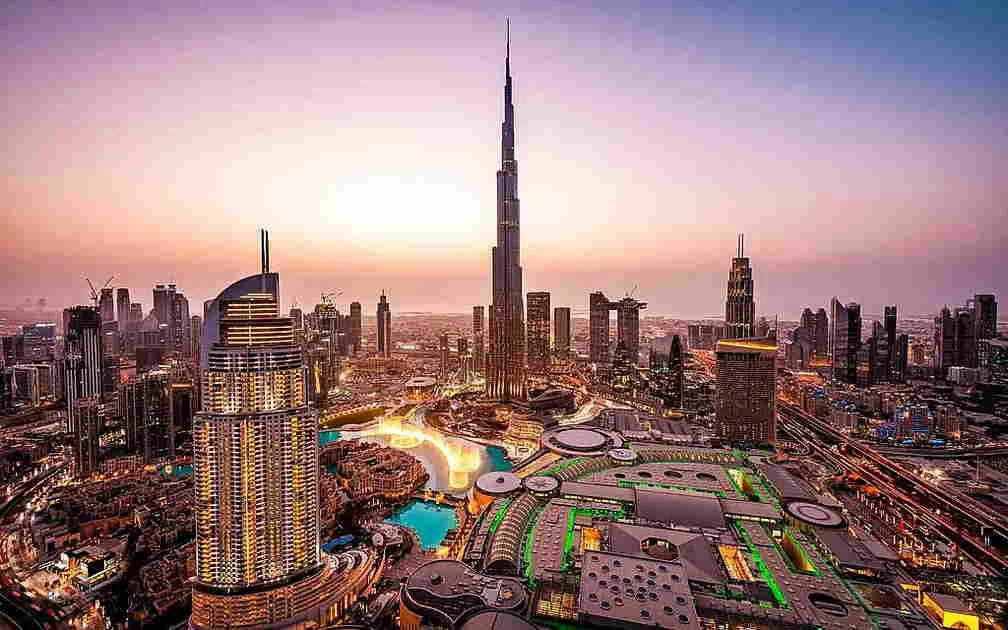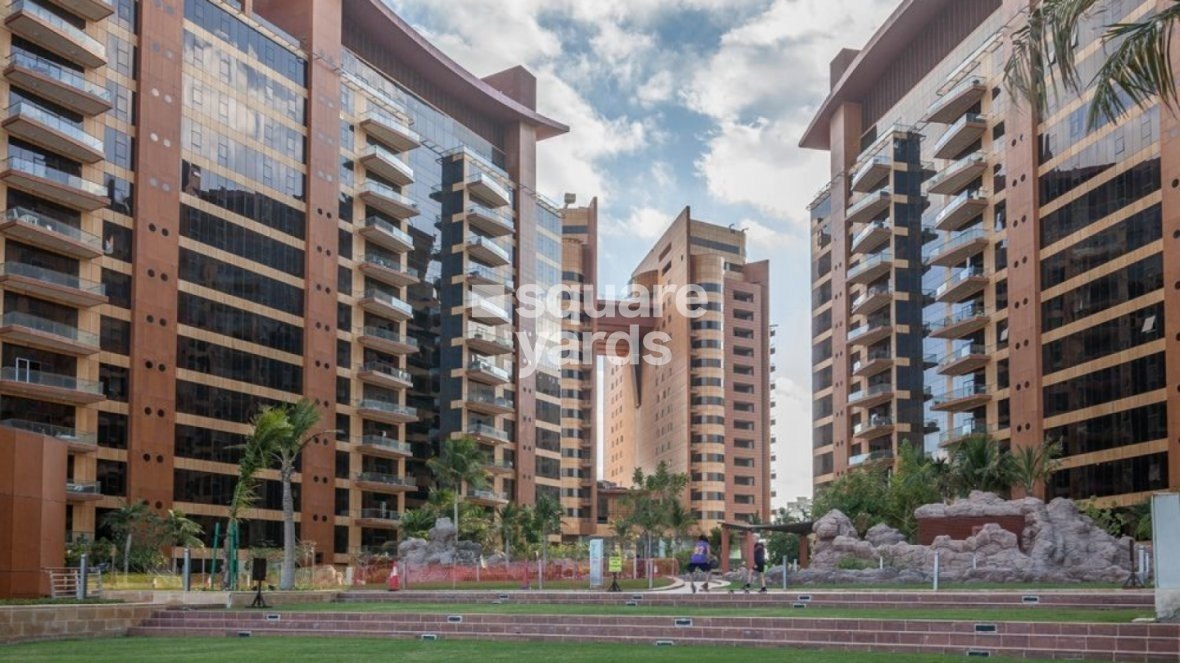
Nakheel is the developer that reshaped Dubai's coastline. Palm Jumeirah exists because Nakheel built land where there was sea, and that single fact does more to explain the pricing of Nakheel stock than any brochure adjective. When a developer manufactures shoreline, it is not selling square footage. It is selling a quantity of frontage that is fixed forever once the last frond is built out.
This guide covers Nakheel's off-plan property in Dubai in 2026 from an investor's chair rather than a sales desk: what the portfolio actually contains, how the scarcity premium is generated and where it stops working, what you give up in yield to own it, how the payment mechanics and buyer protections operate, and who should genuinely be buying. If you want live stock alongside the reading, you can browse off plan Dubai projects by community, developer and payment plan, or look directly at the Nakheel developer page.
What Nakheel actually is, and why the label matters
Nakheel is a government-linked master developer. Both halves of that phrase carry weight, and investors tend to hear only the first.
Master developer means it builds the context, not just the building
A conventional developer buys a plot inside someone else's community and puts a tower on it. A master developer plans the destination itself: the road network, the utilities corridors, the retail spine, the beach access, the plot ratios that decide how dense the neighbourhood will feel a decade from now. It then sells or develops individual plots within that frame.
This changes what you are exposed to as a buyer. In a single-plot purchase, your value depends on a neighbourhood someone else controls. In a master-planned Nakheel destination, the entity that decides whether the promenade gets built is the same entity that sold you the apartment. That alignment is real and it is worth something. It is not a guarantee — master plans get re-phased, and amenities scheduled for phase four can arrive years after the phase-one towers are occupied — but the coordination risk is lower than in a fragmented district.
Government-linked means infrastructure follows policy, not a balance sheet
The practical meaning of institutional backing is patience. Roads, transport links, utilities and public amenities in a government-linked destination are funded on a long-term urban plan rather than on whether one private company had a good quarter. For a buyer in an emerging destination, that is the single most useful reassurance available, because the entire investment case in an emerging area rests on the surrounding infrastructure genuinely materialising.
Be precise about what it does not mean. Institutional backing is not a warranty on your delivery date, and it is not a promise that the market price of your unit will rise. It reduces the probability that the community around your unit remains half-finished. That is a narrower claim than the one usually made, and it is the one that holds.
The landmark communities
Palm Jumeirah
Palm Jumeirah is the asset the whole Nakheel story is built on: the palm-shaped island that made Dubai's skyline legible to people who have never been here. Property on it is scarce in a way that almost no other residential market can replicate, because the frond and beachfront positions are physically finite and the island is not being extended.
What that means for money: capital values are supported by permanent supply constraint and global name recognition, while gross rental yields are tighter than in value communities. You are not buying cash flow. You are buying an asset with a fixed supply and an international bid under it. Our Palm Jumeirah off-plan guide goes deeper on how the sub-locations differ, and the live inventory sits on the Palm Jumeirah area page.
Dubai Islands
Dubai Islands is the emerging multi-island waterfront destination, and it is a fundamentally different trade from the Palm. Here you are buying before the community exists in finished form. The return depends on the islands maturing into a functioning lifestyle and tourism destination — retail, hotels, beach clubs, transport — over a period measured in years, not months.
State the risk plainly, because the upside is usually stated for you. You may take handover of a completed apartment in a community that is still a construction site, rent it below the number in your model because the amenities that justify the rent have not opened, and hold it that way for a while. Buyers who understand this and can carry the unit through the gap tend to do well. Buyers who assumed the island would be finished the day their keys arrived do not.
Jumeirah Village and the community districts
Nakheel also master-planned large community districts that have quietly become some of Dubai's most reliable rental markets. These are the opposite end of the portfolio: accessible entry prices, deep and continuous tenant demand, and the highest percentage yields in the Nakheel universe. If your objective is income rather than prestige, this is the part of the portfolio that serves it. Our JVC off-plan guide covers how that market behaves, including its supply cycles.
The scarcity premium, explained properly
The core investment logic behind iconic Nakheel property is scarcity, and it is worth taking the mechanism apart rather than repeating the word.
Why fixed supply changes the price behaviour
In an ordinary community, when demand rises, developers respond by building more units. New supply meets the new demand and prices normalise. The market has a release valve. On Palm Jumeirah, there is no release valve on the land itself: the beachfront and frond positions cannot be added to. When demand rises against permanently fixed supply, the adjustment happens entirely in price.
That asymmetry is why scarce addresses behave more like a store of value than like a yield instrument. It is also why they are more volatile on the way down than people expect. A thin, high-ticket market with few comparable transactions discovers price slowly. If the international bid pauses, you may find there is no bid at your number for months. Scarcity supports value over a long hold. It does not create liquidity on demand.
Where the scarcity argument gets abused
Scarcity applies to the land, not automatically to every unit built on it. A tower with hundreds of similar apartments on a scarce island still contains hundreds of similar apartments, and they compete with each other. The genuinely constrained assets are the ones with the attributes that cannot be reproduced: direct beach frontage, an unobstructed view corridor, a plot position. Applying the island's scarcity premium to an inward-facing unit on a mid floor is a sales argument, not an economic one. Judge the specific unit.
Balancing prestige against yield
The trade-off with trophy locations is unavoidable: gross rental yields are typically lower than in value communities, because you are paying for scarcity and recognition rather than maximum cash flow. Yield is rent divided by price, and when the denominator is bid up by buyers who are not underwriting rent, the percentage falls. That is arithmetic, not pessimism.
The sensible response is to decide what role the asset plays before you buy it, not after. Many portfolios run both ends: a high-yield unit in a value community for income, and a waterfront asset for long-term capital preservation. The income unit pays the service charges and the carry; the trophy asset does the compounding. What does not work is buying a Palm apartment on a spreadsheet built for JVC yields and then being surprised. Before committing, work the numbers through our ROI guide, and be honest about the service-charge line — amenity-heavy waterfront buildings sit at the top of the range, which is covered in our service charges guide.
Payment plans and how the money is protected
Payment plan structures vary by Nakheel project and by phase. Launches on emerging destinations often carry more accommodating terms, because early terms are the tool a developer uses to build absorption before a community has proved itself. Match the plan to your cash flow rather than to your optimism — the payment plans hub covers the structures in detail, and post-handover plans explain the variant that pushes instalments past the key date.
Escrow is the mechanism, not the marketing
Your instalments do not go into the developer's general account. They go into a project-specific escrow account, and money is released against construction progress certified by an engineer. This is the structural reason an off-plan buyer in Dubai is not simply lending money to a developer on trust: the funds are tied to the specific project and to physical progress on it. It is also the limit of the protection — escrow governs where money goes, it does not guarantee a handover date. Our escrow and deposit protection guide sets out how the releases work.
Your interest is registered before the building exists
Off-plan purchases are recorded through interim registration, which places your contractual interest on the official register during construction rather than leaving you holding only a private contract. This is what makes an assignment before handover possible at all, and it is what makes the eventual title transfer administrative rather than adversarial. The mechanics are in our Oqood registration guide.
Who should actually buy Nakheel
- Long-term holders of scarce assets. If your horizon is a full market cycle and your objective is capital preservation in a globally recognised address, the Palm case is coherent.
- Growth investors with patience. Dubai Islands rewards buying before the community is finished, and charges you in waiting time and interim rent for the privilege.
- Income buyers, but only in the community districts. The yield lives at that end of the portfolio, not on the waterfront.
- Residency-motivated buyers. A qualifying purchase at the AED 2M threshold can anchor a ten-year visa; the mechanics are in our Golden Visa through property guide.
Who should not: anyone who needs the money back on a fixed date, and anyone underwriting a trophy asset on a yield assumption borrowed from a value community. If you are still weighing developers, our Emaar guide and Sobha guide cover the two most common alternatives, and current releases are listed under new launches.
The honest risk list
Every developer guide should contain this section, and most do not.
- Delivery timing. Off-plan dates slip. Institutional backing lowers the probability of abandonment; it does not make a schedule binding on physics or contractors.
- Amenity lag in emerging destinations. The unit completes before the neighbourhood does. Model a period of below-brochure rent.
- Thin resale at the top end. High-ticket scarce assets trade infrequently. That is fine until you need an exit quickly.
- Service charges on amenity-heavy waterfront. Beach access, multiple pools and concierge cost money to run every year, and they come out of your net yield.
- Concentration. Owning two units in the same tower is not diversification, however scarce the island is.
None of these are reasons not to buy. They are the reasons to price properly. A broader treatment of the category risks sits in our guide to whether off-plan property is safe in Dubai.
Frequently Asked Questions
Is Nakheel a reliable developer to buy off plan from? Nakheel is a government-linked master developer with a delivered portfolio of large-scale destinations, which places it among the more institutionally backed names in the market. That lowers counterparty risk relative to a small private developer, but it does not remove ordinary off-plan risks such as timing slippage, so you should still read the SPA and check the escrow arrangements for your specific project.
Why are Palm Jumeirah rental yields lower than in other communities? Because yield is rent divided by price, and the price on a permanently supply-constrained island is bid up by buyers pricing scarcity and prestige rather than cash flow. Rents are high in absolute terms; the purchase price is higher still in proportion, so the percentage compresses. It is a capital-preservation asset first and an income asset second.
Is buying early on Dubai Islands worth the risk? It depends entirely on your holding capacity. Buying before a community matures is how early buyers capture growth, but you should expect a period after handover where the amenities are incomplete and achievable rent is below the projection. If you can carry the unit through that gap without being forced to sell, the trade is coherent. If you cannot, it is not.
Do Nakheel off-plan payments go into escrow? Yes. Instalments on registered off-plan projects are paid into a project-specific escrow account and released against construction milestones certified by an engineer, which ties your money to physical progress on your building rather than to the developer's general finances.
Can a Nakheel purchase qualify for the Golden Visa? A property purchase meeting the AED 2 million threshold can support a renewable ten-year residency, and off-plan purchases can qualify. The unit and the documentation have to satisfy the current criteria, so confirm eligibility for your specific project and payment structure before relying on it as the reason for the purchase.
Can I sell a Nakheel off-plan unit before handover? Generally yes, subject to the developer's minimum-payment threshold and an NOC. Most developers require a set share of the price to be paid before they will approve an assignment, and fees apply. On high-ticket waterfront stock, the practical constraint is usually not permission but the depth of the buyer pool at your asking price.