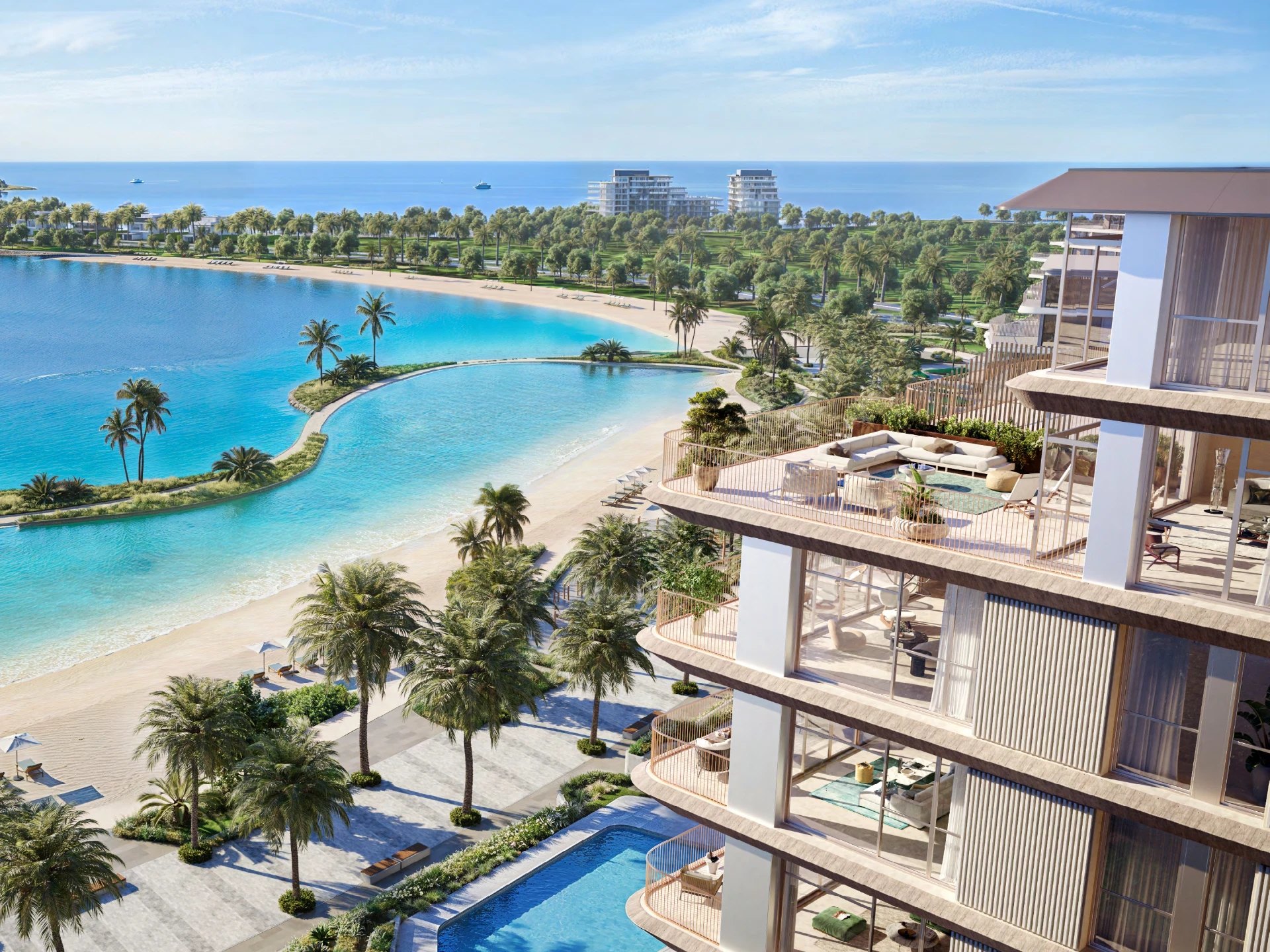
An off-plan villa is a different purchase from an off-plan apartment, and not only because the number is bigger. You are buying a plot as much as a building, in a community that does not exist yet, on a payment schedule that runs for years, from a developer whose landscaping and infrastructure decisions will define your resale market long after the last unit is sold. The apartment buyer is buying a box in a tower. The villa buyer is buying a bet on a masterplan.
That is the case, and it is a strong one: you lock in a launch price, you get first pick of plots and orientations, and you spread the cost rather than needing the full amount up front. It is also where the risks are least symmetrical. This guide covers what actually changes at villa scale — plot selection, payment structure, yield behaviour, developer dependence and delivery exposure — for both the family buying a home and the investor buying an asset.
Why buy a villa before it is built
An off-plan villa is a home bought directly from a developer before or during construction. You commit early, pay in instalments tied to certified construction milestones, and take handover when the keys exist. Three things make the structure attractive at villa scale specifically.
First, the launch price. You are buying at the price the developer sets to fill a phase, which is typically set below where the completed community is expected to trade. Second, and this is unique to villas, you get selection. Plot, orientation, corner position, backing onto a park rather than a service road — these are allocated first-come at launch and they are permanent. Two identical villas in the same phase can diverge materially in value on plot alone, and the buyer at launch chooses while the buyer at handover accepts what is left. Third, the payment schedule spreads a large sum across the build rather than demanding it in one transfer.
Dubai's tax position sharpens all of it. There is no annual property tax, no income tax on rental earnings and no capital gains tax when you sell. The single meaningful government cost is the one-off 4% Dubai Land Department registration fee at purchase. Our guide to tax-free property investment in Dubai breaks down what a buyer should actually expect to pay.
Two buyers, two different purchases
The family end-user
The end-user wants a forever home: four or five bedrooms, a private garden, a maid's room, a school run that does not consume an hour. Off plan gives them a pristine house with warranties intact and neighbours moving in on the same schedule, which is a genuine social advantage in a new community. The cost is time. You are living somewhere else, paying rent, while paying instalments — a double carry that runs the entire build. That is affordable or it is not, and it should be modelled before signing, because a construction delay extends it.
The investor
The investor is buying land scarcity and tenant stickiness. Villas in established communities tend to appreciate steadily because plots are finite in a way that apartment floors are not — you can add towers to a district, you cannot add land to a masterplan once it is drawn. Family tenants renew, treat the home as a home, and absorb a rent increase rather than move school-age children mid-year. The trade-off is that percentage yield is lower and the capital at risk per decision is much higher. One villa is one bet. Four apartments are four.
The communities that define the villa market
Location does most of the heavy lifting in villa returns, more so than in apartments, because a villa's value is inseparable from the community around it. A handful of master communities have earned their standing through build quality, amenity delivery and, critically, resale liquidity.
- Dubai Hills Estate — an Emaar-built green corridor with a championship golf course, a major mall and tree-lined avenues. It is the benchmark for family villa living and the community end-users cite when they say they never want to move again.
- Arabian Ranches — one of Dubai's original villa communities, valued for mature landscaping, community schools and a settled suburban rhythm that newer masterplans take a decade to acquire.
- DAMAC Hills — a self-contained township around a golf course, with parks, sports facilities and a spread of villa sizes that suits growing families and downsizers.
- Emaar South and the newer southern masterplans — lower entry pricing, longer infrastructure horizons, and returns that depend on the surrounding development actually arriving.
That last category is where villa buyers most often misjudge. An early-phase villa in a community whose schools, retail and road links are still on a drawing is priced for that uncertainty, and it should be. If the masterplan delivers, the buyer is rewarded. If it delivers five years late, the buyer has owned an isolated house with a long commute for five years. Both outcomes have happened in this market. To compare established communities against newer launch zones, study our roundup of the best areas to buy off plan in Dubai, and browse live inventory across off plan Dubai projects filtered by community.
Developer track record matters more here than anywhere
With an apartment, a weak developer costs you a building. With a villa, a weak developer costs you a community — the landscaping that never matures, the retail that never opens, the phase two that stalls and leaves your street facing a construction hoarding for years. The developer's delivered communities are the only real evidence, and they are visitable. Go and look at what they finished five years ago, not at what they are selling today.
Emaar Properties is the reference point for master-planned villa estates, and its record on delivering the community around the house — not just the house — is the reason its resale liquidity is what it is. Our Emaar master communities guide covers how that plays out across their portfolio. Damac has built its villa presence around golf-anchored townships. Quality-led builders such as Sobha have extended into the villa segment with a reputation for finish detail. The names matter less than the method: find the delivered project, walk it, and judge.
How a bigger ticket changes the payment plan
Villas carry larger prices, so the payment structure does more work — and developers compete hardest on villas, which is why the plans are often more generous than apartment equivalents. The typical shape:
- Down payment — commonly 10-20% on booking, which is what secures your unit and, more importantly at villa scale, your plot.
- Construction-linked instalments — released against verified building milestones and held in a supervised escrow account until progress is certified.
- Handover payment — a final tranche on completion, sometimes followed by post-handover instalments spread over the following years.
Our payment plans hub explains the common structures, from 80/20 splits to extended post-handover schedules, and our guide to post-handover payment plans covers why the deferred tail is not free — a longer schedule is priced into the headline, and comparing two plans without comparing their total cost is how buyers talk themselves into the wrong one.
One villa-specific point on the plan: the instalment schedule is your exposure schedule. Until you have paid a meaningful share, your position is small; by the final tranches, a very large sum is committed to an asset you have not seen finished. That is why the developer's delivery record and the escrow mechanism matter more in year three of a villa build than in year one.
Returns: yield down, appreciation argument up
Villa yields tend to sit below apartment yields in percentage terms, often in the 5-7% gross range against the 6-8% more common for apartments. That is not a defect; it is what you pay for the characteristics villas bring — steadier tenants, longer tenancies, and exposure to land rather than to floor space.
The appreciation argument is that land is finite and space in a good community is what wealthy families compete for, so villa values in established estates tend to compound more reliably than apartment values in districts where new supply can always be added. That argument is sound in principle. It is not a guarantee, and it depends entirely on the community being one people still want in ten years — which is a bet on the masterplan and the developer, restated.
Every dirham of rent and any eventual gain stays with you under Dubai's tax framework, which magnifies the difference over a long hold. If you are weighing villas against apartments as an asset class rather than as a lifestyle, our comparison of off-plan versus ready property is a useful reality check on the timing side of the decision, and the ongoing cost side is covered in our service charges guide — community charges on a villa fund landscaping, security and shared facilities, and they are not trivial.
Protecting your money, and what protection does not cover
Buyer protection in Dubai is genuinely robust at the mechanical level. Payments are held in a RERA-supervised escrow account and released to the developer only against independently verified construction progress, and your interest is recorded through interim registration on the off-plan register. That combination limits how far ahead of the actual build your money can travel, which is the single most important structural safeguard in this market.
Be precise about what it does not do. Escrow does not guarantee a handover date. It does not compensate you for a community that arrives late around a house that arrived on time. It does not make a poorly chosen plot valuable. And it does not remove the double carry of rent plus instalments if the build runs long. Those are the risks that scale with the ticket, and a villa ticket is large. For an honest treatment of the whole risk set, read is off-plan property safe in Dubai, and before you accept keys, work through our guide to the snagging and handover process — on a villa, with its own roof, garden, boundary walls and services, the snagging list is longer and the cost of missing something is higher than in an apartment.
The Golden Visa angle
Because villas usually clear the AED 2 million threshold comfortably, they are a natural route to the UAE Golden Visa: a qualifying purchase of AED 2 million or more can support a renewable 10-year residency covering your spouse and children, and off-plan units can qualify. The same purchase that houses your family can anchor its residency, which is a meaningful part of why the villa segment attracts overseas buyers who would not otherwise buy an investment property at that size. The mechanics, including the conditions that "qualifying" actually carries, are in our Golden Visa through property guide.
Frequently Asked Questions
Can a foreigner buy an off-plan villa in Dubai? Yes. Foreign nationals can own villas outright on a freehold basis in designated areas, with registered title, no UAE residency required beforehand, and the transaction executable remotely. The one-off 4% Dubai Land Department fee applies at registration, and there is no annual property tax.
Are off-plan villas a better investment than apartments? They are a different one. Villa yields typically sit around 5-7% gross against 6-8% for apartments, so you give up percentage income. In return you get land exposure, tenants who renew rather than churn, and a segment where supply cannot simply be stacked higher. Whether that trade suits you depends on whether you are optimising for cash flow or for a long hold.
Do off-plan villas qualify for the Golden Visa? A qualifying property purchase of AED 2 million or more can support a renewable 10-year residency covering a spouse and children, and off-plan purchases can qualify. Villas usually clear the threshold comfortably. The conditions attached to how the purchase is structured and evidenced should be confirmed for your specific unit rather than assumed.
What is the biggest risk with an off-plan villa specifically? The community, not the house. A villa's value is inseparable from the masterplan around it — the schools, retail, roads and landscaping that make the location worth living in. A house delivered on time into a community that is years behind is a real outcome. Judge the developer on communities they finished, not on the one they are selling.
How much do I pay upfront for an off-plan villa? Typically 10-20% on booking, which secures both the unit and the plot, followed by instalments released against certified construction milestones and held in escrow, then a final tranche at handover and sometimes post-handover instalments after that. Terms vary by developer and launch, and developers compete harder on villa plans than on apartment plans.